In today’s hectic world of parenting, where every child seems to come with their unique set of challenges, one common struggle that many families face is dealing with picky eaters. It’s a scenario familiar to almost every parent or guardian out there. But fear not, because MetroEHS Pediatric Therapy is stepping in to offer a solution that not only addresses the needs of the child but also brings relief to the entire family.
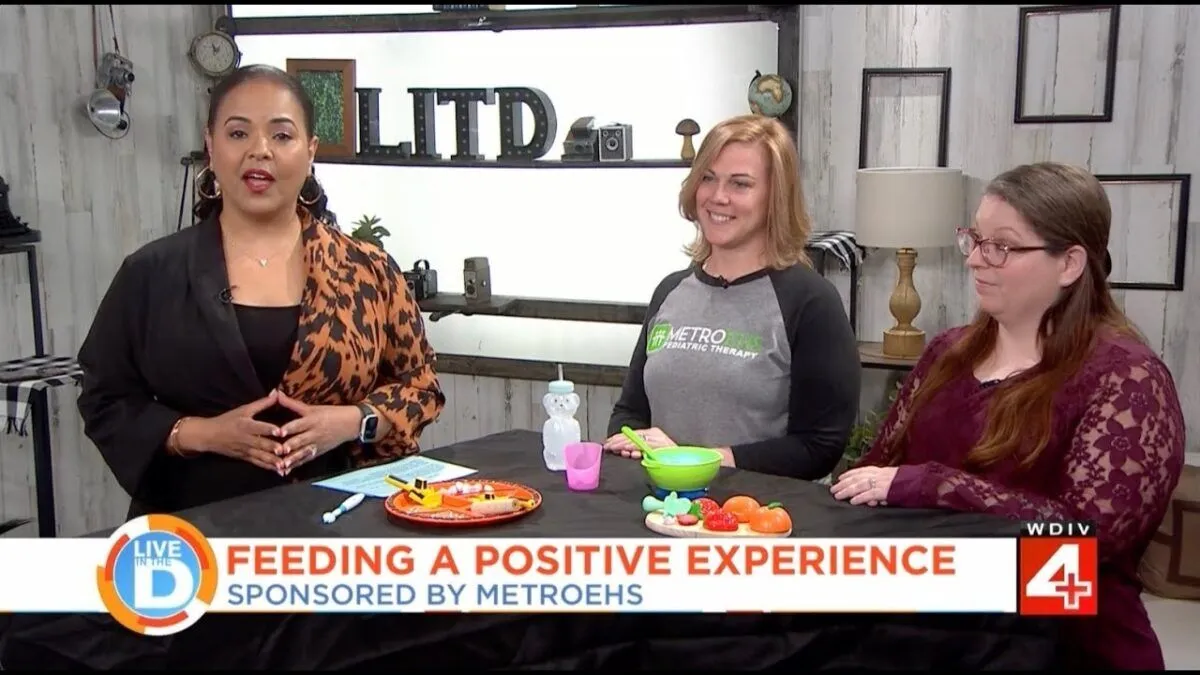
During a recent segment on Live in the D, Tati Amare dove into the topic of feeding therapy with two experts from MetroEHS: Dawn Sterling, a Board Certified Behavioral Analyst, and Sam Fitzsimmons, the Director of Occupational Therapy. Their insights shed light on the signs indicating a child could benefit from feeding therapy, how MetroEHS approaches this issue, and invaluable advice for parents navigating feeding challenges.
According to Sam Fitzsimmons, pediatric feeding disorders are more common than we might think, with one in 23 children under the age of five affected. These disorders often accompany developmental disabilities like ADHD and autism, making them even more prevalent. Signs to watch out for include mealtime behaviors that disrupt daily routines, extreme food selectivity, and a reduction in the variety of foods consumed.
MetroEHS takes a holistic approach to feeding therapy, utilizing an interdisciplinary model that incorporates occupational therapy, speech therapy, applied behavior analysis (ABA), and physical therapy. Their goal is to make feeding a positive and enjoyable experience for children, starting with non-food items and gradually progressing to food-based activities through play and sensory exploration.
One of the most significant takeaways from the discussion is that it’s never too early to seek help. Whether it’s addressing difficulties with latching during breastfeeding in newborns or tackling food aversions in older children, MetroEHS is there to support families every step of the way.
When it comes to feeding strategies, Dawn Sterling emphasizes the importance of keeping things light and pressure-free. Rather than engaging in power struggles over food, she advocates for creating a nurturing environment where children feel comfortable exploring new foods at their own pace. The key is to focus on engagement and enjoyment, both for the child and the family.
In their own words, both Dawn and Sam emphasize MetroEHS’s commitment to holistic care, not just for the child but for the entire family. By adopting a whole-child approach and empowering families, MetroEHS aims to foster growth and success in every aspect of a child’s development.
As the conversation drew to a close, Tati Amare reiterated the accessibility of MetroEHS’s services, with 14 locations already established in Metro Detroit and three more on the horizon. Whether it’s ABA, speech, occupational, feeding, or physical therapies, MetroEHS stands ready to lend a helping hand to families in need.
In conclusion, dealing with picky eaters can be a daunting challenge, but with the right support and guidance from experts like those at MetroEHS Pediatric Therapy, families can overcome these obstacles and ensure that every child thrives. If you’re facing feeding difficulties with your child, don’t hesitate to reach out and discover the transformative power of pediatric feeding therapy.
Teletherapy, also called tele-practice or tele-speech, has become more popular during the uncertain circumstances and stay at home orders of COVID-19. Teletherapy can bring a sense of familiarity in uncertain times, as your child can have a weekly live speech therapy visit with a consistent speech language pathologist (SLP). A relationship is built, and the therapist and child share smiles and laughter in between working on their goals. With teletherapy, children can continue to receive continuity of care even as they stay safe at home! But does this foreign method of attending speech therapy really work?
Research is largely in agreement: Teletherapy is a very effective way of teaching kids speech and language!
With teletherapy, speech therapy is provided via a video chat platform that is secure. MetroEHS’s online platform includes fun games, a box for clients to watch applicable videos and talk through worksheets or read stories, screen share, practice cards, and, of course, a live-streaming video SLP guiding them through all of it. All of these features engage most children, including those on the Autism Spectrum. This 1:1 teletherapy has been proven effective: according to a review of 7 studies of school-aged children, “telehealth is a promising method for treating children” (1). Another study looking specifically at children with ASD stated, “All [14] studies reported high levels of programme acceptability and parent satisfaction with the telehealth component of the intervention” (2). And another states, “Emerging research in telepractice treatment for ASD clients already shows success in both direct and indirect interactions” (3).
If a child is too young or difficult to engage, the SLP may opt for a parent training approach. The parent will receive a list of supplies to gather from around the house, and the SLP will teach the parent how to target the child’s goals. The parent is encouraged to ask questions, and the SLP coaches as the parent engages their child and completes their goals. This has also been proven effective for children learning language! Evidence suggests, “that parent-mediated intervention training delivered remotely can improve parents’ knowledge in [autism spectrum disorder] ASD, parent intervention fidelity, and subsequently improve the social behavior and communication skills of their children with ASD (4).
Feeding Therapy can be provided with a similar model. The SLP guides the caregiver during the session, and talks through strategies and techniques for children accepting the food, chewing, and swallowing. Providing feeding therapy online can be beneficial because the SLP can see where the child typically sits, the types of eating utensils that are used, and overall family dynamic- all of which play a major role in carryover of skills to the home environment. What better way to support generalization to home, than having therapy in the home! Feeding Teletherapy, too, is an excellent and effective substitute to in-person therapy, according to research (5)!
As you can see, teletherapy is a powerful alternative to in-person therapy, especially during situations when receiving in-person therapy is difficult or impossible for families. If you would like more information about teletherapy, to enroll your child, or a free “Teletherapy Tour” to see our platform, please contact MetroEHS today!
Resources
2017. Wales, D., Skinner, L., et al. The Efficacy of Telehealth-Delivered Speech and Language Intervention for Primary School-Age Children: A Systematic Review. International Journal of Telerehabilitation, 9(1), 55-70.
2018. Sutherland, R., Trembath, D., et al. Telehealth and Autism: A Systematic Search and Review of the Literature. International Journal of Speech-Language Pathology, 20(3), 324-336.
2017. Parsons, D., Cordier, R., et al. Parent-Mediated Intervention Training Delivered Remotely for Children With Autism Spectrum Disorder Living Outside of Urban Areas: Systematic Review. Journal of Medical Internet Research, 19(8), e198.
2008. Clawson, Seldon, Lacks, Deaton, Hall, Bach. Complex pediatric feeding disorders: using teleconferencing technology to improve access to a treatment program. Pediatric Nursing, 34(3): 213-6.
We love working in Southeastern Michigan as we get to work with hard-working families and amazing businesses like Emagine who intentionally create special experiences for members of the community that can get overlooked.
Join Emagine For A Sensory Friendly Movie!
Sensory Friendly Screenings provide modifications to the theatre atmosphere without modifying the film for those who experience sensory issues.
Sensory Friendly Film Screenings
Select Emagine locations will host a unique, sensory friendly screening twice a month, with specific modifications made to ensure an enjoyable experience for individuals with sensory needs and their supporters. Their sensory friendly programing makes going to the movies a more enjoyable experience for families, children, and teens with sensory needs. All sensory friendly films will be shown in 2D. *Note there are no modifications made to the film.
What does Sensory Friendly mean?
First, it means sensory friendly experience (lights up a bit, sound down a bit). Second, if your child needs to get up, move, dance, sing…No problem. Third, guests are welcome to bring a safe snack for any food allergies or food avoidance/restrictions.
First Showing of the Day. On-Sale dates vary. Check the website or Emagine app for theatres and showtimes.
The Little Mermaid Saturday, June 3, 2023
Elemental Saturday, June 17, 2023
Where
Tickets are available at the box office, online at Emagine-Entertainment.com or through the Emagine App. To purchase tickets and for a full list of showtimes visit Emagine-Entertainment.com On-Sale dates vary. All films, locations, dates, and times are subject to change.
Film Synopsis
The Little Mermaid (Rated PG) The Little Mermaid is the beloved story of Ariel, a beautiful and spirited young mermaid with a thirst for adventure. The youngest of King Triton’s daughters and the most defiant, Ariel longs to find out more about the world beyond the sea and, while visiting the surface, falls for the dashing Prince Eric. While mermaids are forbidden to interact with humans, Ariel must follow her heart. She makes a deal with the evil sea witch, Ursula, which gives her a chance to experience life on land but ultimately places her life – and her father’s crown – in jeopardy.
Elemental (Rated Pg) Follows Ember and Wade, in a city where fire-, water-, land- and air-residents live together.
In addition to Sensory Friendly Movies
Join Emagine Entertainment For A Variety Of Specialty Screenings
Providing Open Caption, Sensory Friendly, Dementia Friendly, Breakfast & a Movie, and Lunch & a Movie Screenings
Join Emagine Entertainment this June as they host a variety of specialty screenings for their guests. Each month guests can watch some of the newest film releases with an enhanced experience. Open Caption screenings provide subtitles for those with hearing impairments. Sensory Friendly Screenings provide modifications to the theatre atmosphere without modifying the film for those who experience sensory issues. Dementia Friendly screenings provide exclusively selected classic movies and musicals and encourage audience participation while providing guests with special door-to-door service. The Breakfast and a Movie and Lunch and a Movie allow guests to enjoy a full meal and concessions while they enjoy their film.
Open Caption Film Screenings
Select Emagine locations will host Open Caption showings of some of the newest film releases on Sunday and Wednesday afternoons all month long. Guests who experience hearing impairments will be able to enjoy the movie-going experience with audio subtitles displayed on the big screen for all to see. All open caption movies are shown in 2D. *Note: there are no modifications made to the film.
Locations: (Michigan) Novi, Rochester Hills, Royal Oak, Hartland, Woodhaven, Quality 10 Powered by Emagine, (Minnesota) Eagan, Lakeville, Monticello, Rogers, White Bear, Willow Creek, (Wisconsin) Geneva Lakes, (Illinois) Frankfort, (Indiana) Noblesville, Portage
Films: On-Sale dates vary. Check the website or Emagine app for theatres and showtimes.
Spider-Man: Across The Spider-Verse Sunday, June 4, 2023 Wednesday, June 7, 2023
Transformers: Rise Of The Beasts Sunday, June 11, 2023 Wednesday, June 14, 2023
Elemental Sunday, June 18, 2023 Wednesday, June 21, 2023
The Flash Sunday, June 25, 2023 Wednesday, June 28, 2023
Dementia Friendly Screening
Dementia Friendly Screenings include exclusively selected classic movies and musicals presented in a unique setting with softer sound and ambient lighting. Guests are able to interact during the presentation and encouraged to talk back, clap, tap their feet, sway, sing along and get up and dance. Emagine works with Dementia Friendly Saline to provide guests with a special door-to-door experience guided by a team of dementia friendly “Purple Angels.” These staff and volunteers act as guides for the guests beginning the moment they arrive until the moment they leave. More information can be found on Emagine’s website. Tickets can be purchaseddirectly through Dementia Friendly Saline.
Location: Emagine Saline
Films: Showings are the second Wednesday of each month.
Meet Me In St. Louis Wednesday, June 14, 2023 Pre-Show Mingling: 1:15-2:00PM Film Begins: 2:00PM
Breakfast And A Movie Screening
Each month, Emagine hosts a Breakfast and a Movie showing, at select theatres, of one of the newest family-film releases. Tickets are $24 each and include a full breakfast buffet, a 44oz. popcorn, and a 21oz fountain drink as well as a ticket to the showing.
Location: Emagine Royal Oak, Emagine Palladium, Emagine Canton
Film: On-Sale dates vary. Check the website or Emagine app for more information.
The Little Mermaid* Sunday, May 28, 2023
Spider-Man: Across The Spider-Verse Sunday, June 4, 2023
Spider-Man: Across The Spider-Verse Sunday, June 4, 2023
Senior Lunch And A Movie Screening
Each month, Emagine Royal Oak hosts a special Senior Citizen Lunch and a Movie. Tickets are $24 each and include a full lunch buffet, a 44oz. popcorn and a 21oz. fountain drink as well as a ticket to the showing. This offer is valid for guests aged 55 and up.
Location: Emagine Royal Oak
Film: On-Sale dates vary. Check the website or Emagine app for more information.
About My Father Tuesday, June 20, 2023
Where: Tickets are available at the box office, online at Emagine-Entertainment.com or through the Emagine App.
Film Synopsis
Spider-Man: Across The Spider-Verse (Rated P) Miles Morales returns for the next chapter of the Oscar®-winning Spider-Verse saga, an epic adventure that will transport Brooklyn’s full-time, friendly neighbourhood Spider-Man across the Multiverse to join forces with Gwen Stacy and a new team of Spider-People to face off with a villain more powerful than anything they have ever encountered.
Transformers: Rise Of The Beasts (Rated P-13) Returning to the action and spectacle that have captured moviegoers around the world, Transformers: Rise of the Beasts will take audiences on a ‘90s globetrotting adventure with the Autobots and introduce a whole new breed of Transformer – the Maximals – to the existing battle on earth between Autobots and Decepticons. Directed by Steven Caple Jr. and starring Anthony Ramos and Dominique Fishback, the film arrives in theatres June 9, 2023.
The Flash (Rated P-13) Worlds collide in “The Flash” when Barry uses his superpowers to travel back in time in order to change the events of the past. But when his attempt to save his family inadvertently alters the future, Barry becomes trapped in a reality in which General Zod has returned, threatening annihilation, and there are no Super Heroes to turn to. That is unless Barry can coax a very different Batman out of retirement and rescue an imprisoned Kryptonian… albeit not the one he’s looking for. Ultimately, to save the world that he is in and return to the future that he knows, Barry’s only hope is to race for his life. But will making the ultimate sacrifice be enough to reset the universe?
He Little Mermaid (Rated PG) The Little Mermaid is the beloved story of Ariel, a beautiful and spirited young mermaid with a thirst for adventure. The youngest of King Triton’s daughters and the most defiant, Ariel longs to find out more about the world beyond the sea and, while visiting the surface, falls for the dashing Prince Eric. While mermaids are forbidden to interact with humans, Ariel must follow her heart. She makes a deal with the evil sea witch, Ursula, which gives her a chance to experience life on land but ultimately places her life – and her father’s crown – in jeopardy.
Elemental (Rated PG) Follows Ember and Wade, in a city where fire-, water-, land- and air-residents live together.
About My Father (Rated PG-13) The hottest comic in America, Sebastian Maniscalco joins forces with legendary Italian-American and two-time Oscar® winner, Robert De Niro (Best Actor, Raging Bull, 1980), in the new comedy ABOUT MY FATHER. The film centers around Sebastian (Maniscalco) who is encouraged by his fiancée (Leslie Bibb) to bring his immigrant, hairdresser father, Salvo (De Niro), to a weekend get-together with her super-rich and exceedingly eccentric family (Kim Cattrall, Anders Holm, Brett Dier, David Rasche). The weekend develops into what can only be described as a culture clash, leaving Sebastian and Salvo to discover that the great thing about family is everything about family.
Meet Me In St. Louis St. Louis 1903. The well-off Smith family has four beautiful daughters, including Esther and little Tootie. 17-year-old Esther has fallen in love with the boy next door who has just moved in, John. He however barely notices her at first. The family is shocked when Mr. Smith reveals that he has been transferred to a nice position in New York, which means that the family has to leave St. Louis and the St. Louis Fair.
In a recent airing of Live in the D, sponsored by MetroEHS Pediatric Therapy, the spotlight was on Autism Awareness Month, shedding light on how children on the autism spectrum can benefit from life-changing therapy. MetroEHS, a pediatric neighborhood therapy company with multiple locations across Metro Detroit, including expanding services, is dedicated to enhancing the quality of life for children with various therapy needs, including autism.
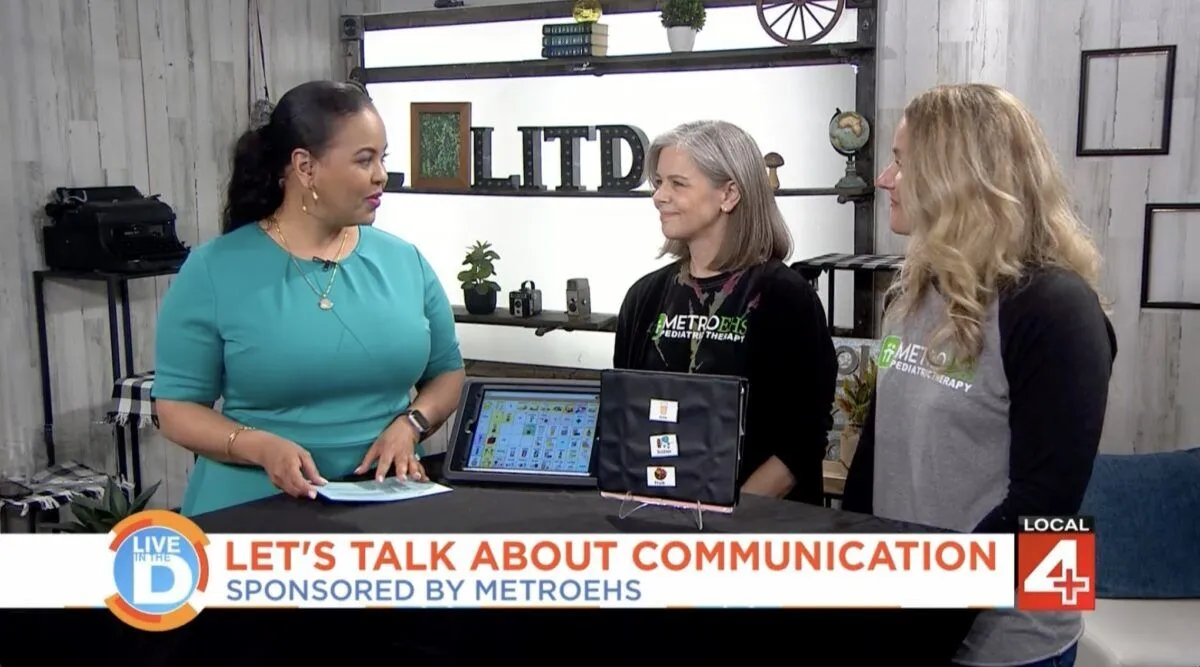
Deanna Coker, a board-certified behavioral analyst, and Kris Krajewski, a speech therapist with MetroEHS, joined the show to discuss how therapy can significantly impact children’s communication skills.
Understanding Communication Challenges in Autism
Deanna explained that autism, as a developmental disability, often presents challenges in social interaction and communication. Unlike typically developing children who learn language by observing and imitating, children with autism struggle to find meaningful ways to communicate, despite their desire to do so.
The Role of Speech Therapy
Kris emphasized that speech therapy is essential for children with autism, given that communication difficulties are a hallmark characteristic of the condition. Speech therapists, like those at MetroEHS, work to identify barriers to communication and introduce alternative methods for expressing thoughts and needs.
Speech Therapy Interventions
Kris introduced an innovative tool called the AAC device (Alternative and Augmentative Communication), essentially an iPad loaded with specialized software designed exclusively for communication purposes. This device enables children to select words and icons to express themselves, giving them a voice and autonomy in their interactions.
Empowering Communication Through Tools
Deanna highlighted another communication aid, the PECS book (Picture Exchange Communication System), a low-tech solution that uses pictures to help children convey wants, needs, and preferences. By selecting and exchanging pictures, children can effectively communicate with caregivers, enhancing their independence and self-expression.
The conversation between Deanna, Kris, and the show’s host highlighted the importance of therapy in empowering children with autism to communicate effectively. Through innovative interventions and specialized tools, such as AAC devices and PECS books, children can overcome communication barriers and actively engage with the world around them.
For families seeking therapy services for their children, MetroEHS offers comprehensive support, including ABA, speech, occupational, feeding, and physical therapies. With multiple locations across Metro Detroit and additional centers on the way, MetroEHS aims to make therapy accessible and impactful for families in need.