









MetroEHS Joins WDIV for Autism Awareness Month

a young woman surrounded by diverse group of happy kids

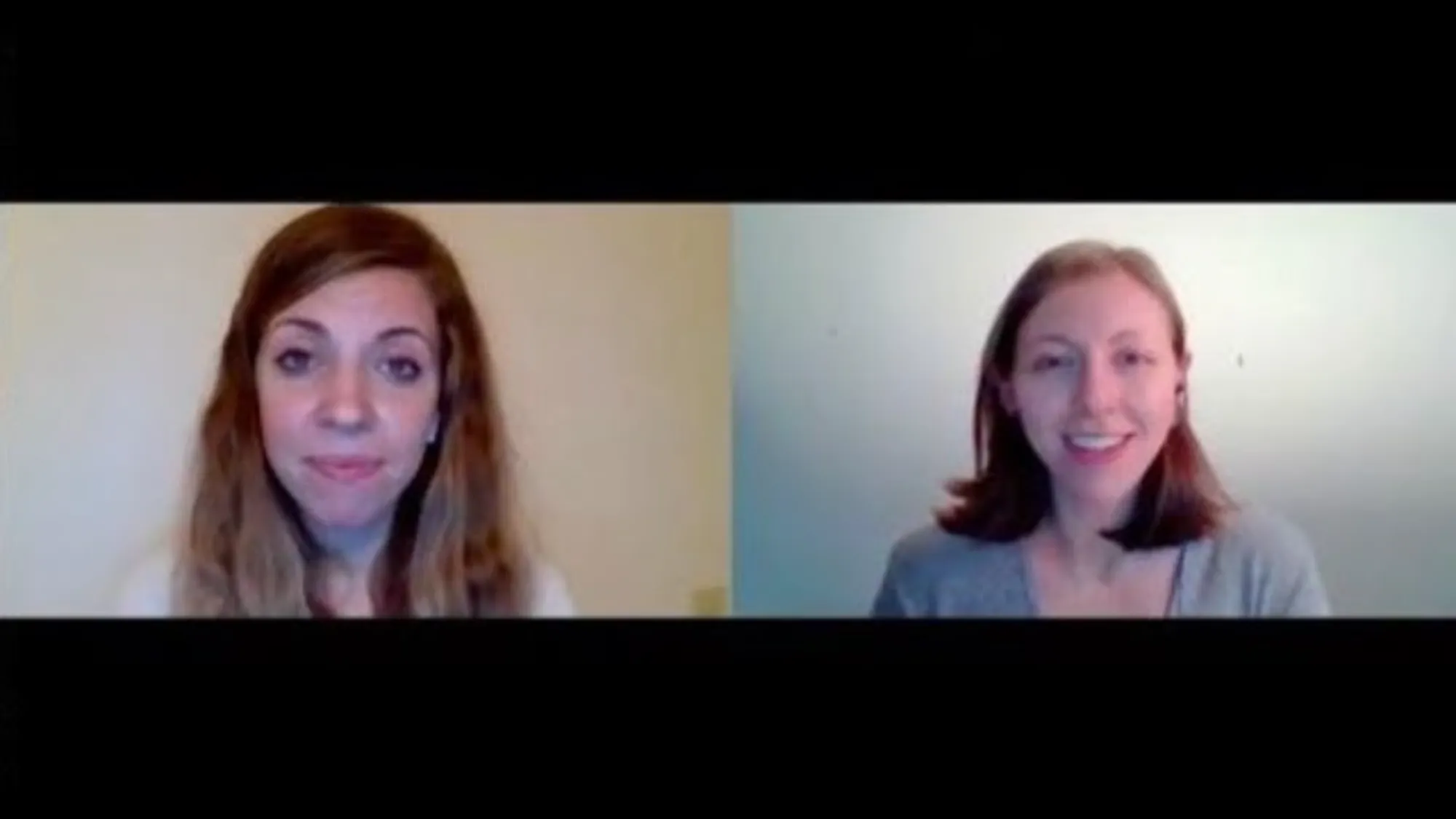
We are proud to sponsor Live in the D, and excited to have joined them this month to bring Autism Awareness.

Tati Amare:
As we watch children grow, we see them develop in many different ways, from infant to toddler to child. As they grow, we celebrate milestones like first steps or first words, but what if the child in your life hasn’t reached a milestone by a certain age or at all? That’s where our sponsor, MetroEHS can help families and children thrive when developmental challenges present themselves. Joining us now here from MetroEHS is our sponsor for Autism Awareness Month is Dawn Sterling, a board certified behavioral analyst with MetroEHS Pediatric Therapy. Good morning and thank you for being with us.

Dawn Sterling:
Good morning. Thank you for having me.

Tati Amare:
This is a lot to think about, but MetroEHS prides itself as a neighborhood therapy company that is accessible to everyone because you have 14 locations and 3 more on the way. Explain the work that you do with families and what makes MetroEHS unique.

Dawn Sterling:
Yes, so we are a pediatric therapy service provider and what really makes us unique is the different variety of services that we offer all in one location. So each neighborhood therapy center has a speech and language pathologist, occupational therapy, physical therapy, applied behavior analysis. We also have dieticians and mental health professionals working with us, and what really sets us apart is our feeding therapy program. So what we do, and its uniqueness, is this wrap around the whole child. So we focus on the whole child developmentally. So whatever a family may be concerned with or struggling with, we’ve got services and support for those families.

Tati Amare:
For every need. I like that. Now if I’m a parent at home and for family members of children, what are some signs that we should look for that may indicate that there may be developmental concerns with our children?

Dawn Sterling:
That’s a great question. So we look for what is called developmental milestones. So your pediatrician is a great person to get that resource from. So if you are at all concerned about your child meeting milestones, maybe they’re not meeting them in the timeframe that you expected, or maybe they had some of these milestones and they’re dropping off, you’re going to start with your pediatrician. They may recommend evaluations. Always pursue those. It’s better to rule out any concerns than to perhaps miss it.
Sometimes what’s recommended is behavior therapy. Applied behavior analysis is one type of therapy that can really help with children with developmental disabilities, and not just autism. These therapies, speech therapy, feeding therapy, occupational therapy, they are for a variety of diagnoses, global childhood developmental delay, any sort of developmental delay that your evaluators may see, there is a related service that can support these families.

Tati Amare:
All right. Now you’ve brought in some example of the items that you use to work with children. So walk us through these tools. I’m going to hold these up.

Dawn Sterling:
Thank you, Tati.

Tati Amare:
Of course.

Dawn Sterling:
MetroEHS is a collaborative pediatric center, so we collaborate with all of our service providers such as SLPs, or Speech Language Pathologists, that may help us design core boards for learners that are not communicating fully with their words yet. We also will collaborate with our occupational therapists on staff for things that may meet a young child’s sensory needs. We are movers and shakers, so sometimes we need to have things that we can play with in our hands, it might be scented to wake up some of those senses. We also have sensory oral chews. We work with a lot of very young kids and we know developmentally young children like to mouth on things.

Tati Amare:
Yeah, this is perfect.

Dawn Sterling:
So this is food grade silicone, it’s safe, it’s safer than the wooden puzzle piece that your toddler might be putting in their mouth. And then we do work on daily living skills, and this is from our OT department, as well. When children are learning to utilize a straw, this cup can be very helpful because we can squeeze it to give them a little bit of that liquid and really show them this is something you might want as we build up their ability to have independence with eating, drinking.

Tati Amare:
And all of that stuff.

Dawn Sterling:
Again, the whole child.

Tati Amare:
Yeah, definitely. Definitely. Okay, so I have to ask you before, because we’re just about running out of time, how rewarding is it for you to be in this position and have the impact with these kids?

Dawn Sterling:
It is the most incredible experience. We get to partner with families. The parents are a viable and valuable member of our treatment team, so we get to work with them and really see what their children and their families are achieving as a result of our therapies. So that is the biggest impact, is seeing progress with our kids.

Tati Amare:
That’s awesome. Dawn, thank you so much for being with us.

Dawn Sterling:
Thank you. Thank you for having me.

Tati Amare:
This is going to be helpful for a lot of families out there. Remember, MetroEHS has 14 locations and 3 more on the way across Metro Detroit. To find a location near you and to see how they can help your family, go to metroehs.com.

Continue Reading

March 11, 2021

Opening up New Opportunities with Pediatric Therapy in Spanish!

Brittany: Hello! My name is Brittany, I am the bilingual Speech Pathologist at Metro EHS in Sterling Heights and Detroit.

Mallory: Hi! My name is Mallory, and I work in the Human Resources Department at the administrative office in Plymouth.

B: And we are so excited to announce that MetroEHS now offers speech therapy in Spanish and English!

M: That’s great! We can service Metro Detroit kids in their native language! But Brittany, can you tell me how to know if my child needs speech therapy?

B: Sure! If you have concerns about the language or articulation development of your child, it is possible that he/she might benefit from speech therapy. For example, if your child cannot pronounce certain sounds, does not say a lot of words or combine words to form sentences, or if you cannot understand him/her, we can do an evaluation to see if he/she qualifies for speech therapy.

M: That sounds great! What happens next?

B: After the evaluation, if therapy is necessary, we are able to initiate therapy in English, Spanish, or both languages to help your child communicate with family, friends and all of the people in the child’s life using their preferred language.

M: So cool! Are any other therapies offered?

B: Of course! We also offer therapy for feeding difficulties, stuttering, problems with social language secondary to autism, and the use of augmentative and alternative communication for children who are not able to talk using verbalizations. Here at MetroEHS we also offer occupational and behavior therapy at all of our centers. We have a phenomenal team of therapists that provide individualized services for your child. And Mallory, you can assist Spanish-speaking families get started, right?

M: Of course! We accept most insurances. I would be happy to answer any questions that families might have. Call our office to see if your child might benefit from speech therapy or other therapies in Spanish, English, or both languages. Our telephone number is 313-278-4601. We would love to talk to you!

Brittany: Hola! Me llamo Brittany y soy la terapeuta bilingue de habla en MetroEHS en Sterling Heights y Detroit.

Mallory: Hola! Me llamo Mallory y trabajo en el departamentro de recursos humanos en la oficina administrativa en Plymouth.

Brittany: Estamos emocionados de anunciar que MetroEHS ofrece la terapia de habla en ingles y espanol.

Mallory: Que excelente! Podemos proporcionar la terapia de habla a ninos en MetroDetroit en su idioma nativo. Brittany, me puedes explicar como saber si mi hijo necesita la terapia de habla.

Brittany: Por supuesto! Si tiene preocupaciones del desarrollo del lenguaje o de la articulacion de su hijo es posible que se beneficie de la terapia de habla. Por ejemplo,  si su hijo no puede pronunciar ciertos sonidos, no dice muchas palabras ni combina palabras para hacer oraciones, o si no le puede entender a su hijo, podemos hacer una evaluacion para ver si califica para la terapia de habla.

Mallory: Suena muy bien! Que pasara despues?

Brittany: Despues de la evaluacion, si las terapias son necesarias, podemos iniciar las terapias en ingles, espanol o ambos idimos para ayudar a hijo a comunicarse con la familia, los amigos y todas las personas en su vida usando su idioma preferido.

Mallory: Guau(wow)! Ofrecen otras terapias?

Brittany: Tambien ofrecemos terapias para dificultades con la alimentacion, el tartamudeo, problemas con el lenguje social secundario al autismo, y el uso de comunicacion aumentativa y alternativa para ninos que no puede hablar con verbalizaciones. En MetroEHS, ofrecemos la terapia ocupacional y la terapia de comportamiento (ABA). Tenemos un equipo fenomenal de terapeutas que proporcionan servicios individualizados para su hijo. Mallory, tu puedes ayudar a las familiar que hablar espanol en la oficina, verdad?

Mallory: Por supuesto! Aceptamos muchos seguros medicos. Yo estaria encantada de responder a cualquier pregunta que tenga. Llame nuesta oficina para ver si su hijo se podria beneficiar de la terapia de habla en espanol, ingles, o ambos idiomas. El numero de telefono de la oficina es 313-278-4601. Nos encantaria hablar con usted.

June 17, 2022

What Is the TheraSuit Method and How Does It Help Children Build Motor Skills?

History of TheraSuit

Richard and Izabela Koscielny are physical therapists, who have a daughter diagnosed with cerebral palsy and tried out suit therapy with her. After significant improvements with the suit, they modified and created their own suit specialized for therapeutic benefits, called TheraSuit™.

How Does TheraSuit Work?

  • TheraSuit worn over a prolonged time will correct proprioception and accelerate progress with functional strengthening
  • Skills practiced become more fluent when TheraSuit is worn
  • TheraSuit facilitates the development of new gross and fine motor skills faster than typical therapy approaches

Benefits Seen with TheraSuit

  • Retraining the central nervous system
  • Restores ontogenetic development
  • Provides external stabilization
  • Normalizes muscle tone
  • Aligns the body to as close to “normal” as possible
  • Provides dynamic correction
  • Normalizes gait patterns
  • Provides tactile stimulation
  • Influences the vestibular system
  • Improves balance
  • Improves coordination
  • Supports weak muscles
  • Decreases uncontrolled movements in ataxia and athetosis
  • Improves body and spatial awareness
  • Provides resistance to muscles to further enhance strengthening
  • Improves speech production and fluency through head control and trunk support
  • Promotes gross and fine motor development
  • Helps decrease contractures
  • Helps improve hip alignment through vertical loading
image

Patient Populations

  • Most major neurological diseases/diagnoses:
    • Autism
    • Down Syndrome
    • Cerebral Palsy
    • Cerebral Vascular Acciden
    • Traumatic Brain Injury
    • Spinal Cord Injury
  • Posture/alignment asymmetries
image

Intensive Physical Therapy Schedule

  • Intensive physical therapy is meant to be done 3 hours/day, for 5 days/week for 3-5 weeks
  • Recommended to complete 3-4 intensive bouts of therapy throughout the year
  • Breaks between the bouts have been shown to be more beneficial for the patient vs continuously pushing for months on end
  • Recommended to complete HEP 1-hour/day to compliment exercises done in intensive, allowing the patient to not only maintain, but improve their functional abilities
  • The schedule of 4  weeks was created specifically in order to change the neuro-pathways, and allow for increased improvements

In General

  • Week 1 works on correct muscle activation and beginning to complete basic concentric exercises
  • Week 2 works on solidifying concentric movements and working into eccentric movements
  • Week 3 solidifies the eccentric movements and introduces isometric holds
  • Week 4 focuses all on isometric holds, working into more complex exercises, as well as creating POC and HEP for time off between bouts of intensive

Work to decrease primitive reflexes and general movements that are present → goal-directed movements → selective effective strategies → refining skills → maintaining through practice

September 26, 2025

Why Does Play-Based Therapy Work? 3 Reasons It Helps Children Thrive

How Play Unlocks Potential

Play isn’t just fun; it’s how kids learn best. It gives them the freedom to explore their abilities while feeling safe and supported. Imagine a young hero practicing teamwork by pretending to save the world with their peers or strengthening fine motor skills while building a block tower taller than a skyscraper. These playful missions help kids grow in ways that traditional methods simply can’t.

The BIG THREE Additions to Heroes’ tool belts.

  1. Improved Social Powers: Group games teach kids how to share, collaborate, and communicate—turning them into master team players.
  2. Problem-Solving Super Skills: Puzzles and pretend play help young heroes learn to think critically and creatively.
  3. Emotional Resilience: Role-playing scenarios give kids the tools to navigate their feelings and build confidence.

The Power of Play

In the world of superheroes, a child’s business is play. Through play-based therapy, skilled therapists use games, toys, and imaginative scenarios to help kids develop essential skills. Whether it’s building social connections, improving motor abilities, or boosting communication skills, every playful moment is designed with purpose—turning fun into progress.

For children, play is more than just a pastime; it’s the key to unlocking their unique powers. At MetroEHS, play-based therapy ensures every child has the chance to soar, grow, and shine—because every superhero deserves to feel unstoppable.