Play isn’t just fun; it’s how kids learn best. It gives them the freedom to explore their abilities while feeling safe and supported. Imagine a young hero practicing teamwork by pretending to save the world with their peers or strengthening fine motor skills while building a block tower taller than a skyscraper. These playful missions help kids grow in ways that traditional methods simply can’t.
The BIG THREE Additions to Heroes’ tool belts.
Improved Social Powers: Group games teach kids how to share, collaborate, and communicate—turning them into master team players.
Problem-Solving Super Skills: Puzzles and pretend play help young heroes learn to think critically and creatively.
Emotional Resilience: Role-playing scenarios give kids the tools to navigate their feelings and build confidence.
The Power of Play
In the world of superheroes, a child’s business is play. Through play-based therapy, skilled therapists use games, toys, and imaginative scenarios to help kids develop essential skills. Whether it’s building social connections, improving motor abilities, or boosting communication skills, every playful moment is designed with purpose—turning fun into progress.
For children, play is more than just a pastime; it’s the key to unlocking their unique powers. At MetroEHS, play-based therapy ensures every child has the chance to soar, grow, and shine—because every superhero deserves to feel unstoppable.
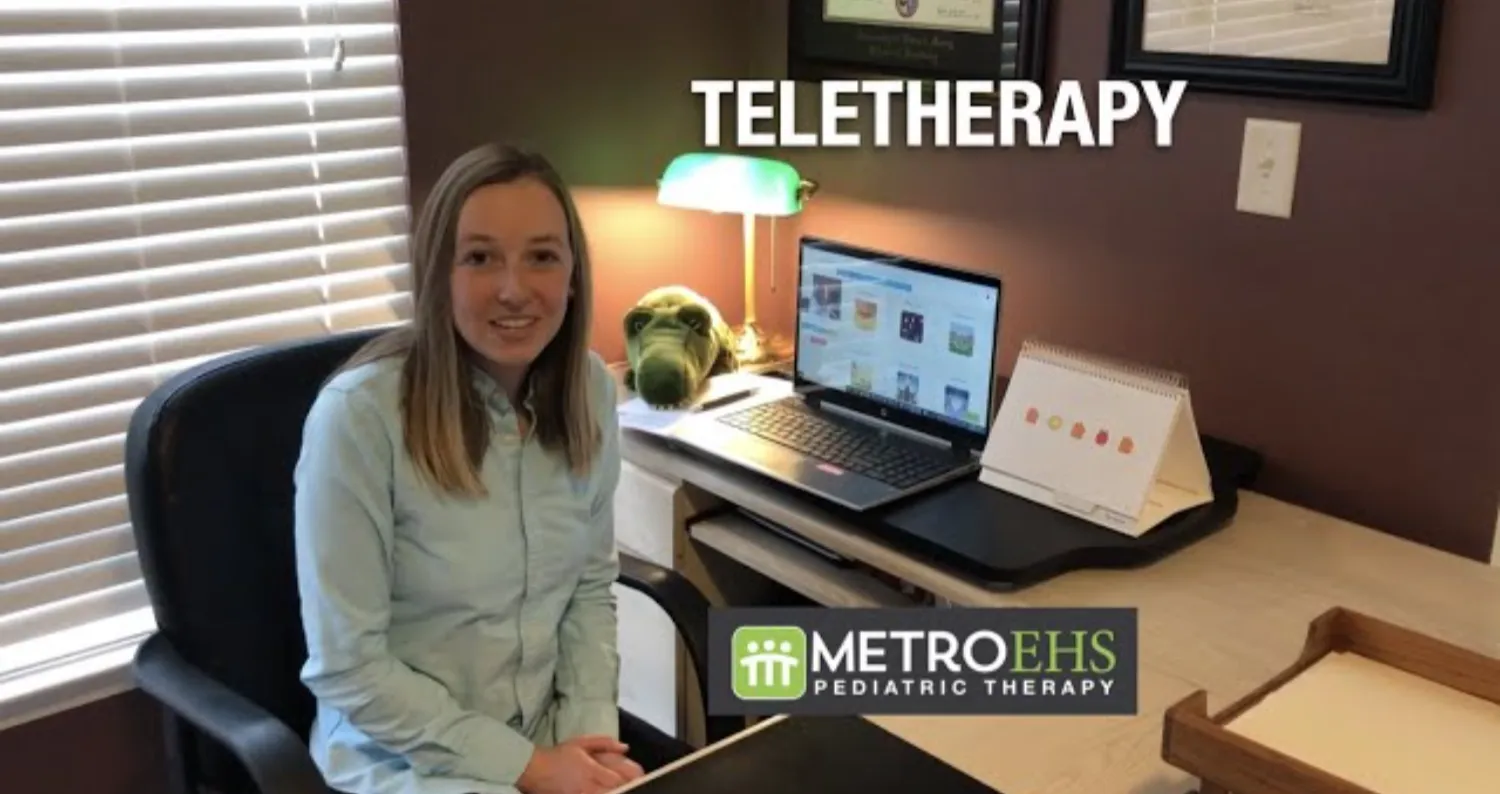
Speech, Occupational and ABA Therapy provided in the comfort of your home via Teletherapy!
Teletherapy
MetroEHS Pediatric Therapy proudly offers excellent therapy to our clients, and service them in a way that suits their individual needs. Speech, Occupational and ABA Therapy provided in the comfort of your own home via Teletherapy! Teletherapy, or telepractice, uses a HIPPA compliant and secure video platform, similar to Skype, to connect a client to a specially trained Speech-Language Pathologist or Occupational Therapist for live, individual treatment sessions. This virtual therapy is an excellent option for families all over Michigan who home-school, have busy schedules, or anyone who otherwise have a difficult time coming into the clinic. Contact us if you think Teletherapy would be a good fit for your family!
In addition to individual families, MetroEHS also offers Teletherapy to schools in Michigan to keep IEP’s in compliance. Please visit our Staffing Page to explore more.
Frequently Asked Questions
Will my insurance cover Teletherapy? Most insurances cover Teletherapy, including many BCBS plans. Community Mental Health is not currently covering Teletherapy in the Metro Detroit counties, but this could change in the future.
How old does my child have to be to participate? Any age! If a child is young or active, the therapy session will be geared towards “parent training”. The therapist will provide materials and coach the parents to implement the goals and provide feedback.
Do kids find it boring? No! Our Teletherapy website offers a variety of picture cards and we always incorporate games to keep clients engaged. Kids also love having the attention of their parent and the person on the other side of the screen. It’s all about them!
What do I need to use Teletherapy? You will need internet connection, a computer or tablet with a camera, microphone, and speakers. Headsets are not required.
How will I access the platform? Your therapist will send you an email and you will make a free account. When it is time for your session, you will receive another email with a link to the session, you will put in your password, and you will be connected with your live therapist.
What if I live outside of Michigan? Due to state licensing requirements, we are only able to provide therapy to residents of Michigan.
A Comprehensive Guide for Parents on the Individualized Education Program
Navigating the world of special education can be overwhelming for parents, especially when faced with terms and processes that are unfamiliar but crucial for their child's education. One of the most crucial tools in supporting children with developmental needs is the Individualized Education Plan (IEP). But what exactly is an IEP, and how can it benefit your child? In this post, we’ll break down the IEP process into four essential points to help you understand how it works and how it can support your child’s educational journey. Plus, we’ll highlight how MetroEHS Pediatric Therapy leverages IEPs to providecomprehensive care for families.
1. Understanding the Basics: What Is an IEP?
An IEP, or Individualized Education Program, is a legally binding document developed for children who qualify for special education services in public schools. The child's IEP outlines specific educational goals, the services the child will receive, and the setting in which those services will be delivered. The IEP is designed to meet the unique needs of each student and is developed by a team that includes parents, teachers, school administrators, and specialists. The IEP is mandated by federal law to ensure that children with disabilities receive a free appropriate public education tailored to their unique needs.
An IEP is provided for students who are aged 3-26 in the state of Michigan. This is Part B of IDEA which is the Individuals with Disabilities Education Act, a federal law that provides free public education and special services to children with disabilities. IDEA entitles children to special education services if their disability significantly impacts their ability to access education, and if a specially designed program is needed. Part C of IDEA includes a special education law that governs special education programs and services for children who are birth to 3 years old. Special needs children in this age grouping and their families receive an Individualized Family Service Plan, and parents/caregivers are integral to the assessment and intervention process. This program is often called “Early On”.
At MetroEHS Pediatric Therapy, our specialists understand the critical role an IEP plays in a child’s education. We work closely with families and school districts to ensure that the IEP aligns with the child’s developmental goals, ensuring a smooth transition between therapy and the classroom environment.
2. The Evaluation Process: How Does It Start?
The IEP process begins with an initial evaluation with a MET (Multidisciplinary Evaluation Team). The MET only includes the required personnel for areas being assessed, which always includes a district representative, and a general education teacher in addition to other special education staff (special education teacher, speech and language pathologist, occupational therapist, and teacher consultants). This initial evaluation is a crucial step in the special education process to assess whether a child qualifies for special education services. In order to be eligible for special education programs and services, the child must have needs that pose an adverse academic impact. If your child has been diagnosed with a developmental disorder, such as autism, you should contact your local school district to request a special education evaluation. If parents disagree with the school's evaluation, they have the right to request an Independent Educational Evaluation (IEE) at the school district's expense. This request must be made in writing, as it ensures a documented trail of your efforts to seek assistance.
Once the request is made, the school district has 30 school days to complete the initial evaluation. MetroEHS is proud to assist families during this process, offering insights and support to ensure that every evaluation considers the child’s full range of needs.
3. Developing the IEP: Collaborating for Special Education Services Success
Once the evaluation is complete and eligibility is confirmed, the IEP team—including parents, teachers, and specialists—convenes for an IEP meeting to develop the IEP. During the IEP meeting, various school personnel, including teachers and administrators, collaborate to create a plan that addresses the child's unique needs. The plan outlines specific goals for the school year, the type of classroom environment the child will be placed in, and any additional services they will receive to support the child's educational development. An IEP meeting should be held at least once per year and can occur more often at the discretion of any IEP team member.
At MetroEHS, we emphasize the importance of parental involvement in this process. Parents are the experts on their child’s needs, and their input is crucial in creating an effective IEP. We work with families to ensure their voices are heard, advocating for the services and accommodations that will best support their child’s growth and learning.
4. Ongoing Monitoring and Adjustments: Keeping the IEP Relevant under the Disabilities Education Act
An IEP is not a static document; it is reviewed annually and adjusted as needed to reflect the child's educational progress and any changes in their needs. Every three years, a full reevaluation is conducted to reassess the child’s eligibility and to update the IEP accordingly. However, parents can request an IEP review at any time if they feel the current plan isn’t meeting their child’s needs. The 3 year Reevaluation may be waived, and the child’s eligibility at that time may be continued. This occurs if there is not a concern about the child’s eligibility, (e.g., the child’s condition is chronic).
MetroEHS is dedicated to ongoing collaboration with schools and families. We monitor the effectiveness of the IEP and make recommendations for adjustments when necessary. This commitment ensures that the child receives the most appropriate education and therapeutic services at every stage of their development.
MetroEHS: Your Partner in the IEP Process with a Special Education Teacher
At MetroEHS Pediatric Therapy, we are committed to helping children with developmental needs reach their full potential. We understand that the IEP is a vital tool in achieving this goal, and we work tirelessly to support families through every step of the process. From initial evaluations to IEP development and ongoing adjustments, our team is here to provide the expertise and advocacy needed to ensure your child’s success in school and beyond.
The best start for your child is for a family member or caregiver to contact their local school district to get the IEP ball rolling. They can call their district’s special education department and seek an evaluation/support as needed.
The Procedural Safeguards is a document given to parents/caregivers at every special education meeting. This includes specific guidance for special education for children in Michigan. You can access this information here: State of Michigan's Website
If you’re seeking more information about the IEP process or need support navigating special education services, contact MetroEHS today. Our experienced professionals are ready to assist you in unlocking the full potential of your child’s educational journey.
Are you concerned about your child’s toe walking habits? Toe walking, a common concern for parents, can sometimes be associated with autism spectrum disorder (ASD). Understanding the connection between toe walking and autism is crucial for early intervention and support.
What is Toe Walking?
Toe walking refers to a walking pattern where a person walks on their toes or the balls of their feet without their heels touching the ground. While occasional toe walking in toddlers is common, persistent toe walking beyond the age of two may indicate an underlying issue.
The Connection with Autism
Toe walking is often observed in children with autism spectrum disorder (ASD). While not all toe walkers have autism, studies suggest that many children with ASD exhibit toe walking behavior. Children with Autism often have higher sensory seeking behaviors, and being up on their toes gives them deep sensory input through their feet and in their contracted calf muscles. This connection can lead to more targeted interventions and support from therapists and parents.
How Can a MetroEHS Physical Therapist Help?
Physical therapy plays a crucial role in addressing toe walking in children, especially those with autism. A skilled physical therapist can:
Assess the Underlying Causes: A physical therapist will conduct a comprehensive evaluation to identify any underlying factors contributing to toe walking, such as muscle tightness, sensory issues, muscle weakness, or lack of range of motion.
Develop Individualized Treatment Plans: Based on the assessment, the physical therapist will create a personalized treatment plan tailored to your child’s needs. This plan may include stretching exercises, strengthening activities, balance training, or different sensory inputs.
Educate and Empower Families: MetroEHS Physical Therapists work closely with families to educate them about toe walking and provide strategies for home exercises and activities to support their child’s progress.
Toe-walking can impact your child long-term if left untreated:
Toe walking will impact your child’s overall body positioning, posture, and muscles. With toe walking, because of these impacts, it will also change the load of the body’s joints and likely cause chronic pain as the individual ages. It is common for toe walkers to lose range of motion in their ankles, preventing them from being able to reach their heels to the ground and causing their Achilles tendon to shorten. In more severe cases, if the Achilles tendon shortens too much, the only way to regain that length is with a surgical lengthening.
Take the First Step Towards Support
If you’re concerned about your child’s toe walking or suspect they may have autism, early intervention is key. Schedule an evaluation with a qualified physical therapist who specializes in pediatric care. Together, we can help your child take confident steps towards improved mobility and independence.