








Unlocking Your Child’s Potential: How Early Intervention and Neuroplasticity Shape Brain Development – WDIV Segment #2

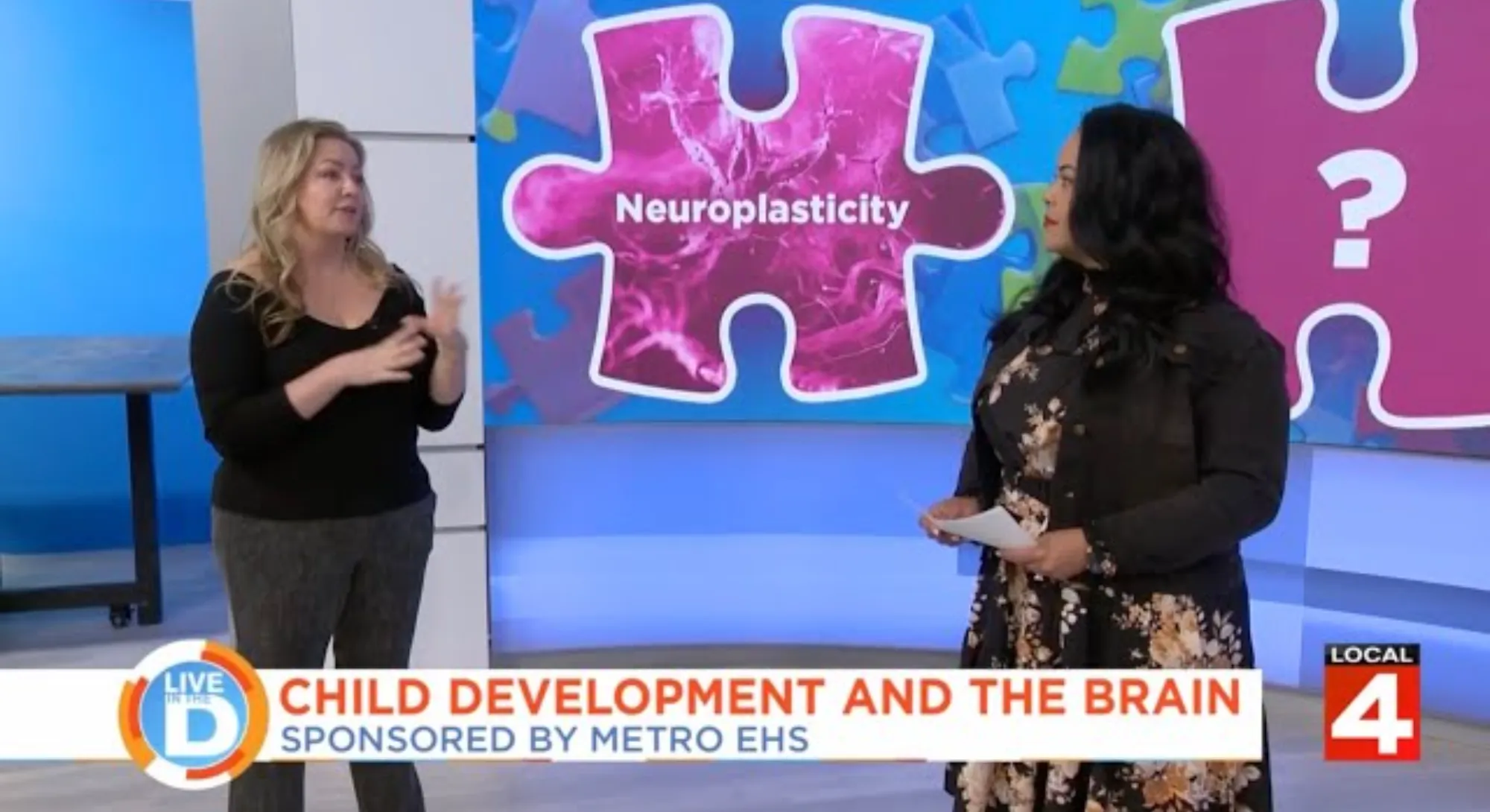
MetroEHS therapist being interviewed on television about child development

Every child’s brain is equipped with a remarkable ability known as neuroplasticity—the capacity to adapt, reorganize, and form new neural connections in response to experiences and learning. This adaptability is especially potent during early childhood, making timely intervention crucial for children facing developmental challenges, including autism spectrum disorder (ASD).

In a recent discussion, Tia Moss and Kathleen Lewandowski, Regional Discipline Directors at MetroEHS Pediatric Therapy, emphasized the significance of early intervention and the role of neuroplasticity in shaping a child’s developmental trajectory.

Understanding Neuroplasticity in Early Childhood

Neuroplasticity refers to the brain’s ability to change and adapt throughout life. In early childhood, this adaptability is at its peak, with the brain forming over a million new neural connections every second. These connections lay the foundation for essential skills such as language, social interaction, and problem-solving.

The Importance of Early Intervention

Research consistently shows that early diagnosis and intervention for autism can lead to significant improvements in communication, social skills, and overall development. Intervening during the brain’s most malleable stages allows therapists to harness neuroplasticity effectively, promoting positive behavioral and cognitive changes.

Creating an Environment That Fosters Brain Development

To optimize neuroplasticity, it’s essential to provide children with stimulating environments that encourage exploration and learning. Engaging in play, encouraging movement, and stimulating the senses can all contribute to healthy brain development . Such environments support the formation of new neural pathways, reinforcing learning and skill acquisition.

Supporting Families Through Early Intervention

MetroEHS Pediatric Therapy is dedicated to helping families navigate the journey of early intervention. Their team of professionals offers comprehensive services, including ABA therapy, speech and language therapy, occupational therapy, and more, tailored to meet each child’s unique needs.

For more information on how MetroEHS can support your child’s development, visit metroehs.com or call 248-970-8402

Continue Reading

October 21, 2024

What Is Pediatric DMI Therapy and How Does It Support Motor Development?

Pediatric Dynamic Movement Intervention (DMI) therapy is a specialized treatment aimed at improving the gross motor skills, movement control, and overall functional mobility of children with developmental delays.  DMI therapy is designed to promote and enhance the natural ability of children to develop motor skills through structured, targeted interventions.

What is Dynamic Movement Intervention (DMI)?

Dynamic Movement Intervention (DMI) is a cutting-edge therapeutic approach focusing on improving strength, coordination, balance, and motor planning in children with developmental delays. DMI therapy is based on neuroplasticity principles—the brain’s ability to reorganize itself by forming new neural connections. This means that with consistent and well-targeted interventions, children with motor impairments could make significant gains in motor function.

Without disruption or intervention, unhealthy habits (the types of learned patterns of movement a child relies on rather than reflexive movements) become engrained in the child’s behavior repertoire. Neuroplasticity is defined as the ability of the brain to form and reorganize synaptic connections, especially in response to learning, experience, or following an injury. Neuroplasticity is at its height in young children. Without novelty and challenge, well-established habits always dominate. Due to this natural neuroplasticity, it is often better to start children young with any kind of therapeutic care.

The primary theory behind DMI is the use of the body's automatic postural responses.  In DMI therapy, we place the child in a position where gravity provides information requiring a response. We then wait for the child to complete the movement, with gradually less assistance over time.

Who Needs DMI Therapy?

DMI is beneficial for children with and without a specific diagnosis. However, those with specific diagnoses include, but are not limited to:

Cerebral Palsy: Children with cerebral palsy often struggle with motor control, muscle tone, and balance, all of which can be targeted by DMI therapy.

Developmental Delays: Children experiencing delays in reaching motor milestones (such as crawling, walking, or standing) may benefit from DMI’s movement-based approach.

Genetic Disorders: Certain genetic conditions that affect motor development, such as Down syndrome or muscular dystrophy, may be candidates for DMI.

Spina Bifida: This congenital condition affecting the spinal cord can cause motor deficits, and DMI can be useful in strengthening movement capabilities.

Brain Injuries: Traumatic or acquired brain injuries in children that result in impaired motor functions can be addressed through DMI therapy.

Other symptoms of a child who could benefit from DMI include:

  • Difficulty with postural control (e.g., sitting, standing, or balancing)
  • Delayed or atypical motor development (not crawling or walking at the expected age)
  • Limited muscle tone or spasticity
  • Challenges in coordination and movement precision
  • Fatigue or weakness during movement activities

This is not an exhaustive list. There are many other conditions that may benefit from Dynamic Movement Intervention. DMI therapy is typically recommended for children who have developmental motor disorders or neuromuscular challenges that affect their ability to move, balance, or coordinate their body movements.

Identifying the Need for DMI

The need for DMI therapy is typically identified by healthcare professionals such as neurologists, rehabilitation specialists or physical therapists, often after a comprehensive evaluation of the child’s motor function. Parents may also notice signs that their child is not reaching developmental motor milestones and seek medical advice.

Any physical therapy diagnosis can result in the use of DMI, and this is often very useful for children under 1 to help with head control, children under 2 to help with standing, walking, and posture control, and children 5 and under with more involved diagnoses. Early identification and intervention are extremely beneficial in maximizing the effectiveness of DMI therapy and improving the child’s functional outcomes.

July 18, 2024

Why Do Some Children With Autism Toe Walk—and What Can Parents Do?

Are you concerned about your child’s toe walking habits? Toe walking, a common concern for parents, can sometimes be associated with autism spectrum disorder (ASD). Understanding the connection between toe walking and autism is crucial for early intervention and support.

What is Toe Walking?

Toe walking refers to a walking pattern where a person walks on their toes or the balls of their feet without their heels touching the ground. While occasional toe walking in toddlers is common, persistent toe walking beyond the age of two may indicate an underlying issue.

The Connection with Autism

Toe walking is often observed in children with autism spectrum disorder (ASD). While not all toe walkers have autism, studies suggest that many children with ASD exhibit toe walking behavior. Children with Autism often have higher sensory seeking behaviors, and being up on their toes gives them deep sensory input through their feet and in their contracted calf muscles. This connection can lead to more targeted interventions and support from therapists and parents.

How Can a MetroEHS Physical Therapist Help?

Physical therapy plays a crucial role in addressing toe walking in children, especially those with autism. A skilled physical therapist can:

  • Assess the Underlying Causes: A physical therapist will conduct a comprehensive evaluation to identify any underlying factors contributing to toe walking, such as muscle tightness, sensory issues, muscle weakness, or lack of range of motion.
  • Develop Individualized Treatment Plans: Based on the assessment, the physical therapist will create a personalized treatment plan tailored to your child’s needs. This plan may include stretching exercises, strengthening activities, balance training, or different sensory inputs.
  • Educate and Empower Families: MetroEHS Physical Therapists work closely with families to educate them about toe walking and provide strategies for home exercises and activities to support their child’s progress.

Toe-walking can impact your child long-term if left untreated:

Toe walking will impact your child’s overall body positioning, posture, and muscles. With toe walking, because of these impacts, it will also change the load of the body’s joints and likely cause chronic pain as the individual ages. It is common for toe walkers to lose range of motion in their ankles, preventing them from being able to reach their heels to the ground and causing their Achilles tendon to shorten. In more severe cases, if the Achilles tendon shortens too much, the only way to regain that length is with a surgical lengthening.

Take the First Step Towards Support

If you’re concerned about your child’s toe walking or suspect they may have autism, early intervention is key. Schedule an evaluation with a qualified physical therapist who specializes in pediatric care. Together, we can help your child take confident steps towards improved mobility and independence.

April 22, 2024

Empowering Communication for Children with Autism: A Look at Therapy Interventions

In a recent airing of Live in the D, sponsored by MetroEHS Pediatric Therapy, the spotlight was on Autism Awareness Month, shedding light on how children on the autism spectrum can benefit from life-changing therapy. MetroEHS, a pediatric neighborhood therapy company with multiple locations across Metro Detroit, including expanding services, is dedicated to enhancing the quality of life for children with various therapy needs, including autism.

Deanna Coker, a board-certified behavioral analyst, and Kris Krajewski, a speech therapist with MetroEHS, joined the show to discuss how therapy can significantly impact children’s communication skills.

Understanding Communication Challenges in Autism

Deanna explained that autism, as a developmental disability, often presents challenges in social interaction and communication. Unlike typically developing children who learn language by observing and imitating, children with autism struggle to find meaningful ways to communicate, despite their desire to do so.

The Role of Speech Therapy

Kris emphasized that speech therapy is essential for children with autism, given that communication difficulties are a hallmark characteristic of the condition. Speech therapists, like those at MetroEHS, work to identify barriers to communication and introduce alternative methods for expressing thoughts and needs.

Speech Therapy Interventions

Kris introduced an innovative tool called the AAC device (Alternative and Augmentative Communication), essentially an iPad loaded with specialized software designed exclusively for communication purposes. This device enables children to select words and icons to express themselves, giving them a voice and autonomy in their interactions.

Empowering Communication Through Tools

Deanna highlighted another communication aid, the PECS book (Picture Exchange Communication System), a low-tech solution that uses pictures to help children convey wants, needs, and preferences. By selecting and exchanging pictures, children can effectively communicate with caregivers, enhancing their independence and self-expression.

The conversation between Deanna, Kris, and the show’s host highlighted the importance of therapy in empowering children with autism to communicate effectively. Through innovative interventions and specialized tools, such as AAC devices and PECS books, children can overcome communication barriers and actively engage with the world around them.

For families seeking therapy services for their children, MetroEHS offers comprehensive support, including ABA, speech, occupational, feeding, and physical therapies. With multiple locations across Metro Detroit and additional centers on the way, MetroEHS aims to make therapy accessible and impactful for families in need.