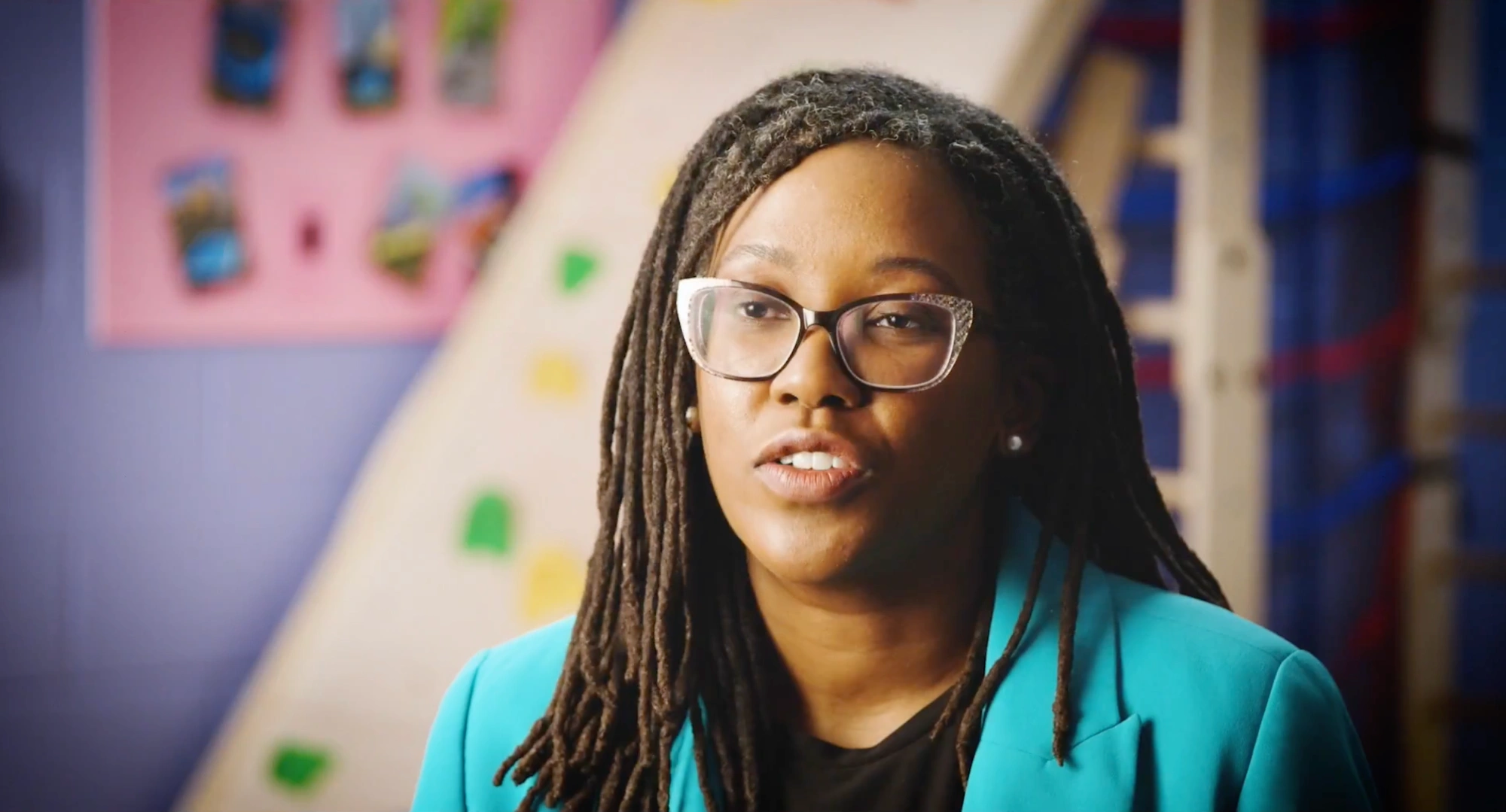









How Does Early Intervention Therapy Help Children?

Continue Reading

September 26, 2025

Why Does Play-Based Therapy Work? 3 Reasons It Helps Children Thrive

How Play Unlocks Potential

Play isn’t just fun; it’s how kids learn best. It gives them the freedom to explore their abilities while feeling safe and supported. Imagine a young hero practicing teamwork by pretending to save the world with their peers or strengthening fine motor skills while building a block tower taller than a skyscraper. These playful missions help kids grow in ways that traditional methods simply can’t.

The BIG THREE Additions to Heroes’ tool belts.

  1. Improved Social Powers: Group games teach kids how to share, collaborate, and communicate—turning them into master team players.
  2. Problem-Solving Super Skills: Puzzles and pretend play help young heroes learn to think critically and creatively.
  3. Emotional Resilience: Role-playing scenarios give kids the tools to navigate their feelings and build confidence.

The Power of Play

In the world of superheroes, a child’s business is play. Through play-based therapy, skilled therapists use games, toys, and imaginative scenarios to help kids develop essential skills. Whether it’s building social connections, improving motor abilities, or boosting communication skills, every playful moment is designed with purpose—turning fun into progress.

For children, play is more than just a pastime; it’s the key to unlocking their unique powers. At MetroEHS, play-based therapy ensures every child has the chance to soar, grow, and shine—because every superhero deserves to feel unstoppable.

April 22, 2024

Empowering Communication for Children with Autism: A Look at Therapy Interventions

In a recent airing of Live in the D, sponsored by MetroEHS Pediatric Therapy, the spotlight was on Autism Awareness Month, shedding light on how children on the autism spectrum can benefit from life-changing therapy. MetroEHS, a pediatric neighborhood therapy company with multiple locations across Metro Detroit, including expanding services, is dedicated to enhancing the quality of life for children with various therapy needs, including autism.

Deanna Coker, a board-certified behavioral analyst, and Kris Krajewski, a speech therapist with MetroEHS, joined the show to discuss how therapy can significantly impact children’s communication skills.

Understanding Communication Challenges in Autism

Deanna explained that autism, as a developmental disability, often presents challenges in social interaction and communication. Unlike typically developing children who learn language by observing and imitating, children with autism struggle to find meaningful ways to communicate, despite their desire to do so.

The Role of Speech Therapy

Kris emphasized that speech therapy is essential for children with autism, given that communication difficulties are a hallmark characteristic of the condition. Speech therapists, like those at MetroEHS, work to identify barriers to communication and introduce alternative methods for expressing thoughts and needs.

Speech Therapy Interventions

Kris introduced an innovative tool called the AAC device (Alternative and Augmentative Communication), essentially an iPad loaded with specialized software designed exclusively for communication purposes. This device enables children to select words and icons to express themselves, giving them a voice and autonomy in their interactions.

Empowering Communication Through Tools

Deanna highlighted another communication aid, the PECS book (Picture Exchange Communication System), a low-tech solution that uses pictures to help children convey wants, needs, and preferences. By selecting and exchanging pictures, children can effectively communicate with caregivers, enhancing their independence and self-expression.

The conversation between Deanna, Kris, and the show’s host highlighted the importance of therapy in empowering children with autism to communicate effectively. Through innovative interventions and specialized tools, such as AAC devices and PECS books, children can overcome communication barriers and actively engage with the world around them.

For families seeking therapy services for their children, MetroEHS offers comprehensive support, including ABA, speech, occupational, feeding, and physical therapies. With multiple locations across Metro Detroit and additional centers on the way, MetroEHS aims to make therapy accessible and impactful for families in need.

April 25, 2024

How Does Physical Therapy Help Children Who Toe Walk?

April is Autism Awareness Month, a time dedicated to shedding light on autism spectrum disorder (ASD) and promoting understanding and acceptance. Throughout this month, we've been exploring how MetroEHS, a pediatric neighborhood therapy company with locations across Metro Detroit, is making a difference in the lives of children on the autism spectrum through various forms of therapy.

Today, we delve into a common phenomenon observed in children—toe walking—and its potential significance, particularly in relation to autism. Toe walking, the act of walking on the toes, balls of the feet, or tippy toes, is a behavior that may raise concerns, especially when observed in children around the ages of two to three.

According to experts at MetroEHS, including Kelly Johns, the Director of Physical Therapy, toe walking can be an indicator of potential developmental issues, including autism spectrum disorder. Children on the spectrum often exhibit sensory-seeking behaviors, and toe walking can be one manifestation of this sensory-seeking behavior, providing them with additional sensory input.

While occasional toe walking in toddlers who are still learning to walk may not be alarming, persistent toe walking, especially beyond the age of two or three, warrants attention. If a child is consistently toe walking more than 50% of the time, it is advisable for parents to seek evaluation and possible intervention, such as physical or occupational therapy.

Toe walking can have various implications for a child's physical development and overall well-being. It can lead to issues such as pelvic misalignment, muscular imbalances, and even the shortening of the Achilles tendon over time. Addressing toe walking early through therapy and interventions can mitigate potential future problems and promote proper musculoskeletal development.

MetroEHS offers a range of therapies, including physical and occupational therapy, to address toe walking and other developmental concerns in children. Additionally, parents can play an active role in helping their children at home by incorporating simple exercises and activities aimed at stretching the calf muscles and promoting proper walking mechanics.

Simple interventions like stretching exercises and using swim flippers can aid in correcting toe walking tendencies and promoting a more natural gait pattern in children. By combining professional therapy with at-home practices, parents can support their children's physical development and overall well-being.

MetroEHS has 14 locations across Metro Detroit, with three more on the way, ensuring accessibility for families seeking therapy services for various developmental needs, including autism spectrum disorder. Find the nearest MetroEHS location to you on the Locations Page!

As we wrap up Autism Awareness Month, let's continue to spread awareness, understanding, and support for individuals on the autism spectrum and their families, empowering them to thrive and lead fulfilling lives.