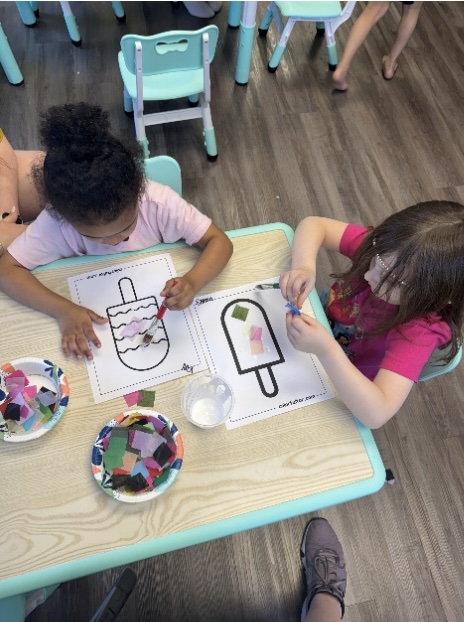
Play is crucial for children’s physical, social, emotional, and cognitive development. Through play, children learn important life skills such as problem-solving, creativity, social interaction, and self-regulation. Play allows children to explore their environment, experiment with different ideas, and express themselves in ways that are natural and meaningful to them.
Play can take many forms, including physical play, imaginative play, sensory play, and social play. Children learn best through play that is meaningful and engaging to them, so it is important for parents, caregivers, and educators to provide a variety of play opportunities that are tailored to a child’s individual needs and interests.
What is play?
Play includes fun activities enjoyed independently or with others. Play has no rules, and people make up their own games. Play can be inside or outside. It uses things around us, like balls and sticks. Playing helps us learn how to get along with others and think about new things.
Types of play:
Social Play is when kids play together. For example, playing soccer.
Symbolic Play is when you pretend. You can do this from 18 months to 5 years old.
Practice Play is doing the same thing repeatedly to learn how to do it better. For example, you might practice throwing a ball.
Sensorimotor Play is used by infants. This means that they use their senses and move around. An example of this is shaking a rattle.
Constructive Play is when kids make something. For example, building with legos or painting with their fingers.
Play helps a child…
Build Imagination and Creativity
Foster Cognitive Growth
Improve Literacy
Improve Emotional Well-Being
Encourage Greater Independence
Play is not just a fun activity for children but a vital part of their development. Therefore, it is essential to support and encourage play in children and create a safe and stimulating environment for them to explore and learn.
We love working in Southeastern Michigan as we get to work with hard-working families and amazing businesses like Emagine who intentionally create special experiences for members of the community that can get overlooked.
Join Emagine For A Sensory Friendly Movie!
Sensory Friendly Screenings provide modifications to the theatre atmosphere without modifying the film for those who experience sensory issues.
Sensory Friendly Film Screenings
Select Emagine locations will host a unique, sensory friendly screening twice a month, with specific modifications made to ensure an enjoyable experience for individuals with sensory needs and their supporters. Their sensory friendly programing makes going to the movies a more enjoyable experience for families, children, and teens with sensory needs. All sensory friendly films will be shown in 2D. *Note there are no modifications made to the film.
What does Sensory Friendly mean?
First, it means sensory friendly experience (lights up a bit, sound down a bit). Second, if your child needs to get up, move, dance, sing…No problem. Third, guests are welcome to bring a safe snack for any food allergies or food avoidance/restrictions.
First Showing of the Day. On-Sale dates vary. Check the website or Emagine app for theatres and showtimes.
The Little Mermaid Saturday, June 3, 2023
Elemental Saturday, June 17, 2023
Where
Tickets are available at the box office, online at Emagine-Entertainment.com or through the Emagine App. To purchase tickets and for a full list of showtimes visit Emagine-Entertainment.com On-Sale dates vary. All films, locations, dates, and times are subject to change.
Film Synopsis
The Little Mermaid (Rated PG) The Little Mermaid is the beloved story of Ariel, a beautiful and spirited young mermaid with a thirst for adventure. The youngest of King Triton’s daughters and the most defiant, Ariel longs to find out more about the world beyond the sea and, while visiting the surface, falls for the dashing Prince Eric. While mermaids are forbidden to interact with humans, Ariel must follow her heart. She makes a deal with the evil sea witch, Ursula, which gives her a chance to experience life on land but ultimately places her life – and her father’s crown – in jeopardy.
Elemental (Rated Pg) Follows Ember and Wade, in a city where fire-, water-, land- and air-residents live together.
In addition to Sensory Friendly Movies
Join Emagine Entertainment For A Variety Of Specialty Screenings
Providing Open Caption, Sensory Friendly, Dementia Friendly, Breakfast & a Movie, and Lunch & a Movie Screenings
Join Emagine Entertainment this June as they host a variety of specialty screenings for their guests. Each month guests can watch some of the newest film releases with an enhanced experience. Open Caption screenings provide subtitles for those with hearing impairments. Sensory Friendly Screenings provide modifications to the theatre atmosphere without modifying the film for those who experience sensory issues. Dementia Friendly screenings provide exclusively selected classic movies and musicals and encourage audience participation while providing guests with special door-to-door service. The Breakfast and a Movie and Lunch and a Movie allow guests to enjoy a full meal and concessions while they enjoy their film.
Open Caption Film Screenings
Select Emagine locations will host Open Caption showings of some of the newest film releases on Sunday and Wednesday afternoons all month long. Guests who experience hearing impairments will be able to enjoy the movie-going experience with audio subtitles displayed on the big screen for all to see. All open caption movies are shown in 2D. *Note: there are no modifications made to the film.
Locations: (Michigan) Novi, Rochester Hills, Royal Oak, Hartland, Woodhaven, Quality 10 Powered by Emagine, (Minnesota) Eagan, Lakeville, Monticello, Rogers, White Bear, Willow Creek, (Wisconsin) Geneva Lakes, (Illinois) Frankfort, (Indiana) Noblesville, Portage
Films: On-Sale dates vary. Check the website or Emagine app for theatres and showtimes.
Spider-Man: Across The Spider-Verse Sunday, June 4, 2023 Wednesday, June 7, 2023
Transformers: Rise Of The Beasts Sunday, June 11, 2023 Wednesday, June 14, 2023
Elemental Sunday, June 18, 2023 Wednesday, June 21, 2023
The Flash Sunday, June 25, 2023 Wednesday, June 28, 2023
Dementia Friendly Screening
Dementia Friendly Screenings include exclusively selected classic movies and musicals presented in a unique setting with softer sound and ambient lighting. Guests are able to interact during the presentation and encouraged to talk back, clap, tap their feet, sway, sing along and get up and dance. Emagine works with Dementia Friendly Saline to provide guests with a special door-to-door experience guided by a team of dementia friendly “Purple Angels.” These staff and volunteers act as guides for the guests beginning the moment they arrive until the moment they leave. More information can be found on Emagine’s website. Tickets can be purchaseddirectly through Dementia Friendly Saline.
Location: Emagine Saline
Films: Showings are the second Wednesday of each month.
Meet Me In St. Louis Wednesday, June 14, 2023 Pre-Show Mingling: 1:15-2:00PM Film Begins: 2:00PM
Breakfast And A Movie Screening
Each month, Emagine hosts a Breakfast and a Movie showing, at select theatres, of one of the newest family-film releases. Tickets are $24 each and include a full breakfast buffet, a 44oz. popcorn, and a 21oz fountain drink as well as a ticket to the showing.
Location: Emagine Royal Oak, Emagine Palladium, Emagine Canton
Film: On-Sale dates vary. Check the website or Emagine app for more information.
The Little Mermaid* Sunday, May 28, 2023
Spider-Man: Across The Spider-Verse Sunday, June 4, 2023
Spider-Man: Across The Spider-Verse Sunday, June 4, 2023
Senior Lunch And A Movie Screening
Each month, Emagine Royal Oak hosts a special Senior Citizen Lunch and a Movie. Tickets are $24 each and include a full lunch buffet, a 44oz. popcorn and a 21oz. fountain drink as well as a ticket to the showing. This offer is valid for guests aged 55 and up.
Location: Emagine Royal Oak
Film: On-Sale dates vary. Check the website or Emagine app for more information.
About My Father Tuesday, June 20, 2023
Where: Tickets are available at the box office, online at Emagine-Entertainment.com or through the Emagine App.
Film Synopsis
Spider-Man: Across The Spider-Verse (Rated P) Miles Morales returns for the next chapter of the Oscar®-winning Spider-Verse saga, an epic adventure that will transport Brooklyn’s full-time, friendly neighbourhood Spider-Man across the Multiverse to join forces with Gwen Stacy and a new team of Spider-People to face off with a villain more powerful than anything they have ever encountered.
Transformers: Rise Of The Beasts (Rated P-13) Returning to the action and spectacle that have captured moviegoers around the world, Transformers: Rise of the Beasts will take audiences on a ‘90s globetrotting adventure with the Autobots and introduce a whole new breed of Transformer – the Maximals – to the existing battle on earth between Autobots and Decepticons. Directed by Steven Caple Jr. and starring Anthony Ramos and Dominique Fishback, the film arrives in theatres June 9, 2023.
The Flash (Rated P-13) Worlds collide in “The Flash” when Barry uses his superpowers to travel back in time in order to change the events of the past. But when his attempt to save his family inadvertently alters the future, Barry becomes trapped in a reality in which General Zod has returned, threatening annihilation, and there are no Super Heroes to turn to. That is unless Barry can coax a very different Batman out of retirement and rescue an imprisoned Kryptonian… albeit not the one he’s looking for. Ultimately, to save the world that he is in and return to the future that he knows, Barry’s only hope is to race for his life. But will making the ultimate sacrifice be enough to reset the universe?
He Little Mermaid (Rated PG) The Little Mermaid is the beloved story of Ariel, a beautiful and spirited young mermaid with a thirst for adventure. The youngest of King Triton’s daughters and the most defiant, Ariel longs to find out more about the world beyond the sea and, while visiting the surface, falls for the dashing Prince Eric. While mermaids are forbidden to interact with humans, Ariel must follow her heart. She makes a deal with the evil sea witch, Ursula, which gives her a chance to experience life on land but ultimately places her life – and her father’s crown – in jeopardy.
Elemental (Rated PG) Follows Ember and Wade, in a city where fire-, water-, land- and air-residents live together.
About My Father (Rated PG-13) The hottest comic in America, Sebastian Maniscalco joins forces with legendary Italian-American and two-time Oscar® winner, Robert De Niro (Best Actor, Raging Bull, 1980), in the new comedy ABOUT MY FATHER. The film centers around Sebastian (Maniscalco) who is encouraged by his fiancée (Leslie Bibb) to bring his immigrant, hairdresser father, Salvo (De Niro), to a weekend get-together with her super-rich and exceedingly eccentric family (Kim Cattrall, Anders Holm, Brett Dier, David Rasche). The weekend develops into what can only be described as a culture clash, leaving Sebastian and Salvo to discover that the great thing about family is everything about family.
Meet Me In St. Louis St. Louis 1903. The well-off Smith family has four beautiful daughters, including Esther and little Tootie. 17-year-old Esther has fallen in love with the boy next door who has just moved in, John. He however barely notices her at first. The family is shocked when Mr. Smith reveals that he has been transferred to a nice position in New York, which means that the family has to leave St. Louis and the St. Louis Fair.
Gratitude is a valuable life skill that can enrich the lives of all individuals, including children on the autism spectrum. Teaching children with autism about gratitude can help them develop a more positive outlook, build stronger relationships, and improve their overall well-being. However, because children on the autism spectrum often have unique learning needs, it’s important to use tailored strategies to teach them about gratitude. Here are a few ideas.
1. Visual Supports
Visual supports are powerful tools for children with autism, as they process information in a more concrete manner. Create visual schedules or charts that incorporate gratitude activities into their daily routines. For example, you can design a “gratitude journal” with pictures or symbols representing things they are thankful for. During the month of November, you could draw a tree on a large piece of paper and add a leaf of gratitude every day with a drawn picture of what you are thankful or writing down simply one word. This can be a simple way to encourage them to reflect on positive aspects of their lives. As they add items to their gratitude journal, reinforce the positive feelings associated with each entry.
2. Social Stories
Social stories are narratives that describe social situations and appropriate behavior. You can create social stories that revolve around gratitude. Tailor the stories to your child’s interests and communication style. For instance, you might develop a story about a character who learns to express gratitude when someone helps them. Reading and discussing these stories with your child can help them understand the concept of gratitude and its importance.
3. Visual Modeling
Children on the autism spectrum often benefit from visual modeling, where they observe someone demonstrating a behavior or skill. Create visual examples of gratitude by using pictures, drawings, or videos. Show them how to say “thank you” or how to express gratitude through simple gestures. Repeated exposure to these visuals can help them imitate and internalize these actions. Make sure you are expressing your appreciation with the people around you while your child is watching.
4. Use Concrete Reinforcers
For many children with autism, immediate reinforcement is key to learning new behaviors. Use concrete reinforcers to motivate your child to practice gratitude. This could be as simple as providing a favorite treat or activity when they express gratitude, whether by saying thank you or engaging in a small act of kindness. The more they associate gratitude with positive outcomes, the more likely they are to embrace it.
5. Practice Mindfulness and Reflection
Gratitude often goes hand in hand with mindfulness and reflection. Teach your child techniques for being present in the moment and focusing on positive aspects of their lives. Simple activities like mindful breathing, meditation, or keeping a gratitude jar can help them develop an appreciation for what they have. Encourage them to reflect at bedtime about their day and share what they are thankful for, fostering a sense of gratitude as part of their daily routine.
Teaching children about gratitude is not only possible but also incredibly beneficial. Gratitude helps improve their emotional well-being, enhance their social interactions, and promote a more positive outlook on life. The key is to tailor your approach to their specific learning needs, using visual supports, social stories, visual modeling, concrete reinforcers, and mindfulness and reflection techniques. Remember that patience and consistency are crucial in helping children with autism develop this valuable life skill. By embracing these strategies, you can help them grow into more thankful, empathetic, and content individuals.
Parents often ask one important question before preschool or kindergarten begins:
"Is my child ready?"
Many people think school readiness simply means knowing letters, numbers, or colors. While those skills are certainly helpful, they are only one small piece of the puzzle.
The truth is that successful classroom participation depends on many developmental skills working together.
Can your child:
✔ Follow simple directions?
✔ Transition between activities?
✔ Sit with a group?
✔ Ask for help?
✔ Play alongside peers?
✔ Manage big emotions?
✔ Hold crayons and scissors?
✔ Listen during story time?
✔ Walk safely in a classroom?
These everyday abilities often have a much bigger impact on classroom success than academic knowledge alone.
Why School Readiness Matters
The first few years of school help shape confidence, friendships, communication, and lifelong learning habits.
When children enter school with strong foundational skills, they're often able to:
Participate confidently
Build friendships
Follow classroom routines
Learn alongside peers
Become more independent
For children with autism, these foundational skills often benefit from early, coordinated support.
Introducing Superhero Academy
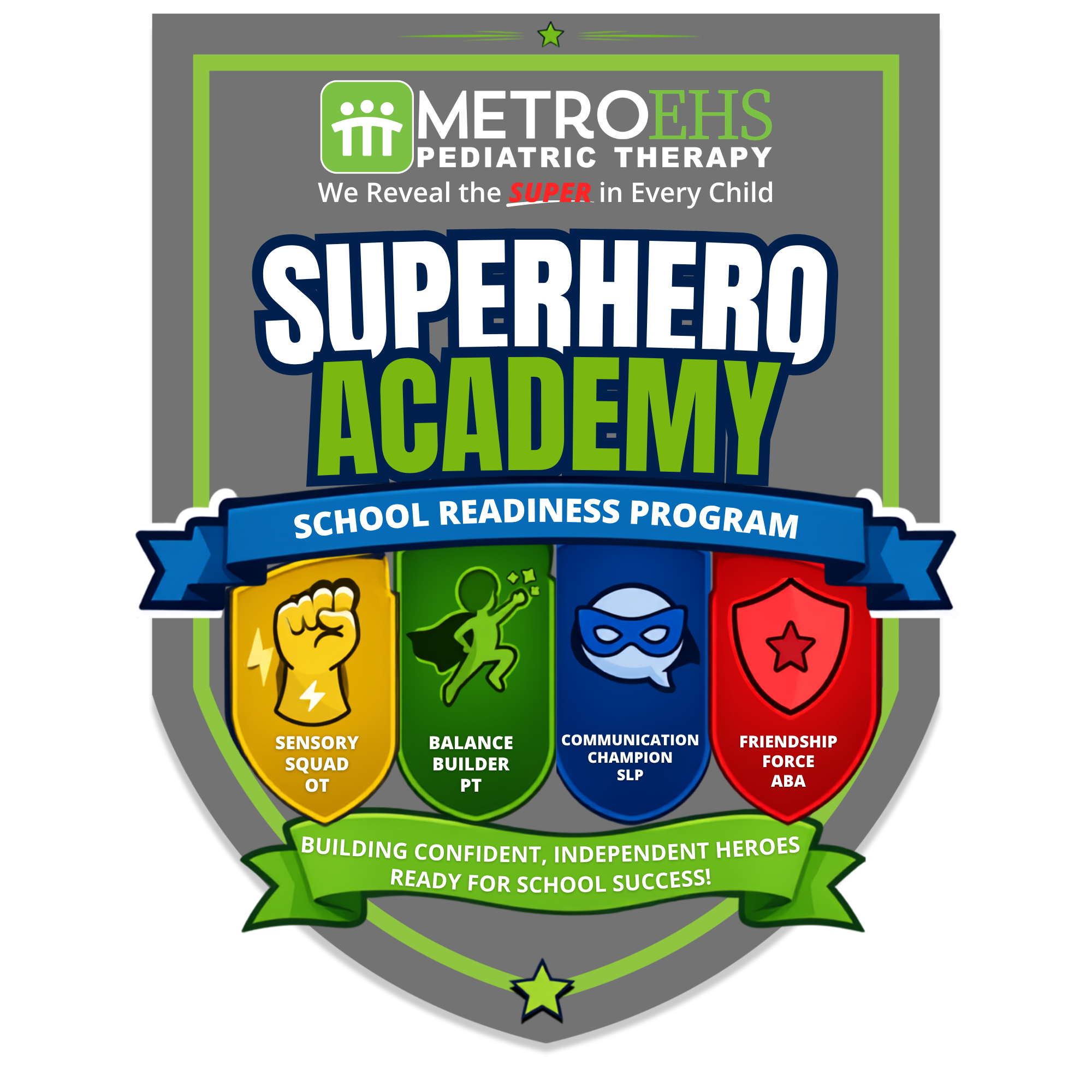
MetroEHS created Superhero Academy to help children ages 2-6 develop the skills needed for preschool and kindergarten through integrated therapy.
Unlike traditional therapy where each discipline works independently, Superhero Academy combines:
Every milestone helps prepare them for the classroom.
Celebrating Every Hero
Children earn Hero Badges as they master new skills throughout the year.
At graduation, every child receives a Superhero Cape or Hero Champion Medal and a diploma celebrating everything they've accomplished.
Because every child deserves to feel like a superhero.
Ready to Begin?
If your child is between the ages of 2 and 6 and has been diagnosed with autism and you’ve been interested in an ABA program, Superhero Academy may be the perfect next step.