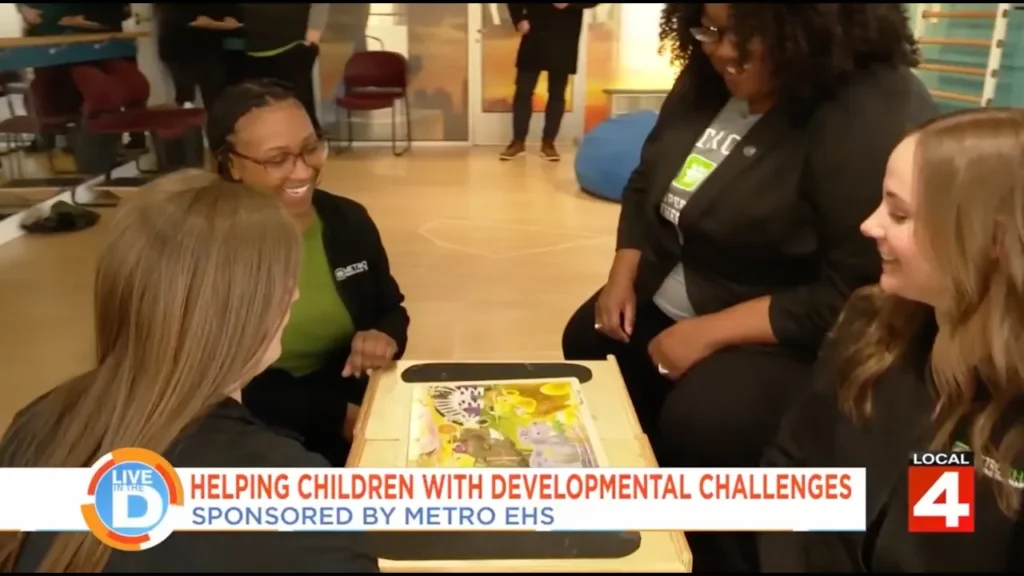
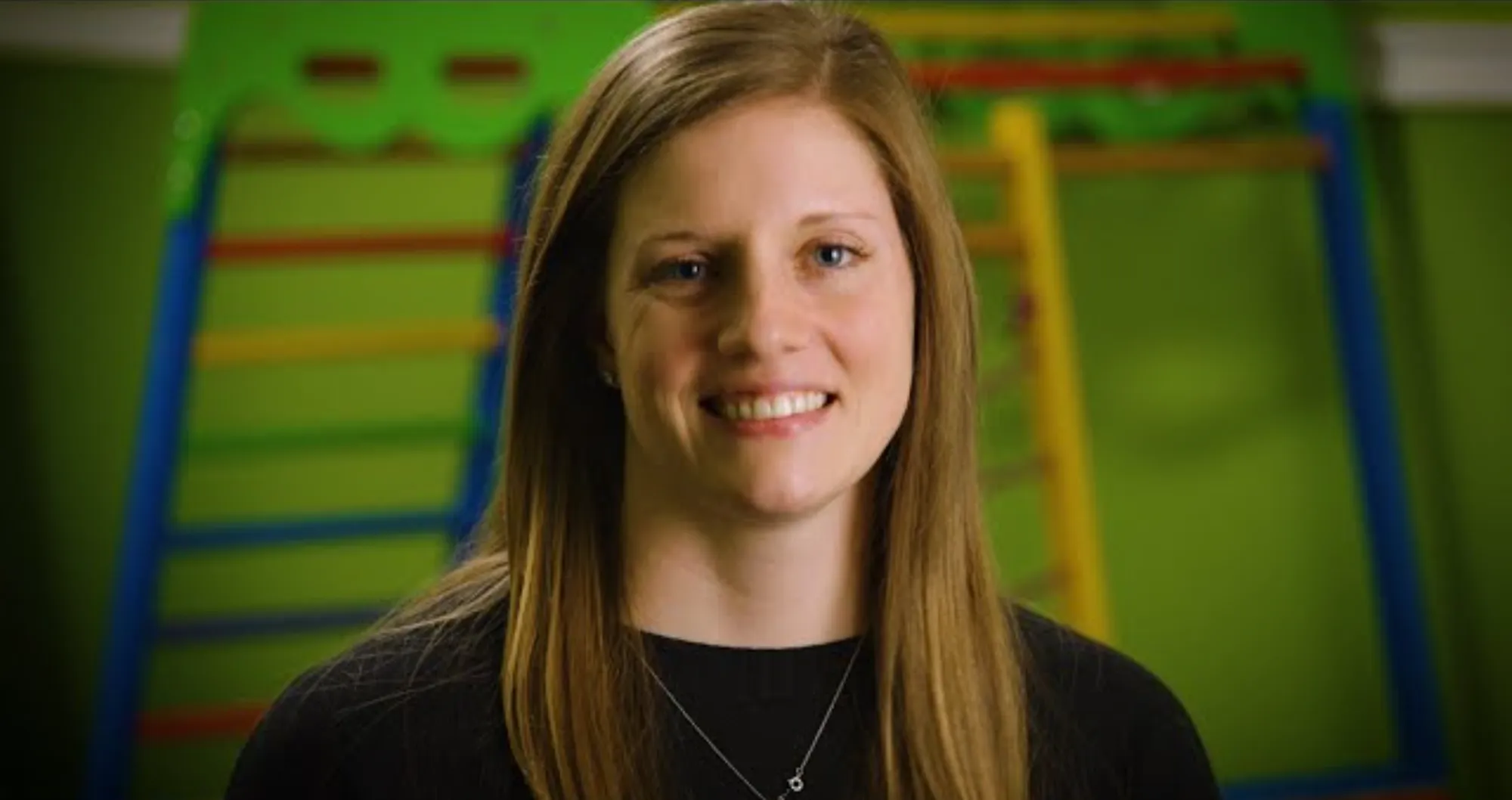
Dr. Vira Francis, a speech-language pathologist at the West Bloomfield location, emphasizes the importance of this collaboration:
“When we’re using a collaborative and holistic approach with children, it’s like each team member is a puzzle piece. We really make that impact when we all come together to make the big picture, and it really helps to prioritize the child’s needs.”
Services Offered
MetroEHS provides a wide array of pediatric therapy services, including:
Speech Therapy: Addressing communication challenges, articulation, language development, and literacy skills.
Occupational Therapy: Focusing on daily living skills such as bathing, dressing, grooming, toileting, feeding, play, social participation, and school readiness.
Physical Therapy: Enhancing gross motor skills, balance, coordination, and strength to support functional movement and participation in activities.
ABA Therapy: Utilizing evidence-based strategies to improve socially significant behaviors in children with autism and other developmental disorders.
Each therapy session is designed to be engaging and child-led, incorporating play-based methods to make therapy enjoyable and effective.
Creating a Stimulating Environment
The West Bloomfield center is intentionally designed to be colorful and kid-friendly, providing a stimulating environment that encourages active participation. Therapists tailor activities to each child’s interests and sensory needs, ensuring that therapy sessions are both fun and beneficial.
Empowering Families
MetroEHS is committed to not only supporting children but also empowering parents and caregivers. By providing education and resources, they enable families to reinforce therapy goals at home and advocate effectively for their children’s needs.
What is the Intensive Feeding Therapy Program Like at MetroEHS?
As we dive into the details of the Intensive Feeding Therapy Program at MetroEHS, hear from the experts at MetroEHS and how they collaborate on the most wholistic approach to Intensive Feeding Therapy.
Jessica Hunt (Occupational Therapist/Feeding Specialist): When it comes to treating children who have complex feeding difficulties and pediatric feeding issues, there's a multitude of things that are typically at the root of the problem. So what's very unique about the program that we have here is that we have involvement from both occupational therapy, speech and language therapy, physical therapy, a dietician, as well as psychology.
Rose Britt (Registered Dietitian): So it's all five disciplines. Spending time together with the family, with the patient, with each other, all talking at one cohesive time, making a plan instead of grabbing pieces from all over the place and putting them together. I think it makes it a lot smoother for us and the families as well.
Kris Krajewski (Director PT, OT, and Speech Services/SLP): Each of our disciplines really does have something to offer to this process, but when we work all together, we have the ability to help our kiddos make more progress more quickly.
Kayla Daniels (Physical Therapist): At Metro, we really take a whole body approach. We don't just look at one aspect of the child. And a lot of people don't think of physical therapy as part of the feeding team, but in order to eat, you have to use all of these posture and muscles, you have to hold yourself up. You have to hold your head up to be able to swallow. So really focusing on all of those aspects of your body is really important to be able to make the progress.
Azari Haygood (Psychologist): As a psychologist on staff for the Intensive Feeding Program, I offer mental health services to the families and to some of the clients. It's very stressful for a lot of these families. It's stressful for the clients that we see. And so, I offer just another support for them, where I'm helping them kind of overcome some of the stressors that they're experiencing around feeding.
Rose Britt (Registered Dietitian): It's not just me telling you what to do. There's so much more going into that, and you get to really listen to the families and hear why it's not working and problem solve together.
Kayla Daniels (Physical Therapist): The impact you can make, not only on the child's life, but on the family's life as a whole is huge.
Azari Haygood (Psychologist): Seeing that improvement in their family's lives feels really great all around.
Jessica Hunt (Occupational Therapist/Feeding Specialist): One in 23 children have a pediatric feeding issue. And so, to truly be able to address all of the aspects of that in one place, that's where we get to make a difference every single day.
Kris Krajewski (Director PT, OT, and Speech Services/SLP): It's like when you have a jigsaw puzzle and you're missing one piece, you can still tell what the picture of the jigsaw puzzle is going to be, but when you have all of the pieces together, integrated into this treatment, the result is just something so much more beautiful.
A Comprehensive Guide for Parents on the Individualized Education Program
Navigating the world of special education can be overwhelming for parents, especially when faced with terms and processes that are unfamiliar but crucial for their child's education. One of the most crucial tools in supporting children with developmental needs is the Individualized Education Plan (IEP). But what exactly is an IEP, and how can it benefit your child? In this post, we’ll break down the IEP process into four essential points to help you understand how it works and how it can support your child’s educational journey. Plus, we’ll highlight how MetroEHS Pediatric Therapy leverages IEPs to providecomprehensive care for families.
1. Understanding the Basics: What Is an IEP?
An IEP, or Individualized Education Program, is a legally binding document developed for children who qualify for special education services in public schools. The child's IEP outlines specific educational goals, the services the child will receive, and the setting in which those services will be delivered. The IEP is designed to meet the unique needs of each student and is developed by a team that includes parents, teachers, school administrators, and specialists. The IEP is mandated by federal law to ensure that children with disabilities receive a free appropriate public education tailored to their unique needs.
An IEP is provided for students who are aged 3-26 in the state of Michigan. This is Part B of IDEA which is the Individuals with Disabilities Education Act, a federal law that provides free public education and special services to children with disabilities. IDEA entitles children to special education services if their disability significantly impacts their ability to access education, and if a specially designed program is needed. Part C of IDEA includes a special education law that governs special education programs and services for children who are birth to 3 years old. Special needs children in this age grouping and their families receive an Individualized Family Service Plan, and parents/caregivers are integral to the assessment and intervention process. This program is often called “Early On”.
At MetroEHS Pediatric Therapy, our specialists understand the critical role an IEP plays in a child’s education. We work closely with families and school districts to ensure that the IEP aligns with the child’s developmental goals, ensuring a smooth transition between therapy and the classroom environment.
2. The Evaluation Process: How Does It Start?
The IEP process begins with an initial evaluation with a MET (Multidisciplinary Evaluation Team). The MET only includes the required personnel for areas being assessed, which always includes a district representative, and a general education teacher in addition to other special education staff (special education teacher, speech and language pathologist, occupational therapist, and teacher consultants). This initial evaluation is a crucial step in the special education process to assess whether a child qualifies for special education services. In order to be eligible for special education programs and services, the child must have needs that pose an adverse academic impact. If your child has been diagnosed with a developmental disorder, such as autism, you should contact your local school district to request a special education evaluation. If parents disagree with the school's evaluation, they have the right to request an Independent Educational Evaluation (IEE) at the school district's expense. This request must be made in writing, as it ensures a documented trail of your efforts to seek assistance.
Once the request is made, the school district has 30 school days to complete the initial evaluation. MetroEHS is proud to assist families during this process, offering insights and support to ensure that every evaluation considers the child’s full range of needs.
3. Developing the IEP: Collaborating for Special Education Services Success
Once the evaluation is complete and eligibility is confirmed, the IEP team—including parents, teachers, and specialists—convenes for an IEP meeting to develop the IEP. During the IEP meeting, various school personnel, including teachers and administrators, collaborate to create a plan that addresses the child's unique needs. The plan outlines specific goals for the school year, the type of classroom environment the child will be placed in, and any additional services they will receive to support the child's educational development. An IEP meeting should be held at least once per year and can occur more often at the discretion of any IEP team member.
At MetroEHS, we emphasize the importance of parental involvement in this process. Parents are the experts on their child’s needs, and their input is crucial in creating an effective IEP. We work with families to ensure their voices are heard, advocating for the services and accommodations that will best support their child’s growth and learning.
4. Ongoing Monitoring and Adjustments: Keeping the IEP Relevant under the Disabilities Education Act
An IEP is not a static document; it is reviewed annually and adjusted as needed to reflect the child's educational progress and any changes in their needs. Every three years, a full reevaluation is conducted to reassess the child’s eligibility and to update the IEP accordingly. However, parents can request an IEP review at any time if they feel the current plan isn’t meeting their child’s needs. The 3 year Reevaluation may be waived, and the child’s eligibility at that time may be continued. This occurs if there is not a concern about the child’s eligibility, (e.g., the child’s condition is chronic).
MetroEHS is dedicated to ongoing collaboration with schools and families. We monitor the effectiveness of the IEP and make recommendations for adjustments when necessary. This commitment ensures that the child receives the most appropriate education and therapeutic services at every stage of their development.
MetroEHS: Your Partner in the IEP Process with a Special Education Teacher
At MetroEHS Pediatric Therapy, we are committed to helping children with developmental needs reach their full potential. We understand that the IEP is a vital tool in achieving this goal, and we work tirelessly to support families through every step of the process. From initial evaluations to IEP development and ongoing adjustments, our team is here to provide the expertise and advocacy needed to ensure your child’s success in school and beyond.
The best start for your child is for a family member or caregiver to contact their local school district to get the IEP ball rolling. They can call their district’s special education department and seek an evaluation/support as needed.
The Procedural Safeguards is a document given to parents/caregivers at every special education meeting. This includes specific guidance for special education for children in Michigan. You can access this information here: State of Michigan's Website
If you’re seeking more information about the IEP process or need support navigating special education services, contact MetroEHS today. Our experienced professionals are ready to assist you in unlocking the full potential of your child’s educational journey.
Unleashing the Superpower of Words: The Importance of Reading and Speech Development with MetroEHS Pediatric Therapy
Greetings, heroes of child development! At MetroEHS Pediatric Therapy, we believe every child has a SUPER spark waiting to shine, and there’s no greater way to ignite that spark than encouraging a love of reading. Like a trusty cape, developing reading skills empowers children to soar through life with confidence, connection, and success. Let’s dive into why nurturing these abilities is a game-changer for your little hero’s growth, all while embracing the compassionate, play-based approach that defines MetroEHS!
The Superpower of Reading: Building a Foundation for Success
Reading is more than just decoding words on a page—it’s a superpower that unlocks imagination, knowledge, and communication. For young children, reading acts as a catalyst for cognitive and emotional growth, especially during the critical early years when the brain’s neuroplasticity is at its peak. According to our MetroEHS mission, early intervention is key to leveraging this neuroplasticity, helping kids develop essential skills like speech, comprehension, and social interaction.
When children engage with stories, they’re not just following along—they’re building vocabulary, learning sentence structure, and developing critical thinking. Picture your little one giggling at a silly rhyme or pointing excitedly at a colorful picture book. These moments are more than just fun; they’re wiring their brains for language mastery! Reading exposes children to new words and concepts, fostering a love for learning that sets them up for success in the classroom and beyond.
Speech Development: Giving Voice to Their Inner Hero
Speech development is the megaphone that amplifies a child’s thoughts, feelings, and ideas. At MetroEHS, we know that clear communication is vital for connection and engagement, two pillars of life which enhance quality of life. Through play-based therapy, our therapists create a joyful environment where children feel safe to express themselves, whether through words, sounds, or even playful gestures.
Speech isn’t just about pronouncing words correctly—it’s about building confidence and social skills. When children struggle with speech delays, it can impact their ability to connect with peers or express their needs. That’s where MetroEHS swoops in with intensive, evidence-based interventions. By focusing on consistent, tailored support (think five times a week for maximum impact!), we help children overcome challenges and unlock their ability to communicate effectively.
Reading Fuels Speech Development
Reading and speech development are like two sidekicks working together to save the day. When children listen to stories or read aloud, they practice articulation, rhythm, and intonation. Storytime becomes a playground for language, where kids mimic sounds, learn new phrases, and build the confidence to share their own stories. Our play-based approach at MetroEHS harnesses this magic, using activities like storytelling and role-playing to make speech practice feel like an adventure.
For example, a child might act out a scene from their favorite book, practicing words like “roar” or “zoom” with a therapist’s guidance. These playful interactions not only improve speech clarity but also boost emotional well-being by creating a safe space for self-expression. Plus, reading together with parents or caregivers strengthens family bonds, aligning with our collaborative care model to empower families for long-term success.
Here’s the superhero secret: timing is everything.
The earlier we nurture reading and speech development, the greater the impact. MetroEHS emphasizes intensive early intervention because young brains are wired to learn and adapt. Parents swoop in heroically and read to their little superheroes daily. Therapists address any speech delays or reading challenges, mitigate developmental delays and set children on a path to achieve their full potential. Think of it as giving your child a head-start in their heroic journey!
Ready to help your little hero soar? At MetroEHS Pediatric Therapy, we’re passionate about revealing the SUPER in every child through compassionate, play-based care. Learn how our evidence-based therapies can empower your child’s reading and speech development. Contact us today to schedule a consultation and join our mission to foster connection, engagement, and success!