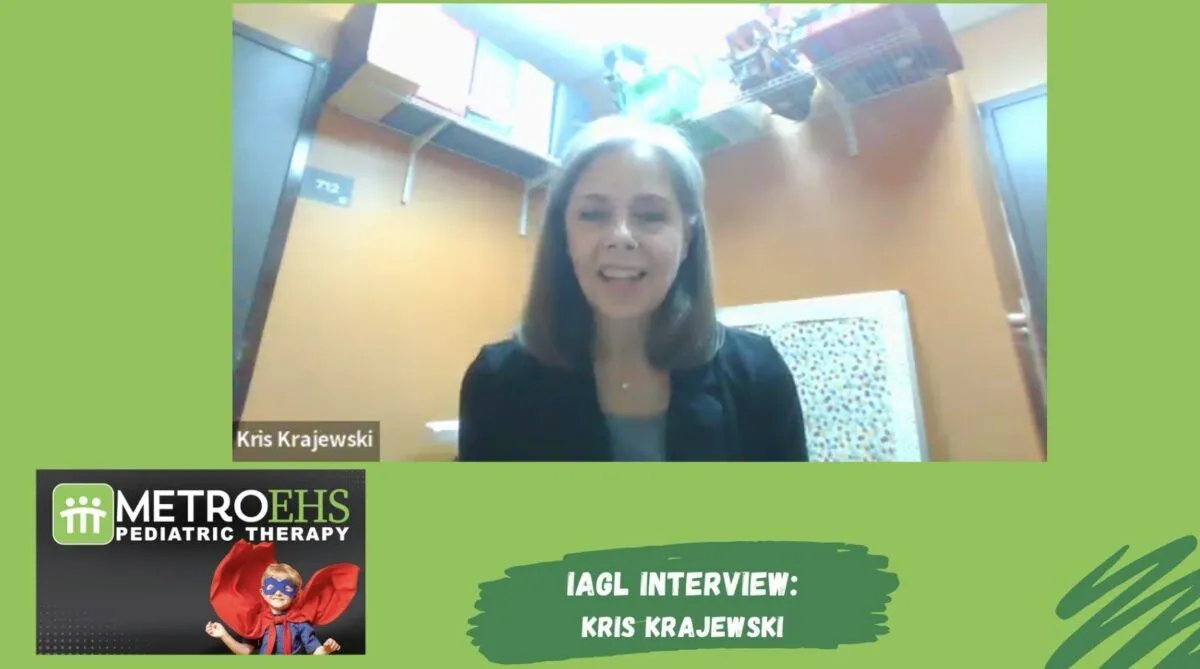









Navigating Grand Parenting Challenges: A Pathway to Expertise and Support

an interview of Kris Krajewski, a speech and language pathologist

In the fast-paced world of grand parenting, it’s crucial to stay informed and equipped with the best solutions for raising grandchildren. With approximately 3 million grandparents across the United States taking on the responsibility of raising their grandkids, there is a growing need for expert guidance and support. That’s where the podcast “It’s a Grand Life” comes in, connecting listeners with subject matter experts who understand the unique challenges faced by grand families.

A Valuable Resource:

In a recent episode, host Craig Nash warmly welcomed new listeners from Texas, Nevada, Colorado, Florida, and Alabama. He emphasized the importance of being informed about the best solutions for raising grandkids, setting the objective of “It’s a Grand Life” to present subject matter experts who can provide valuable insights and information.

Expertise in Pediatric Therapies:

The guest of the episode was Kris Krajewski, a speech and language pathologist with MetroEHS Pediatric Therapy, a group dedicated to pediatric therapy in Michigan. Kris shared her background and expertise in speech and language pathology, highlighting her passion for working with children and her personal experience as a parent of a child with Down syndrome.

Comprehensive Approach to Care:

MetroEHS offers a wide range of therapies, including speech, physical, and occupational therapy, as well as applied behavior analysis (ABA) and mental health services. Their focus is on a holistic and coordinated approach, providing support not only to the children but also to their families and caregivers. By incorporating various services, MetroEHS aims to address the unique needs of each child and help them reach their full potential.

Addressing Feeding and Swallowing Issues:

Kris shed light on pediatric feeding disorders, a relatively new diagnosis, and emphasized the importance of understanding the sensory challenges that some children face when it comes to food. MetroEHS provides interventions to help children develop tolerance for different textures and improve their chewing and swallowing abilities.

Navigating the Path to Treatment:

To begin the journey of seeking therapy services, Kris advised starting with a discussion with the child’s pediatrician, who can refer them to appropriate specialists for evaluations and treatments. MetroEHS collaborates with pediatricians, school districts, and insurance providers to ensure comprehensive and accessible care for children.

Supporting Grand Families:

The podcast episode acknowledged that the journey of raising grandchildren can be overwhelming, but it highlighted the importance of seeking help and support. MetroEHS welcomes inquiries and assists families in finding the right resources for their specific needs. Additionally, the Autism Alliance of Michigan was recommended as an excellent resource for families dealing with autism-related concerns.

Raising grandchildren comes with unique challenges, but resources like “It’s a Grand Life” and organizations like MetroEHS provide valuable expertise and support for grand families. By accessing specialized therapies and collaborating with professionals, grandparents can help their grandchildren thrive. Remember, you are not alone in this journey, and there are pathways to assistance and resources available to support you and your grand family along the way.


Continue Reading

April 5, 2023

MetroEHS Joins WDIV for Autism Awareness Month

We are proud to sponsor Live in the D, and excited to have joined them this month to bring Autism Awareness.

Tati Amare:
As we watch children grow, we see them develop in many different ways, from infant to toddler to child. As they grow, we celebrate milestones like first steps or first words, but what if the child in your life hasn’t reached a milestone by a certain age or at all? That’s where our sponsor, MetroEHS can help families and children thrive when developmental challenges present themselves. Joining us now here from MetroEHS is our sponsor for Autism Awareness Month is Dawn Sterling, a board certified behavioral analyst with MetroEHS Pediatric Therapy. Good morning and thank you for being with us.

Dawn Sterling:
Good morning. Thank you for having me.

Tati Amare:
This is a lot to think about, but MetroEHS prides itself as a neighborhood therapy company that is accessible to everyone because you have 14 locations and 3 more on the way. Explain the work that you do with families and what makes MetroEHS unique.

Dawn Sterling:
Yes, so we are a pediatric therapy service provider and what really makes us unique is the different variety of services that we offer all in one location. So each neighborhood therapy center has a speech and language pathologist, occupational therapy, physical therapy, applied behavior analysis. We also have dieticians and mental health professionals working with us, and what really sets us apart is our feeding therapy program. So what we do, and its uniqueness, is this wrap around the whole child. So we focus on the whole child developmentally. So whatever a family may be concerned with or struggling with, we’ve got services and support for those families.

Tati Amare:
For every need. I like that. Now if I’m a parent at home and for family members of children, what are some signs that we should look for that may indicate that there may be developmental concerns with our children?

Dawn Sterling:
That’s a great question. So we look for what is called developmental milestones. So your pediatrician is a great person to get that resource from. So if you are at all concerned about your child meeting milestones, maybe they’re not meeting them in the timeframe that you expected, or maybe they had some of these milestones and they’re dropping off, you’re going to start with your pediatrician. They may recommend evaluations. Always pursue those. It’s better to rule out any concerns than to perhaps miss it.
Sometimes what’s recommended is behavior therapy. Applied behavior analysis is one type of therapy that can really help with children with developmental disabilities, and not just autism. These therapies, speech therapy, feeding therapy, occupational therapy, they are for a variety of diagnoses, global childhood developmental delay, any sort of developmental delay that your evaluators may see, there is a related service that can support these families.

Tati Amare:
All right. Now you’ve brought in some example of the items that you use to work with children. So walk us through these tools. I’m going to hold these up.

Dawn Sterling:
Thank you, Tati.

Tati Amare:
Of course.

Dawn Sterling:
MetroEHS is a collaborative pediatric center, so we collaborate with all of our service providers such as SLPs, or Speech Language Pathologists, that may help us design core boards for learners that are not communicating fully with their words yet. We also will collaborate with our occupational therapists on staff for things that may meet a young child’s sensory needs. We are movers and shakers, so sometimes we need to have things that we can play with in our hands, it might be scented to wake up some of those senses. We also have sensory oral chews. We work with a lot of very young kids and we know developmentally young children like to mouth on things.

Tati Amare:
Yeah, this is perfect.

Dawn Sterling:
So this is food grade silicone, it’s safe, it’s safer than the wooden puzzle piece that your toddler might be putting in their mouth. And then we do work on daily living skills, and this is from our OT department, as well. When children are learning to utilize a straw, this cup can be very helpful because we can squeeze it to give them a little bit of that liquid and really show them this is something you might want as we build up their ability to have independence with eating, drinking.

Tati Amare:
And all of that stuff.

Dawn Sterling:
Again, the whole child.

Tati Amare:
Yeah, definitely. Definitely. Okay, so I have to ask you before, because we’re just about running out of time, how rewarding is it for you to be in this position and have the impact with these kids?

Dawn Sterling:
It is the most incredible experience. We get to partner with families. The parents are a viable and valuable member of our treatment team, so we get to work with them and really see what their children and their families are achieving as a result of our therapies. So that is the biggest impact, is seeing progress with our kids.

Tati Amare:
That’s awesome. Dawn, thank you so much for being with us.

Dawn Sterling:
Thank you. Thank you for having me.

Tati Amare:
This is going to be helpful for a lot of families out there. Remember, MetroEHS has 14 locations and 3 more on the way across Metro Detroit. To find a location near you and to see how they can help your family, go to metroehs.com.

April 12, 2023

Who Benefits From Pediatric AAC Devices and How Do They Support Communication?

AAC Devices in Pediatric Therapy

AAC is the term used to describe any form of communication that a person can use that is not speech. This may include pointing to pictures of what the person wants, using sign language, or using a device that will speak a message when a specific button is pushed.

MetroEHS can boast a 100% success rate in supplying clients with these crucial communication devices giving a voice to our superheroes.

When Should AAC be Considered for a Child?

An AAC device should be considered for any child whose speech output is not adequate to fully communicate their wants and needs.

Things to consider:

-Child’s frustration levels

-Adult frustration levels

-Access to school curriculum

-Participation in classroom activities

-Ability to demonstrate knowledge to teachers

-Access to home and community environment

-Ability to interact appropriately with family and peers

-Independence in developmentally-appropriate daily activities

MetroEHS partners with an AAC company and a medical equipment company. These companies serve as consultants for Metro EHS SLPs as we work toward supplying families with AAC devices. Some AAC tools are covered by insurance, but some are not. MetroEHS Pediatric Therapy will help you understand your options.

The Process:

Step One: Our SLPs identify kiddos who might benefit from using AAC!

Step Two: We begin trialing different devices and different communication systems determining which systems work best for each individual client. There are several devices and programs to choose from.

Step Three: Once the SLP determines which system works best, an AAC evaluation is submitted to the client's pediatrician for review. If the pediatrician approves, we obtain a prescription for the device, much like obtaining a prescription for a splint, or other form of medical equipment.

Step Four: When the prescription is received, the prescription and evaluation report are all submitted to the insurance company.  Once approved, the device is ordered!

Step Five: The device is delivered to the family and they family receives assistance with set up and demonstration.  The device fully belongs to the child.

After the device is in the hands of our client, MetroEHS SLPs work with the family and the client to integrate the device into their world in speech therapy.

With Locations all over South East Michigan and excellent Speech Therapy services, MetroEHS Pediatric Therapy is here to help. Browse through our Locations Page to find a Local Therapy Center near you!

April 25, 2024

How Does Physical Therapy Help Children Who Toe Walk?

April is Autism Awareness Month, a time dedicated to shedding light on autism spectrum disorder (ASD) and promoting understanding and acceptance. Throughout this month, we've been exploring how MetroEHS, a pediatric neighborhood therapy company with locations across Metro Detroit, is making a difference in the lives of children on the autism spectrum through various forms of therapy.

Today, we delve into a common phenomenon observed in children—toe walking—and its potential significance, particularly in relation to autism. Toe walking, the act of walking on the toes, balls of the feet, or tippy toes, is a behavior that may raise concerns, especially when observed in children around the ages of two to three.

According to experts at MetroEHS, including Kelly Johns, the Director of Physical Therapy, toe walking can be an indicator of potential developmental issues, including autism spectrum disorder. Children on the spectrum often exhibit sensory-seeking behaviors, and toe walking can be one manifestation of this sensory-seeking behavior, providing them with additional sensory input.

While occasional toe walking in toddlers who are still learning to walk may not be alarming, persistent toe walking, especially beyond the age of two or three, warrants attention. If a child is consistently toe walking more than 50% of the time, it is advisable for parents to seek evaluation and possible intervention, such as physical or occupational therapy.

Toe walking can have various implications for a child's physical development and overall well-being. It can lead to issues such as pelvic misalignment, muscular imbalances, and even the shortening of the Achilles tendon over time. Addressing toe walking early through therapy and interventions can mitigate potential future problems and promote proper musculoskeletal development.

MetroEHS offers a range of therapies, including physical and occupational therapy, to address toe walking and other developmental concerns in children. Additionally, parents can play an active role in helping their children at home by incorporating simple exercises and activities aimed at stretching the calf muscles and promoting proper walking mechanics.

Simple interventions like stretching exercises and using swim flippers can aid in correcting toe walking tendencies and promoting a more natural gait pattern in children. By combining professional therapy with at-home practices, parents can support their children's physical development and overall well-being.

MetroEHS has 14 locations across Metro Detroit, with three more on the way, ensuring accessibility for families seeking therapy services for various developmental needs, including autism spectrum disorder. Find the nearest MetroEHS location to you on the Locations Page!

As we wrap up Autism Awareness Month, let's continue to spread awareness, understanding, and support for individuals on the autism spectrum and their families, empowering them to thrive and lead fulfilling lives.