








Registered Behavior Technician FAQs

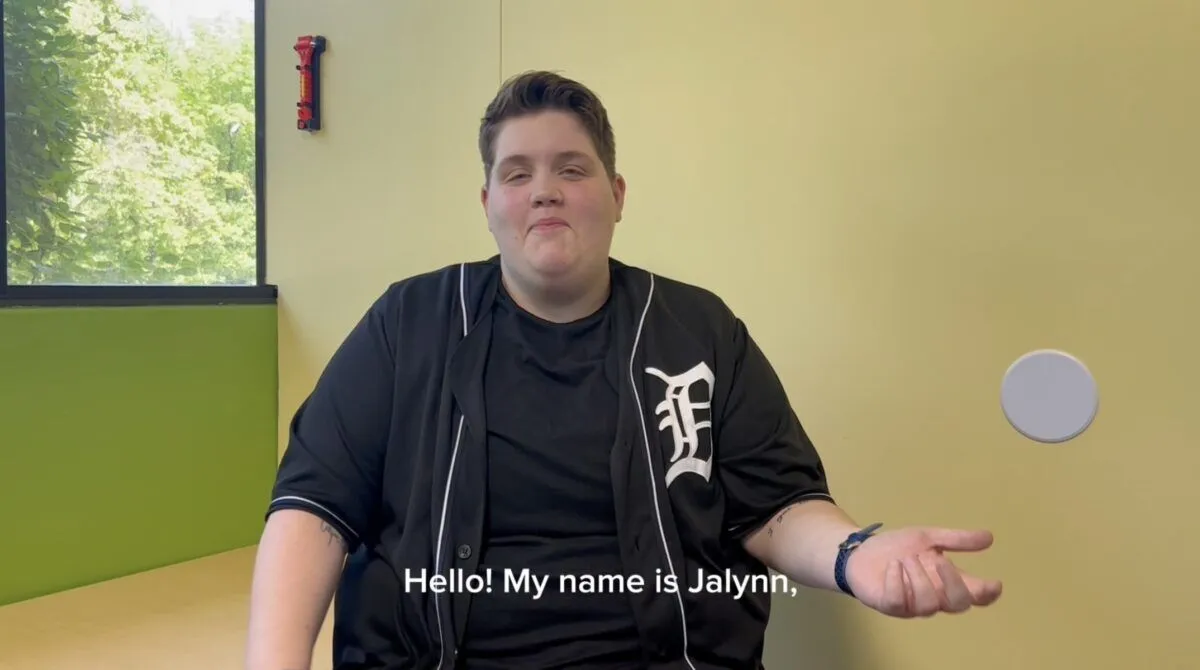
MetroEHS behavioral technician doing a Q&A interview

Q: What is the RBT certification?

A: RBT certification is a paraprofessional certificate that is in the behavioral analyst field, and you work under the BCBA or BCABA treating and providing services to our kids.

Q: What are the requirements?

A: What it takes to become an RBT here at MetroEHS is you must be 18 years old, a high school diploma, you need the 40 hours of training, and then take a competency test with the supervisor, and then you apply at the BACB website, and take a test, and become an RBT.

Q: What does the training consist of?

A: The RBT training consists of like an interactive and comprehensive 40-hour training that you work in a small group or one on one with other technicians or your BCBA. You’re out in the clinic, hanging out with the kids, learning and watching how they run programs. That could be at the table time or out in natural environment and once you understand the new words in the ABA field, you take your competency test and take the test at the website.

Q: What is the competency test?

A: The competency test is when the supervisor comes out the clinic with you and they watch how you run programs, they interview you, ask questions about the terminology and it’s pretty much just one on one time or you and the supervisor and your client to make sure you understand the terminology and what you’re actually doing and it’s highly encouraged to actually take your RBT test within 90 days of your 40 hour training. It is free of charge. You take the test at the BACB website.

Apply now!

Q: How do I maintain my credentials?

A: To maintain my credentials as an RBT here at MetroEHS, I track all my supervision hours, and I retake my competency test at the year mark or year anniversary of my RBT testing date.

Q: What are the benefits if earning an RBT certification?

A: MetroEHS offers two benefits for becoming an RBT. One is a raise and two, once you become an RBT, you have more opportunities to move up the ladder and become admin or fun stuff.

Continue Reading

April 25, 2024

How Does Physical Therapy Help Children Who Toe Walk?

April is Autism Awareness Month, a time dedicated to shedding light on autism spectrum disorder (ASD) and promoting understanding and acceptance. Throughout this month, we've been exploring how MetroEHS, a pediatric neighborhood therapy company with locations across Metro Detroit, is making a difference in the lives of children on the autism spectrum through various forms of therapy.

Today, we delve into a common phenomenon observed in children—toe walking—and its potential significance, particularly in relation to autism. Toe walking, the act of walking on the toes, balls of the feet, or tippy toes, is a behavior that may raise concerns, especially when observed in children around the ages of two to three.

According to experts at MetroEHS, including Kelly Johns, the Director of Physical Therapy, toe walking can be an indicator of potential developmental issues, including autism spectrum disorder. Children on the spectrum often exhibit sensory-seeking behaviors, and toe walking can be one manifestation of this sensory-seeking behavior, providing them with additional sensory input.

While occasional toe walking in toddlers who are still learning to walk may not be alarming, persistent toe walking, especially beyond the age of two or three, warrants attention. If a child is consistently toe walking more than 50% of the time, it is advisable for parents to seek evaluation and possible intervention, such as physical or occupational therapy.

Toe walking can have various implications for a child's physical development and overall well-being. It can lead to issues such as pelvic misalignment, muscular imbalances, and even the shortening of the Achilles tendon over time. Addressing toe walking early through therapy and interventions can mitigate potential future problems and promote proper musculoskeletal development.

MetroEHS offers a range of therapies, including physical and occupational therapy, to address toe walking and other developmental concerns in children. Additionally, parents can play an active role in helping their children at home by incorporating simple exercises and activities aimed at stretching the calf muscles and promoting proper walking mechanics.

Simple interventions like stretching exercises and using swim flippers can aid in correcting toe walking tendencies and promoting a more natural gait pattern in children. By combining professional therapy with at-home practices, parents can support their children's physical development and overall well-being.

MetroEHS has 14 locations across Metro Detroit, with three more on the way, ensuring accessibility for families seeking therapy services for various developmental needs, including autism spectrum disorder. Find the nearest MetroEHS location to you on the Locations Page!

As we wrap up Autism Awareness Month, let's continue to spread awareness, understanding, and support for individuals on the autism spectrum and their families, empowering them to thrive and lead fulfilling lives.

April 12, 2023

Who Benefits From Pediatric AAC Devices and How Do They Support Communication?

AAC Devices in Pediatric Therapy

AAC is the term used to describe any form of communication that a person can use that is not speech. This may include pointing to pictures of what the person wants, using sign language, or using a device that will speak a message when a specific button is pushed.

MetroEHS can boast a 100% success rate in supplying clients with these crucial communication devices giving a voice to our superheroes.

When Should AAC be Considered for a Child?

An AAC device should be considered for any child whose speech output is not adequate to fully communicate their wants and needs.

Things to consider:

-Child’s frustration levels

-Adult frustration levels

-Access to school curriculum

-Participation in classroom activities

-Ability to demonstrate knowledge to teachers

-Access to home and community environment

-Ability to interact appropriately with family and peers

-Independence in developmentally-appropriate daily activities

MetroEHS partners with an AAC company and a medical equipment company. These companies serve as consultants for Metro EHS SLPs as we work toward supplying families with AAC devices. Some AAC tools are covered by insurance, but some are not. MetroEHS Pediatric Therapy will help you understand your options.

The Process:

Step One: Our SLPs identify kiddos who might benefit from using AAC!

Step Two: We begin trialing different devices and different communication systems determining which systems work best for each individual client. There are several devices and programs to choose from.

Step Three: Once the SLP determines which system works best, an AAC evaluation is submitted to the client's pediatrician for review. If the pediatrician approves, we obtain a prescription for the device, much like obtaining a prescription for a splint, or other form of medical equipment.

Step Four: When the prescription is received, the prescription and evaluation report are all submitted to the insurance company.  Once approved, the device is ordered!

Step Five: The device is delivered to the family and they family receives assistance with set up and demonstration.  The device fully belongs to the child.

After the device is in the hands of our client, MetroEHS SLPs work with the family and the client to integrate the device into their world in speech therapy.

With Locations all over South East Michigan and excellent Speech Therapy services, MetroEHS Pediatric Therapy is here to help. Browse through our Locations Page to find a Local Therapy Center near you!

December 8, 2023

Unlocking the Power of Play: 5 Beneficial Toys for Children Aged 0-10 Years

‘Tis the season of shopping! During all the hustle and bustle, MetroEHS wanted to offer a few tips for how to shop smart for your little superhero! At MetroEHS, we know that play is a crucial aspect of a child’s development. This means choosing the right toys can significantly impact a child’s cognitive, physical, social, and emotional growth. During this season of giving, we thought we could explore five suggestions for beneficial toys that cater to the developmental needs of children, as well as share our Amazon Shopping Idea list that was created by some of our amazing and knowledgeable MetroEHS therapists.

Sensory Toys and Building Blocks for Littles (0-2 years):

In the early stages of life, infants rely heavily on their senses to understand the world and face-to-face time during play time is paramount. Through engaging directly with beloved caregivers and family members by singing simple songs, reading nursery rhymes, and playing silly fingerplays like peekaboo, little ones learn to enjoy level appropriate toys as well as time with caregivers.

Sensory toys with high contrast patterns are the most engaging selection for children aged 0-2 years. This includes toys with different textures and sounds and toys that allow for simple problem solving.  Aim for easy to grasp toys that target multiple senses for the sensorimotor stage of play in order to promote motor skill development and learning.  Ensure toys are free from small parts that could pose a choking hazard. Be sure to engage with your child by narrating what they are feeling and doing with the toy with simple language (e.g., “Big ball!” if playing with a ball). soft, cold, bumpy, hard, etc.).

Children are natural builders and playing with building blocks can enhance their motor skills, spatial awareness, and creativity. Choose colorful blocks that are easy for small hands to manipulate. Building activities also promote problem-solving, social skills, and cognitive development as children experiment with different arrangements and structures. Engage with your child by verbalizing and encouraging them to “put on”, “knock down”, “kick over”, “put in”, “take out”, or use narration of colors and counting to practice those ever-important verbal skills. Make playtime learning time!

-Pretend Play for Toddlers (2-4 years): Preschoolers love to pretend and role play. Toys that simulate real life tasks (cooking, tools, costumes) are great for cognition and development of the imagination. They also foster independence, social and emotional skills, overall language, and critical thinking.

-Games for Early School-Aged Kids (4-6 years): Board games tailored for young children offer a fun way to introduce early learning concepts such as counting, color recognition, and basic literacy. Games like “Memory” or “Chutes and Ladders” encourage social interaction, turn-taking, and strategic thinking. Games like “Sneaky Squirrel” and “Twister” can foster fine and gross motor skills. Ensure the games are age-appropriate and encourage cooperative play, fostering important social skills.

-STEM Toys for School-Aged Children (6-10 years): As children progress through the school years, STEM (science, technology, engineering, and math) toys can play a vital role in developing critical thinking and problem-solving skills. Look for age-appropriate science kits, robotics, or construction sets that engage children in hands-on learning experiences. These toys not only make learning fun but also prepare children for the challenges of a technology-driven future. Consider games like Headbandz, which can allow your child an opportunity to practice vocabulary skills. Card games are a great time to play with your child in which your child can think strategically, for instance Uno, Phase 10, and Old Maid, can be fun for early school age children.

-Art and Craft Supplies for Creative Expression (All Ages): Foster your child’s creativity with art and craft supplies. From coloring books and crayons for younger children to more advanced crafting materials for older kids, these activities help enhance fine motor skills, self-expression, and imaginative thinking. Consider providing a designated space for art projects, allowing children to explore their creativity in a supportive environment.

Choosing the right toys for children aged 0-10 years involves considering their developmental stage and providing opportunities for growth through play. Soft, sensory toys, building blocks, educational board games, STEM toys, and art supplies can all contribute to a well-rounded and enriching playtime experience. By selecting toys that align with a child’s developmental needs, parents and caregivers can actively support their journey of learning and discovery. Parents are a child’s first play partner. The importance of a parent engaging in play with their child cannot be minimized! Enjoy this special time with your child and make playtime beneficial for both of you.

Experienced MetroEHS Clinicians pulled together a great shopping list which includes some of the toys discussed in this blog. You can find that list here.

https://www.amazon.com/hz/wishlist/ls/2GKR4U81VUFCE?ref_=wl_share