










How Does Physical Therapy Help Children Who Toe Walk?

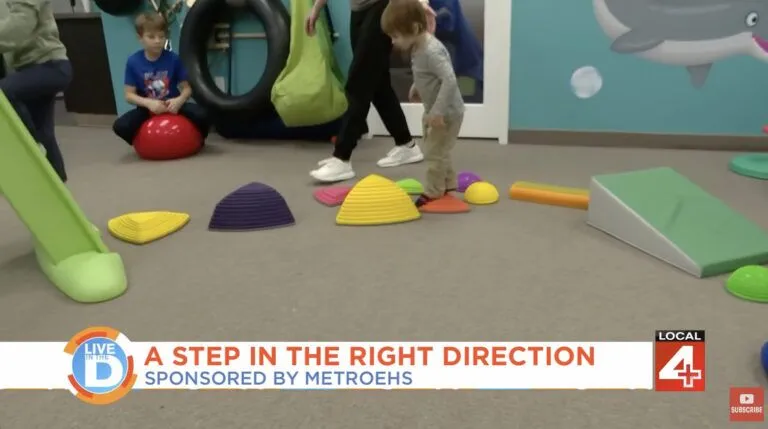
the feet of a child doing a therapy for toe walking

April is Autism Awareness Month, a time dedicated to shedding light on autism spectrum disorder (ASD) and promoting understanding and acceptance. Throughout this month, we've been exploring how MetroEHS, a pediatric neighborhood therapy company with locations across Metro Detroit, is making a difference in the lives of children on the autism spectrum through various forms of therapy.

Today, we delve into a common phenomenon observed in children—toe walking—and its potential significance, particularly in relation to autism. Toe walking, the act of walking on the toes, balls of the feet, or tippy toes, is a behavior that may raise concerns, especially when observed in children around the ages of two to three.

According to experts at MetroEHS, including Kelly Johns, the Director of Physical Therapy, toe walking can be an indicator of potential developmental issues, including autism spectrum disorder. Children on the spectrum often exhibit sensory-seeking behaviors, and toe walking can be one manifestation of this sensory-seeking behavior, providing them with additional sensory input.

While occasional toe walking in toddlers who are still learning to walk may not be alarming, persistent toe walking, especially beyond the age of two or three, warrants attention. If a child is consistently toe walking more than 50% of the time, it is advisable for parents to seek evaluation and possible intervention, such as physical or occupational therapy.

Toe walking can have various implications for a child's physical development and overall well-being. It can lead to issues such as pelvic misalignment, muscular imbalances, and even the shortening of the Achilles tendon over time. Addressing toe walking early through therapy and interventions can mitigate potential future problems and promote proper musculoskeletal development.

MetroEHS offers a range of therapies, including physical and occupational therapy, to address toe walking and other developmental concerns in children. Additionally, parents can play an active role in helping their children at home by incorporating simple exercises and activities aimed at stretching the calf muscles and promoting proper walking mechanics.

Simple interventions like stretching exercises and using swim flippers can aid in correcting toe walking tendencies and promoting a more natural gait pattern in children. By combining professional therapy with at-home practices, parents can support their children's physical development and overall well-being.

MetroEHS has 14 locations across Metro Detroit, with three more on the way, ensuring accessibility for families seeking therapy services for various developmental needs, including autism spectrum disorder. Find the nearest MetroEHS location to you on the Locations Page!

As we wrap up Autism Awareness Month, let's continue to spread awareness, understanding, and support for individuals on the autism spectrum and their families, empowering them to thrive and lead fulfilling lives.

Continue Reading

September 17, 2023

Metrotherapy In Detroit, Michigan

Our therapists and educators have a passion for extending their clinical abilities to those who are in need of Special Education, Child Education or Pediatric Therapy in Metropolitan Detroit.

March 11, 2021

Opening up New Opportunities with Pediatric Therapy in Spanish!

Brittany: Hello! My name is Brittany, I am the bilingual Speech Pathologist at Metro EHS in Sterling Heights and Detroit.

Mallory: Hi! My name is Mallory, and I work in the Human Resources Department at the administrative office in Plymouth.

B: And we are so excited to announce that MetroEHS now offers speech therapy in Spanish and English!

M: That’s great! We can service Metro Detroit kids in their native language! But Brittany, can you tell me how to know if my child needs speech therapy?

B: Sure! If you have concerns about the language or articulation development of your child, it is possible that he/she might benefit from speech therapy. For example, if your child cannot pronounce certain sounds, does not say a lot of words or combine words to form sentences, or if you cannot understand him/her, we can do an evaluation to see if he/she qualifies for speech therapy.

M: That sounds great! What happens next?

B: After the evaluation, if therapy is necessary, we are able to initiate therapy in English, Spanish, or both languages to help your child communicate with family, friends and all of the people in the child’s life using their preferred language.

M: So cool! Are any other therapies offered?

B: Of course! We also offer therapy for feeding difficulties, stuttering, problems with social language secondary to autism, and the use of augmentative and alternative communication for children who are not able to talk using verbalizations. Here at MetroEHS we also offer occupational and behavior therapy at all of our centers. We have a phenomenal team of therapists that provide individualized services for your child. And Mallory, you can assist Spanish-speaking families get started, right?

M: Of course! We accept most insurances. I would be happy to answer any questions that families might have. Call our office to see if your child might benefit from speech therapy or other therapies in Spanish, English, or both languages. Our telephone number is 313-278-4601. We would love to talk to you!

Brittany: Hola! Me llamo Brittany y soy la terapeuta bilingue de habla en MetroEHS en Sterling Heights y Detroit.

Mallory: Hola! Me llamo Mallory y trabajo en el departamentro de recursos humanos en la oficina administrativa en Plymouth.

Brittany: Estamos emocionados de anunciar que MetroEHS ofrece la terapia de habla en ingles y espanol.

Mallory: Que excelente! Podemos proporcionar la terapia de habla a ninos en MetroDetroit en su idioma nativo. Brittany, me puedes explicar como saber si mi hijo necesita la terapia de habla.

Brittany: Por supuesto! Si tiene preocupaciones del desarrollo del lenguaje o de la articulacion de su hijo es posible que se beneficie de la terapia de habla. Por ejemplo,  si su hijo no puede pronunciar ciertos sonidos, no dice muchas palabras ni combina palabras para hacer oraciones, o si no le puede entender a su hijo, podemos hacer una evaluacion para ver si califica para la terapia de habla.

Mallory: Suena muy bien! Que pasara despues?

Brittany: Despues de la evaluacion, si las terapias son necesarias, podemos iniciar las terapias en ingles, espanol o ambos idimos para ayudar a hijo a comunicarse con la familia, los amigos y todas las personas en su vida usando su idioma preferido.

Mallory: Guau(wow)! Ofrecen otras terapias?

Brittany: Tambien ofrecemos terapias para dificultades con la alimentacion, el tartamudeo, problemas con el lenguje social secundario al autismo, y el uso de comunicacion aumentativa y alternativa para ninos que no puede hablar con verbalizaciones. En MetroEHS, ofrecemos la terapia ocupacional y la terapia de comportamiento (ABA). Tenemos un equipo fenomenal de terapeutas que proporcionan servicios individualizados para su hijo. Mallory, tu puedes ayudar a las familiar que hablar espanol en la oficina, verdad?

Mallory: Por supuesto! Aceptamos muchos seguros medicos. Yo estaria encantada de responder a cualquier pregunta que tenga. Llame nuesta oficina para ver si su hijo se podria beneficiar de la terapia de habla en espanol, ingles, o ambos idiomas. El numero de telefono de la oficina es 313-278-4601. Nos encantaria hablar con usted.

May 21, 2024

Potty Training Tips from MetroEHS Pediatric Therapy: Expert Advice for Parents

As April and Autism Awareness Month have come to a close, we’re highlighting the incredible work of MetroEHS Pediatric Therapy in Metro Detroit. With multiple locations and more on the way, MetroEHS is dedicated to helping families with children on the autism spectrum and those needing specialized therapy. Today, we’re focusing on a universal challenge for parents: potty training.

Joining us are Deanna Coker, a board-certified behavioral therapist analyst, and Kelly Johns, the director of physical therapy at MetroEHS. They share valuable insights on potty training, addressing common issues and providing practical solutions.

Recognizing Readiness for Potty Training

Kelly Johns emphasizes that recognizing when your child is ready for potty training is crucial. Key signs include:

- Extended Bladder Control: Holding their bladder overnight or for several consecutive hours.

- Interest in the Potty: Playing with their diaper, showing curiosity about the toilet, or performing a "potty dance."

- Communication: Telling you they need to go or showing signs they’re aware of their bodily functions.

Addressing Potty Training Challenges

Sometimes, despite a parent’s best efforts, potty training can hit a snag. Deanna Coker points out that issues such as regression, frequent nighttime accidents, or persistent constipation might indicate underlying problems like pelvic floor complications.

Assisting with Physiological Challenges

To support children struggling with potty training, Kelly recommends several strategies:

- Blowing Bubbles: This helps relax the pelvic floor. Encourage your child to blow bubbles while sitting on the toilet or during playtime.

- Using a Squatty Potty: This stool ensures a proper 90-degree angle, aiding in effective bowel movements.

- Belly Breathing: Teach your child to focus on their belly rising and falling, which can help with relaxation and control.

Effective Potty Training Methods

Deanna shares essential potty training tips:

  1. Ditch the Diapers: Transition your child to underwear to help them feel the wetness of accidents.
  2. Stay Hydrated: Encourage your child to drink plenty of fluids to ensure they need to use the bathroom regularly.
  3. Set a Schedule: Take your child to the potty every 20 minutes initially, allowing them to sit for a few minutes each time.
  4. Positive Reinforcement: Use rewards like a sticker chart to celebrate successes. This visual progress tracker can be highly motivating for children.

Deanna shares a personal anecdote about using a princess-themed sticker chart for her daughter, highlighting how such simple tools can make the process enjoyable and rewarding for children.

MetroEHS Pediatric Therapy provides comprehensive support for various therapy needs, including ABA, speech, occupational, feeding, and physical therapies. With their expanding network of locations, they are readily accessible to families across Metro Detroit.

For more information or to find the nearest MetroEHS location, visit http://metroehs.com

**Thank you, Deanna and Kelly, for sharing your expertise and practical advice.** Potty training can be a daunting task, but with these tips, parents can navigate this essential milestone more effectively.