








A Mother and Daughter’s Journey

A Mother and Daughter's Journey

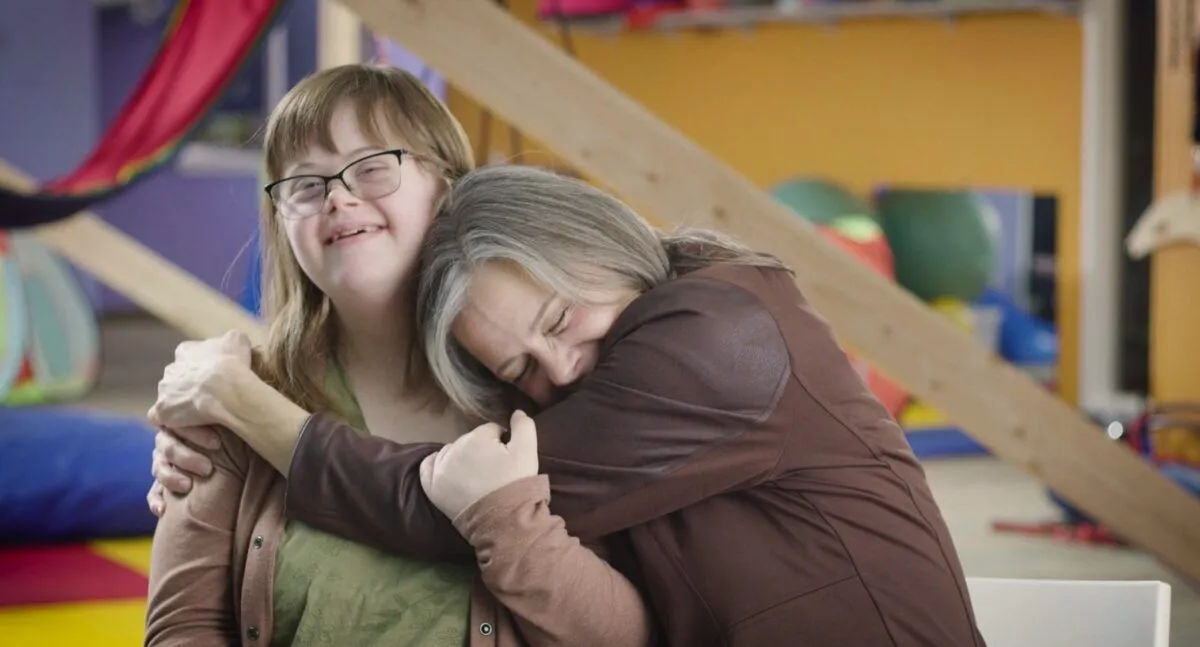
Kris Krajewski: Hi, I am Kris Krajewski. I am the director of PT, OT and Speech Therapy Services at MetroEHS. I am a clinical fellow mentor, a speech language pathologist, and a mom. And this is my daughter McKenna. McKenna is a therapy assistant at our Rochester Hills location.

Mckenna Krajewski: So as therapy assistant, they clean, do desk work and sanitize, take temperatures, taking care of clients, make sure they're safe and healthy, help them with their work and special needs. It makes me feel amazing and happy to be there for them. I am very, very proud.

Kris Krajewski: I got teary listening to McKenna talk about it because what, what is most important to me for children or anybody of any age, but in particular my child, is that they are happy. A large part of that happiness comes from feeling connected and having a purpose, um, and knowing that you have somewhere to go where you're valued and you're important. And so I see that happening at Metro with McKenna, with her job as a professional. I'm really proud of MetroEHS for thinking about people at, you know, both ends of that age spectrum, right? We have our little littles coming in at a very young age, and we are still interested in what happens to our kiddos when they get out into the world of work. Um, and to me that's a really important message.

A Family's Journey with a Special Need Diagnosis is a beautiful journey! Listen from some more of our MetroEHS Family's stories > HERE


Continue Reading

METROstaffing In Detroit

Let us reinvent your workforce for the better. Expect to receive effective and reliable staffing solutions from us.

Positive Relationships

Because METROstaffing is therapist-owned and operated, we know how important your needs are. We will handle finding and retaining your therapist and supporting them clinically so you are free to focus on running your facility!

By working with METROstaffing, we take care of everything and immediately begin to reduce your costs at the outset of our relationship.

Your facility will no longer bear the concerns and overhead for items such as pensions, disability insurance, healthcare, and administrative costs. Our experience shows an average savings of 8–10%, in payroll alone for each full-time employee.

We provide maternity, medical leave, and FMLA coverage for all of your related service needs: Speech, OT, PT, Psych & Special Ed Teachers.

We provide therapists for part and full time and can also cover both short and long term placements. We also offer Tele-Therapy services that can be used as a bridge until a ‘live’ therapist is procured; to keep students in IEP compliance and prohibit litigation possibilities.

Building A Better Business

We have developed a highly successful model that enables facilities and therapists to work together in ways that benefit both parties. Granting job satisfaction for the therapist translates into the longevity of your facility.

We provide therapists for part and full time and can also cover both short and long term placements.

From our web-based billing and payroll system to our clinical support team, we support our therapists completely so your time and effort can be directed to other areas of your business.

Innovative Remote Services

METROstaffing offers unique Tele-Practice Therapy services for rural, remote, and underserved communities, as well as to culturally and linguistically diverse populations. Through the application of telecommunication technologies, we can provide therapy services at a distance.

If your facility falls into one of these categories or if you would like more information on this great service, call us today! We would love to answer your questions about our other services such as teletherapy and pediatric therapy in Metropolitan Detroit.

April 30, 2020

Does Online Speech Teletherapy Work

Teletherapy, also called tele-practice or tele-speech, has become more popular during the uncertain circumstances and stay at home orders of COVID-19. Teletherapy can bring a sense of familiarity in uncertain times, as your child can have a weekly live speech therapy visit with a consistent speech language pathologist (SLP). A relationship is built, and the therapist and child share smiles and laughter in between working on their goals. With teletherapy, children can continue to receive continuity of care even as they stay safe at home! But does this foreign method of attending speech therapy really work?

Research is largely in agreement: Teletherapy is a very effective way of teaching kids speech and language!

With teletherapy, speech therapy is provided via a video chat platform that is secure. MetroEHS’s online platform includes fun games, a box for clients to watch applicable videos and talk through worksheets or read stories, screen share, practice cards, and, of course,  a live-streaming video SLP guiding them through all of it. All of these features engage most children, including those on the Autism Spectrum. This 1:1 teletherapy has been proven effective: according to a review of 7 studies of school-aged children, “telehealth is a promising method for treating children” (1). Another study looking specifically at children with ASD stated, “All [14] studies reported high levels of programme acceptability and parent satisfaction with the telehealth component of the intervention” (2). And another states, “Emerging research in telepractice treatment for ASD clients already shows success in both direct and indirect interactions” (3).

If a child is too young or difficult to engage, the SLP may opt for a parent training approach. The parent will receive a list of supplies to gather from around the house, and the SLP will teach the parent how to target the child’s goals. The parent is encouraged to ask questions, and the SLP coaches as the parent engages their child and completes their goals. This has also been proven effective for children learning language! Evidence suggests, “that parent-mediated intervention training delivered remotely can improve parents’ knowledge in [autism spectrum disorder] ASD, parent intervention fidelity, and subsequently improve the social behavior and communication skills of their children with ASD (4).

Feeding Therapy can be provided with a similar model. The SLP guides the caregiver during the session, and talks through strategies and techniques for children accepting the food, chewing, and swallowing. Providing feeding therapy online can be beneficial because the SLP can see where the child typically sits, the types of eating utensils that are used, and overall family dynamic- all of which play a major role in carryover of skills to the home environment. What better way to support generalization to home, than having therapy in the home! Feeding Teletherapy, too, is an excellent and effective substitute to in-person therapy, according to research (5)!

As you can see, teletherapy is a powerful alternative to in-person therapy, especially during situations when receiving in-person therapy is difficult or impossible for families. If you would like more information about teletherapy, to enroll your child, or a free “Teletherapy Tour” to see our platform, please contact MetroEHS today!

Resources

  1. 2017. Wales, D., Skinner, L., et al. The Efficacy of Telehealth-Delivered Speech and Language Intervention for Primary School-Age Children: A Systematic Review. International Journal of Telerehabilitation, 9(1), 55-70.
  2. 2018. Sutherland, R., Trembath, D., et al. Telehealth and Autism: A Systematic Search and Review of the Literature. International Journal of Speech-Language Pathology, 20(3), 324-336.
  3. 2015, April 28. Cornish, Nate. Social Mediating: Using Telepractice for Clients With Autism. ASHAwire.
  4. 2017. Parsons, D., Cordier, R., et al. Parent-Mediated Intervention Training Delivered Remotely for Children With Autism Spectrum Disorder Living Outside of Urban Areas: Systematic Review. Journal of Medical Internet Research, 19(8), e198.
  5. 2008. Clawson, Seldon, Lacks, Deaton, Hall, Bach. Complex pediatric feeding disorders: using teleconferencing technology to improve access to a treatment program. Pediatric Nursing, 34(3): 213-6.
September 13, 2019

What Does Pediatric Feeding Treatment Look Like?

Once a child has been diagnosed with a Pediatric Feeding Disorder due to oral dysphagia or sensory processing disorder or, if diagnosed by a psychologist, ARFID (Avoidant/Restrictive Food Intake Disorder), they will likely be referred for treatment. Eating is a learned behavior. It is only instinctive for the first 6 months of life. Older children must either teach themselves, or be taught (Toomey). Treatment for a feeding disorder can be completed by a Speech-Language Pathologist (SLP), Occupational Therapist (OT), Board-Certified Behavior Analyst (BCBA), Dietician, or Psychologist. All of these disciplines have overlapping and unique approaches to treatment, so a Pediatric Feeding team that involves more than one specialist may be best for your child. As an SLP who is part of a feeding team that involves an OT and BCBA, some approaches to treatment that I utilize alongside the team include the Food Chaining Approach, The Sequential Oral Sensory approach (SOS), and the Escape Extinction approach.

Food Chaining has become recently popular due to a book written by Fraker and Cox called Food Chaining: The Proven 6 Step Plan To Stop Picky Eating, Solve Feeding Problems, and Expand Your Child’s Diet. To summarize this approach, clinicians and parents would “chain” from food that children currently enjoy by changing 1 aspect of the food at a time: either color, texture, flavor, or shape. For example, if a child enjoys cheetos, you might “chain” to orange veggie sticks (changing flavor), then to green veggie sticks (change in color), then to green veggie chips (change in shape), then to zucchini cut in a circle and placed on the chip (change of texture), then remove the chip. The child is now eating zucchini, and it was introduced slowly in a non-threatening manner! In this procedure, food is not forced on children- they are able to touch and explore it themselves, the clinician models eating it, and children are encouraged to take a bite, but they decide if they would like to try it or not. Using food chaining, children will slowly and positively increase their repertoire of acceptable food.

The Sequential Oral Sensory (SOS) approach was developed by Dr. Kay Toomey, a psychologist who specializes in Pediatric Feeding Disorders. This procedure includes another slow process of children having repeat exposures to foods prior to being forced to take a bite. For example, a child would tolerate a new food, let’s say apple slices, on their plate without expectation of eating it. Once that is tolerated, the apple will slowly and systematically move closer to their mouth, again without expectation of eating. They will touch it first with a fork or toy, then their hand, then put it on their arm, then their cheek, then kiss it, then lick it, then take a bite and spit it out, then chew, and finally swallow the apple slice. This could take a couple of days or even weeks. The idea is to allow children to have positive interactions with the food so that eating is enjoyable and they control what is placed in their mouth according to their comfort level. Eventually the child will be able to more quickly and independently follow the above steps with a new food to independently increase their diet. Children will gain confidence and learn that new foods aren’t as scary as they once thought.

The Escape Extinction approach is an effective, evidence based approach used to aid with feeding problems across all ages and is often utilized in ABA therapy by a BCBA or Behavior Technicians under the guidance of a BCBA. Eating novel food items and non-preferred food items is broken down into easier steps to aid your child with succeeding in their feeding journey. Keeping the presentation of bites and the bite sizes predictable decreases anxiety and allows the child to feel more in control during meal times. We never move up in bite size until we are certain your child is able to handle the bite at that size and has the skills needed to properly lateralize the food item, masticate the bite, and take consecutive bites. Furthermore, this approach reinforces appropriate feeding behavior while extinguishing inappropriate or disruptive feeding behaviors by not allowing the child to escape from taking bites by using a non-removal of the spoon. Often times, children will spit out food, swallow food without chewing, pack bites, turn head away from the bite, or engage in aggression. When these behaviors occur, we do not remove the bite from their lips until the bite has been taken, and provide prompts and reinforcement for taking bites and chewing appropriately.

Children enrolled in the feeding program Metro EHS Pediatric Therapy are evaluated and treated as unique individuals, so these approaches, along with others, are often combined to best help your child experience success with eating.

Sources

  1. Tooomey, Kay. SOS Approach To Feeding.
  2. Tarbox, J and Tarbax, C. Training Manual for Behavior Technician Working with Individuals with Autism Spectrum Disorder. Retrieved from Sciencedirect.com.
  3. Fraker, Fishbein, Cox, Walbert. Food Chaining: The Proven 6 Step Plan To Stop Picky Eating, Solve Feeding Problems, and Expand Your Child’s Diet. Da Capo Lifelong Books.