








Is My Child Ready for School? Here's What School Readiness Really Means

ABA Therapy Near Me

Parents often ask one important question before preschool or kindergarten begins:

"Is my child ready?"

Many people think school readiness simply means knowing letters, numbers, or colors. While those skills are certainly helpful, they are only one small piece of the puzzle.

The truth is that successful classroom participation depends on many developmental skills working together.

Can your child:
✔ Follow simple directions?

✔ Transition between activities?

✔ Sit with a group?

✔ Ask for help?

✔ Play alongside peers?

✔ Manage big emotions?

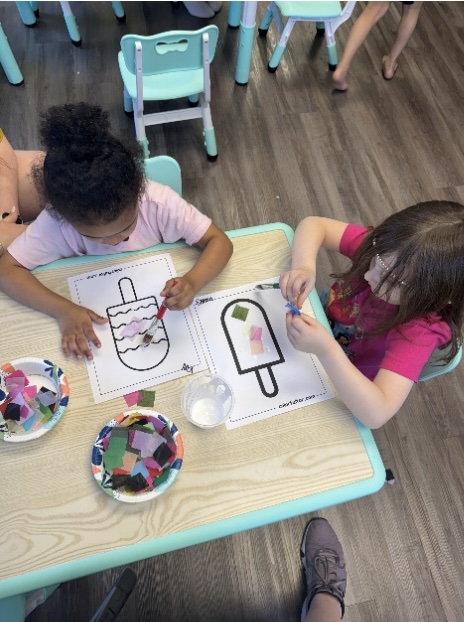
✔ Hold crayons and scissors?

✔ Listen during story time?

✔ Walk safely in a classroom?

These everyday abilities often have a much bigger impact on classroom success than academic knowledge alone.

Why School Readiness Matters

The first few years of school help shape confidence, friendships, communication, and lifelong learning habits.

When children enter school with strong foundational skills, they're often able to:

  • Participate confidently
  • Build friendships
  • Follow classroom routines
  • Learn alongside peers
  • Become more independent

For children with autism, these foundational skills often benefit from early, coordinated support.

Introducing Superhero Academy

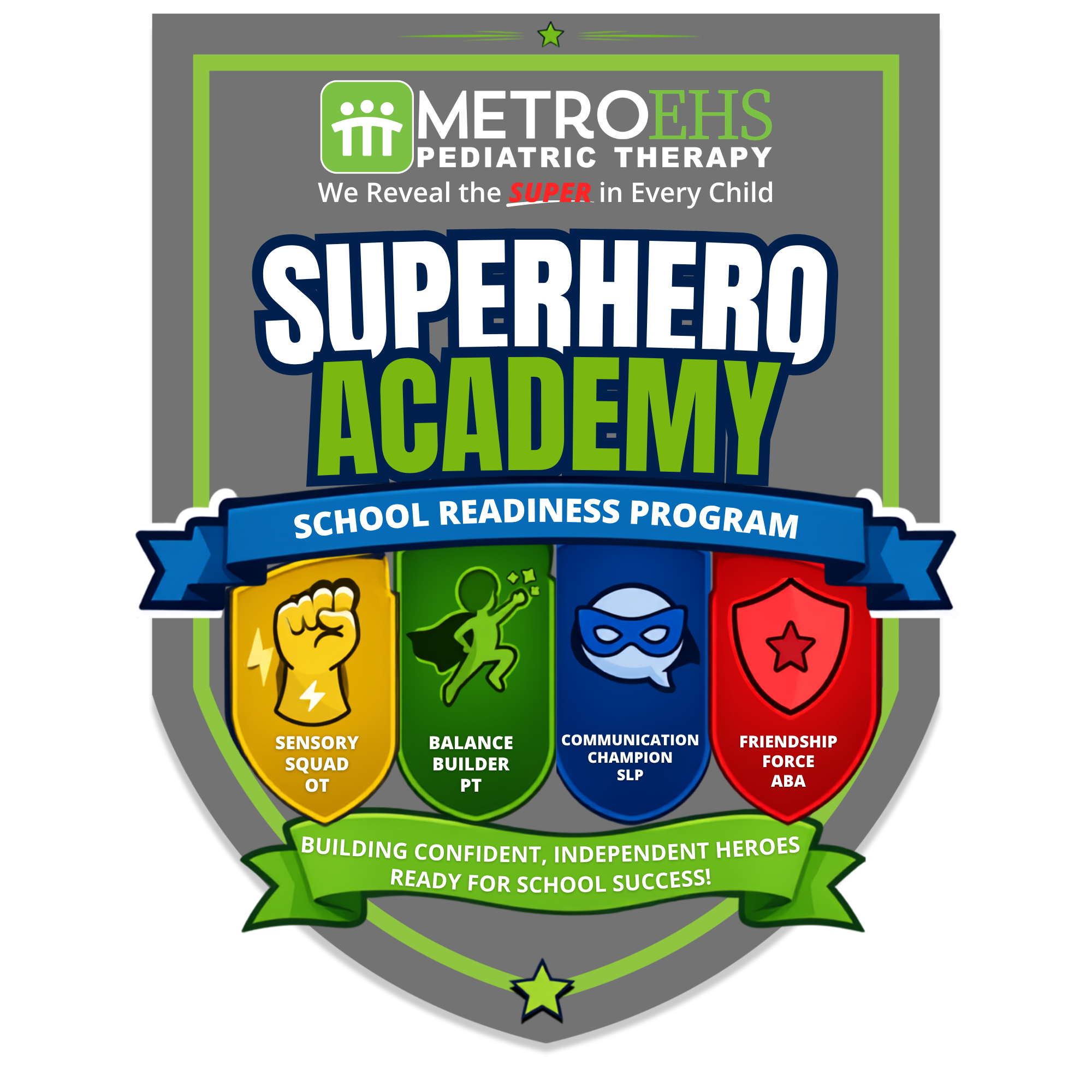
MetroEHS created Superhero Academy to help children ages 2-6 develop the skills needed for preschool and kindergarten through integrated therapy.

Unlike traditional therapy where each discipline works independently, Superhero Academy combines:

ABA Therapy

Occupational Therapy

Physical Therapy

Speech Therapy

Our therapists collaborate to help children practice the same skills across every therapy session.

Instead of isolated goals, children experience one coordinated learning environment.

Learning Through Play

Every month introduces a new superhero mission.

Children learn through:

  • Structured play
  • Sensory activities
  • Group learning
  • Social interaction
  • Movement games
  • Classroom routines
  • Communication opportunities

The result is therapy that feels fun while building real-world school skills.

The Four Hero Disciplines

Sensory Squad (Occupational Therapy)

Helping children develop:

  • Fine Motor Skills
  • Self-regulation
  • Sensory processing
  • Independence

Balance Builder (Physical Therapy)

Helping children improve:

  • Balance
  • Coordination
  • Strength
  • Motor planning
  • Confidence

Communication Champion (Speech Therapy)

Helping children build:

  • Expressive language
  • Listening skills
  • Social communication
  • Early literacy

Friendship Force (ABA)

Helping children develop:

  • Classroom behaviors
  • Emotional regulation
  • Functional communication
  • Cooperation
  • Peer interactions
  • Independence

Building Real School Skills

Throughout the year, children practice:

  • Following routines
  • Listening to teachers
  • Sharing
  • Taking turns
  • Transitioning between activities
  • Solving problems
  • Managing emotions
  • Communicating wants and needs
  • Participating in groups
  • Becoming independent learners

Every milestone helps prepare them for the classroom.

Celebrating Every Hero

Children earn Hero Badges as they master new skills throughout the year.

At graduation, every child receives a Superhero Cape or Hero Champion Medal and a diploma celebrating everything they've accomplished.

Because every child deserves to feel like a superhero.

Ready to Begin?

If your child is between the ages of 2 and 6 and has been diagnosed with autism and you’ve been interested in an ABA program, Superhero Academy may be the perfect next step.
Continue Reading

March 26, 2024

New Therapy for Age Old Issue: Pelvic Floor Therapy

MetroEHS introduced Pelvic Floor Therapy last month and this new therapy will change the lives of countless children because of it. Pelvic floor therapy is a specialized field of physical therapy that focuses on treating conditions and symptoms related to the pelvic floor muscles in children.  Pelvic Floor Therapy involves training your child on how to contract and relax the pelvic floor muscles and with retraining and regular exercises, your child can learn how to better control and gain sensory awareness of these muscles, which play a crucial role in urination and stooling.

Who Could Benefit from Pelvic Floor Therapy?

Pelvic floor therapy can be beneficial for children who struggle with or are unable to gain control over their bowel and bladder. This therapy is often recommended for children who are diagnosed with one or multiple of the following conditions:

  • Enuresis/Bedwetting
  • Constipation
  • Incontinence
  • Overactive bladder
  • Urinary frequency/retention
  • Urinary incontinence
  • Urinary urgency
  • Frequent UTIs

What to Expect with Pelvic Floor Therapy?

The success of pelvic floor therapy often depends on the involvement and commitment of parents or caregivers. Adherence to recommended diet modifications and daily routines can greatly improve the outcomes of this therapy. At MetroEHS, our physical therapists take into account the family history and any life-changing events to tailor the therapy according to the specific needs of each child.

April 20, 2021

Metrotelepractice In Metropolitan Detroit

Speech, Occupational and ABA Therapy provided in the comfort of your home via Teletherapy!

Teletherapy

MetroEHS Pediatric Therapy proudly offers excellent therapy to our clients, and service them in a way that suits their individual needs. Speech, Occupational and ABA Therapy provided in the comfort of your own home via Teletherapy! Teletherapy, or telepractice, uses a HIPPA compliant and secure video platform, similar to Skype, to connect a client to a specially trained Speech-Language Pathologist or Occupational Therapist for live, individual treatment sessions. This virtual therapy is an excellent option for families all over Michigan who home-school, have busy schedules, or anyone who otherwise have a difficult time coming into the clinic. Contact us if you think Teletherapy would be a good fit for your family!

In addition to individual families, MetroEHS also offers Teletherapy to schools in Michigan to keep IEP’s in compliance. Please visit our Staffing Page to explore more.

Frequently Asked Questions
  1. Will my insurance cover Teletherapy?
    Most insurances cover Teletherapy, including many BCBS plans. Community Mental Health is not currently covering Teletherapy in the Metro Detroit counties, but this could change in the future.
  2. How old does my child have to be to participate?
    Any age! If a child is young or active, the therapy session will be geared towards “parent training”. The therapist will provide materials and coach the parents to implement the goals and provide feedback.
  3. Do kids find it boring?
    No! Our Teletherapy website offers a variety of picture cards and we always incorporate games to keep clients engaged. Kids also love having the attention of their parent and the person on the other side of the screen. It’s all about them!
  4. What do I need to use Teletherapy?
    You will need internet connection, a computer or tablet with a camera, microphone, and speakers. Headsets are not required.
  5. How will I access the platform?
    Your therapist will send you an email and you will make a free account. When it is time for your session, you will receive another email with a link to the session, you will put in your password, and you will be connected with your live therapist.
  6. What if I live outside of Michigan?
    Due to state licensing requirements, we are only able to provide therapy to residents of Michigan.
April 30, 2020

Does Online Speech Teletherapy Work

Teletherapy, also called tele-practice or tele-speech, has become more popular during the uncertain circumstances and stay at home orders of COVID-19. Teletherapy can bring a sense of familiarity in uncertain times, as your child can have a weekly live speech therapy visit with a consistent speech language pathologist (SLP). A relationship is built, and the therapist and child share smiles and laughter in between working on their goals. With teletherapy, children can continue to receive continuity of care even as they stay safe at home! But does this foreign method of attending speech therapy really work?

Research is largely in agreement: Teletherapy is a very effective way of teaching kids speech and language!

With teletherapy, speech therapy is provided via a video chat platform that is secure. MetroEHS’s online platform includes fun games, a box for clients to watch applicable videos and talk through worksheets or read stories, screen share, practice cards, and, of course,  a live-streaming video SLP guiding them through all of it. All of these features engage most children, including those on the Autism Spectrum. This 1:1 teletherapy has been proven effective: according to a review of 7 studies of school-aged children, “telehealth is a promising method for treating children” (1). Another study looking specifically at children with ASD stated, “All [14] studies reported high levels of programme acceptability and parent satisfaction with the telehealth component of the intervention” (2). And another states, “Emerging research in telepractice treatment for ASD clients already shows success in both direct and indirect interactions” (3).

If a child is too young or difficult to engage, the SLP may opt for a parent training approach. The parent will receive a list of supplies to gather from around the house, and the SLP will teach the parent how to target the child’s goals. The parent is encouraged to ask questions, and the SLP coaches as the parent engages their child and completes their goals. This has also been proven effective for children learning language! Evidence suggests, “that parent-mediated intervention training delivered remotely can improve parents’ knowledge in [autism spectrum disorder] ASD, parent intervention fidelity, and subsequently improve the social behavior and communication skills of their children with ASD (4).

Feeding Therapy can be provided with a similar model. The SLP guides the caregiver during the session, and talks through strategies and techniques for children accepting the food, chewing, and swallowing. Providing feeding therapy online can be beneficial because the SLP can see where the child typically sits, the types of eating utensils that are used, and overall family dynamic- all of which play a major role in carryover of skills to the home environment. What better way to support generalization to home, than having therapy in the home! Feeding Teletherapy, too, is an excellent and effective substitute to in-person therapy, according to research (5)!

As you can see, teletherapy is a powerful alternative to in-person therapy, especially during situations when receiving in-person therapy is difficult or impossible for families. If you would like more information about teletherapy, to enroll your child, or a free “Teletherapy Tour” to see our platform, please contact MetroEHS today!

Resources

  1. 2017. Wales, D., Skinner, L., et al. The Efficacy of Telehealth-Delivered Speech and Language Intervention for Primary School-Age Children: A Systematic Review. International Journal of Telerehabilitation, 9(1), 55-70.
  2. 2018. Sutherland, R., Trembath, D., et al. Telehealth and Autism: A Systematic Search and Review of the Literature. International Journal of Speech-Language Pathology, 20(3), 324-336.
  3. 2015, April 28. Cornish, Nate. Social Mediating: Using Telepractice for Clients With Autism. ASHAwire.
  4. 2017. Parsons, D., Cordier, R., et al. Parent-Mediated Intervention Training Delivered Remotely for Children With Autism Spectrum Disorder Living Outside of Urban Areas: Systematic Review. Journal of Medical Internet Research, 19(8), e198.
  5. 2008. Clawson, Seldon, Lacks, Deaton, Hall, Bach. Complex pediatric feeding disorders: using teleconferencing technology to improve access to a treatment program. Pediatric Nursing, 34(3): 213-6.