‘Tis the season of shopping! During all the hustle and bustle, MetroEHS wanted to offer a few tips for how to shop smart for your little superhero! At MetroEHS, we know that play is a crucial aspect of a child’s development. This means choosing the right toys can significantly impact a child’s cognitive, physical, social, and emotional growth. During this season of giving, we thought we could explore five suggestions for beneficial toys that cater to the developmental needs of children, as well as share our Amazon Shopping Idea list that was created by some of our amazing and knowledgeable MetroEHS therapists.
Sensory Toys and Building Blocks for Littles (0-2 years):
In the early stages of life, infants rely heavily on their senses to understand the world and face-to-face time during play time is paramount. Through engaging directly with beloved caregivers and family members by singing simple songs, reading nursery rhymes, and playing silly fingerplays like peekaboo, little ones learn to enjoy level appropriate toys as well as time with caregivers.
Sensory toys with high contrast patterns are the most engaging selection for children aged 0-2 years. This includes toys with different textures and sounds and toys that allow for simple problem solving. Aim for easy to grasp toys that target multiple senses for the sensorimotor stage of play in order to promote motor skill development and learning. Ensure toys are free from small parts that could pose a choking hazard. Be sure to engage with your child by narrating what they are feeling and doing with the toy with simple language (e.g., “Big ball!” if playing with a ball). soft, cold, bumpy, hard, etc.).
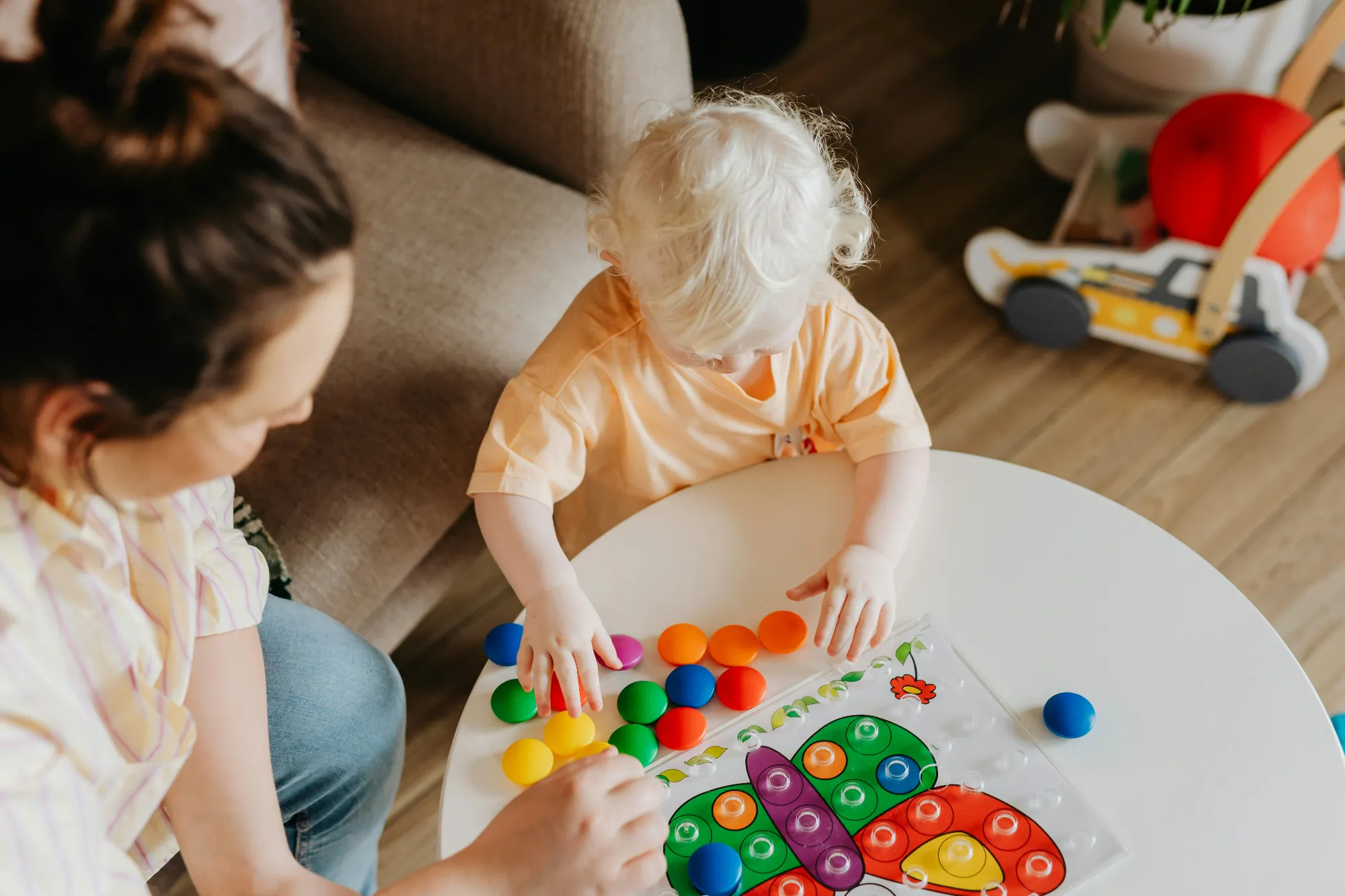
Children are natural builders and playing with building blocks can enhance their motor skills, spatial awareness, and creativity. Choose colorful blocks that are easy for small hands to manipulate. Building activities also promote problem-solving, social skills, and cognitive development as children experiment with different arrangements and structures. Engage with your child by verbalizing and encouraging them to “put on”, “knock down”, “kick over”, “put in”, “take out”, or use narration of colors and counting to practice those ever-important verbal skills. Make playtime learning time!
-Pretend Play for Toddlers (2-4 years): Preschoolers love to pretend and role play. Toys that simulate real life tasks (cooking, tools, costumes) are great for cognition and development of the imagination. They also foster independence, social and emotional skills, overall language, and critical thinking.
-Games for Early School-Aged Kids (4-6 years): Board games tailored for young children offer a fun way to introduce early learning concepts such as counting, color recognition, and basic literacy. Games like “Memory” or “Chutes and Ladders” encourage social interaction, turn-taking, and strategic thinking. Games like “Sneaky Squirrel” and “Twister” can foster fine and gross motor skills. Ensure the games are age-appropriate and encourage cooperative play, fostering important social skills.
-STEM Toys for School-Aged Children (6-10 years): As children progress through the school years, STEM (science, technology, engineering, and math) toys can play a vital role in developing critical thinking and problem-solving skills. Look for age-appropriate science kits, robotics, or construction sets that engage children in hands-on learning experiences. These toys not only make learning fun but also prepare children for the challenges of a technology-driven future. Consider games like Headbandz, which can allow your child an opportunity to practice vocabulary skills. Card games are a great time to play with your child in which your child can think strategically, for instance Uno, Phase 10, and Old Maid, can be fun for early school age children.
-Art and Craft Supplies for Creative Expression (All Ages): Foster your child’s creativity with art and craft supplies. From coloring books and crayons for younger children to more advanced crafting materials for older kids, these activities help enhance fine motor skills, self-expression, and imaginative thinking. Consider providing a designated space for art projects, allowing children to explore their creativity in a supportive environment.
Choosing the right toys for children aged 0-10 years involves considering their developmental stage and providing opportunities for growth through play. Soft, sensory toys, building blocks, educational board games, STEM toys, and art supplies can all contribute to a well-rounded and enriching playtime experience. By selecting toys that align with a child’s developmental needs, parents and caregivers can actively support their journey of learning and discovery. Parents are a child’s first play partner. The importance of a parent engaging in play with their child cannot be minimized! Enjoy this special time with your child and make playtime beneficial for both of you.
Experienced MetroEHS Clinicians pulled together a great shopping list which includes some of the toys discussed in this blog. You can find that list here.
https://www.amazon.com/hz/wishlist/ls/2GKR4U81VUFCE?ref_=wl_share