Metrotelepractice In Metropolitan Detroit

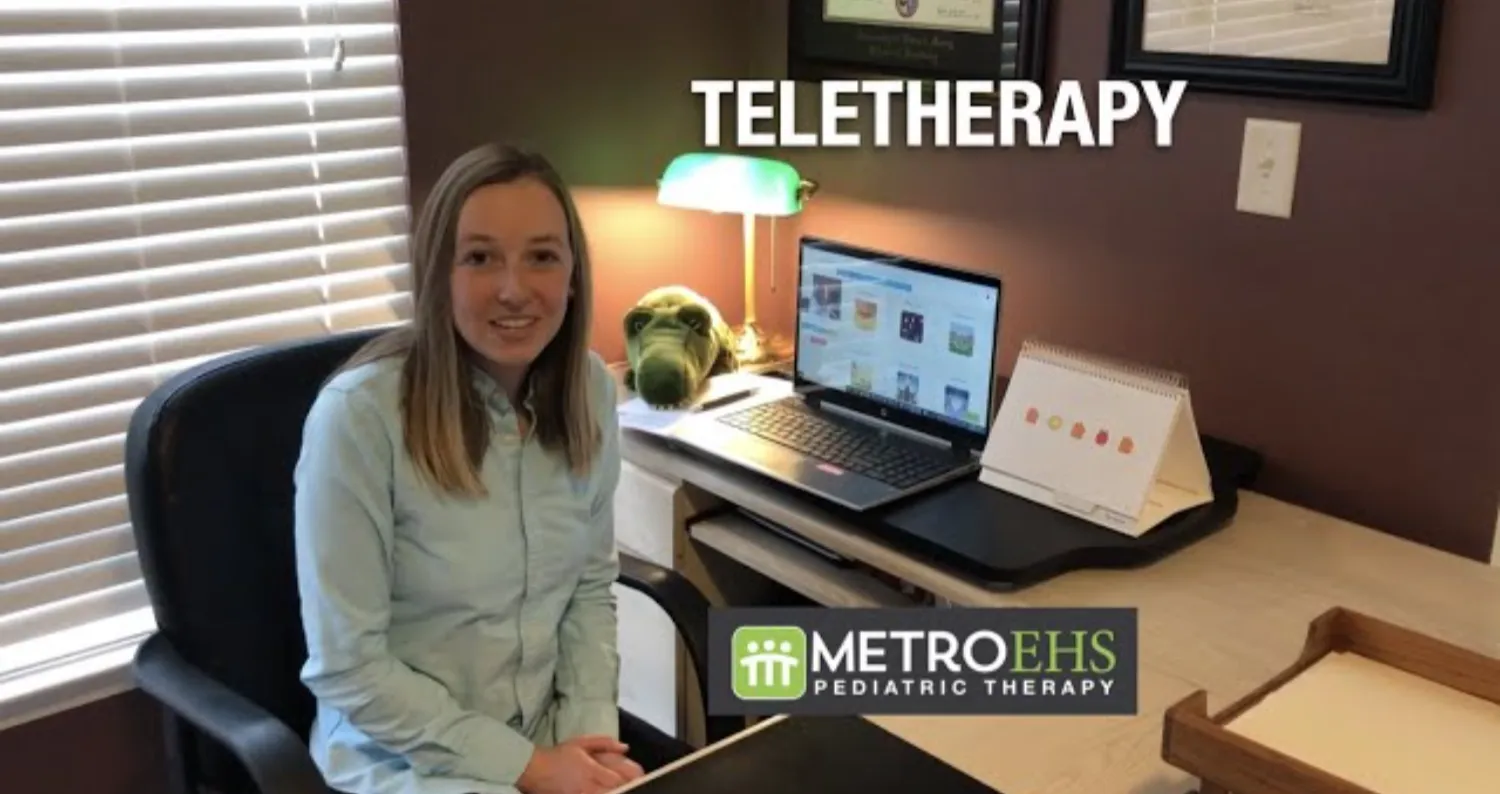
a MetroEHS therapist sitting down at a desk talking to the camera

Speech, Occupational and ABA Therapy provided in the comfort of your home via Teletherapy!

Teletherapy

MetroEHS Pediatric Therapy proudly offers excellent therapy to our clients, and service them in a way that suits their individual needs. Speech, Occupational and ABA Therapy provided in the comfort of your own home via Teletherapy! Teletherapy, or telepractice, uses a HIPPA compliant and secure video platform, similar to Skype, to connect a client to a specially trained Speech-Language Pathologist or Occupational Therapist for live, individual treatment sessions. This virtual therapy is an excellent option for families all over Michigan who home-school, have busy schedules, or anyone who otherwise have a difficult time coming into the clinic. Contact us if you think Teletherapy would be a good fit for your family!

In addition to individual families, MetroEHS also offers Teletherapy to schools in Michigan to keep IEP’s in compliance. Please visit our Staffing Page to explore more.

Frequently Asked Questions
  1. Will my insurance cover Teletherapy?
    Most insurances cover Teletherapy, including many BCBS plans. Community Mental Health is not currently covering Teletherapy in the Metro Detroit counties, but this could change in the future.
  2. How old does my child have to be to participate?
    Any age! If a child is young or active, the therapy session will be geared towards “parent training”. The therapist will provide materials and coach the parents to implement the goals and provide feedback.
  3. Do kids find it boring?
    No! Our Teletherapy website offers a variety of picture cards and we always incorporate games to keep clients engaged. Kids also love having the attention of their parent and the person on the other side of the screen. It’s all about them!
  4. What do I need to use Teletherapy?
    You will need internet connection, a computer or tablet with a camera, microphone, and speakers. Headsets are not required.
  5. How will I access the platform?
    Your therapist will send you an email and you will make a free account. When it is time for your session, you will receive another email with a link to the session, you will put in your password, and you will be connected with your live therapist.
  6. What if I live outside of Michigan?
    Due to state licensing requirements, we are only able to provide therapy to residents of Michigan.

Continue Reading

June 17, 2022

What Is the TheraSuit Method and How Does It Help Children Build Motor Skills?

History of TheraSuit

Richard and Izabela Koscielny are physical therapists, who have a daughter diagnosed with cerebral palsy and tried out suit therapy with her. After significant improvements with the suit, they modified and created their own suit specialized for therapeutic benefits, called TheraSuit™.

How Does TheraSuit Work?

  • TheraSuit worn over a prolonged time will correct proprioception and accelerate progress with functional strengthening
  • Skills practiced become more fluent when TheraSuit is worn
  • TheraSuit facilitates the development of new gross and fine motor skills faster than typical therapy approaches

Benefits Seen with TheraSuit

  • Retraining the central nervous system
  • Restores ontogenetic development
  • Provides external stabilization
  • Normalizes muscle tone
  • Aligns the body to as close to “normal” as possible
  • Provides dynamic correction
  • Normalizes gait patterns
  • Provides tactile stimulation
  • Influences the vestibular system
  • Improves balance
  • Improves coordination
  • Supports weak muscles
  • Decreases uncontrolled movements in ataxia and athetosis
  • Improves body and spatial awareness
  • Provides resistance to muscles to further enhance strengthening
  • Improves speech production and fluency through head control and trunk support
  • Promotes gross and fine motor development
  • Helps decrease contractures
  • Helps improve hip alignment through vertical loading
image

Patient Populations

  • Most major neurological diseases/diagnoses:
    • Autism
    • Down Syndrome
    • Cerebral Palsy
    • Cerebral Vascular Acciden
    • Traumatic Brain Injury
    • Spinal Cord Injury
  • Posture/alignment asymmetries
image

Intensive Physical Therapy Schedule

  • Intensive physical therapy is meant to be done 3 hours/day, for 5 days/week for 3-5 weeks
  • Recommended to complete 3-4 intensive bouts of therapy throughout the year
  • Breaks between the bouts have been shown to be more beneficial for the patient vs continuously pushing for months on end
  • Recommended to complete HEP 1-hour/day to compliment exercises done in intensive, allowing the patient to not only maintain, but improve their functional abilities
  • The schedule of 4  weeks was created specifically in order to change the neuro-pathways, and allow for increased improvements

In General

  • Week 1 works on correct muscle activation and beginning to complete basic concentric exercises
  • Week 2 works on solidifying concentric movements and working into eccentric movements
  • Week 3 solidifies the eccentric movements and introduces isometric holds
  • Week 4 focuses all on isometric holds, working into more complex exercises, as well as creating POC and HEP for time off between bouts of intensive

Work to decrease primitive reflexes and general movements that are present → goal-directed movements → selective effective strategies → refining skills → maintaining through practice

May 28, 2025

The Importance of Reading and Speech Development

Unleashing the Superpower of Words: The Importance of Reading and Speech Development with MetroEHS Pediatric Therapy

Greetings, heroes of child development! At MetroEHS Pediatric Therapy, we believe every child has a SUPER spark waiting to shine, and there’s no greater way to ignite that spark than encouraging a love of reading. Like a trusty cape, developing reading skills empowers children to soar through life with confidence, connection, and success. Let’s dive into why nurturing these abilities is a game-changer for your little hero’s growth, all while embracing the compassionate, play-based approach that defines MetroEHS!

The Superpower of Reading: Building a Foundation for Success

Reading is more than just decoding words on a page—it’s a superpower that unlocks imagination, knowledge, and communication. For young children, reading acts as a catalyst for cognitive and emotional growth, especially during the critical early years when the brain’s neuroplasticity is at its peak. According to our MetroEHS mission, early intervention is key to leveraging this neuroplasticity, helping kids develop essential skills like speech, comprehension, and social interaction.

When children engage with stories, they’re not just following along—they’re building vocabulary, learning sentence structure, and developing critical thinking. Picture your little one giggling at a silly rhyme or pointing excitedly at a colorful picture book. These moments are more than just fun; they’re wiring their brains for language mastery! Reading exposes children to new words and concepts, fostering a love for learning that sets them up for success in the classroom and beyond.

Speech Development: Giving Voice to Their Inner Hero

Speech development is the megaphone that amplifies a child’s thoughts, feelings, and ideas. At MetroEHS, we know that clear communication is vital for connection and engagement, two pillars of life which enhance quality of life. Through play-based therapy, our therapists create a joyful environment where children feel safe to express themselves, whether through words, sounds, or even playful gestures.

Speech isn’t just about pronouncing words correctly—it’s about building confidence and social skills. When children struggle with speech delays, it can impact their ability to connect with peers or express their needs. That’s where MetroEHS swoops in with intensive, evidence-based interventions. By focusing on consistent, tailored support (think five times a week for maximum impact!), we help children overcome challenges and unlock their ability to communicate effectively.

Reading Fuels Speech Development

Reading and speech development are like two sidekicks working together to save the day. When children listen to stories or read aloud, they practice articulation, rhythm, and intonation. Storytime becomes a playground for language, where kids mimic sounds, learn new phrases, and build the confidence to share their own stories. Our play-based approach at MetroEHS harnesses this magic, using activities like storytelling and role-playing to make speech practice feel like an adventure.

For example, a child might act out a scene from their favorite book, practicing words like “roar” or “zoom” with a therapist’s guidance. These playful interactions not only improve speech clarity but also boost emotional well-being by creating a safe space for self-expression. Plus, reading together with parents or caregivers strengthens family bonds, aligning with our collaborative care model to empower families for long-term success.

Here’s the superhero secret: timing is everything.

The earlier we nurture reading and speech development, the greater the impact. MetroEHS emphasizes intensive early intervention because young brains are wired to learn and adapt. Parents swoop in heroically and read to their little superheroes daily. Therapists address any speech delays or reading challenges, mitigate developmental delays and set children on a path to achieve their full potential. Think of it as giving your child a head-start in their heroic journey!

Unleash Your Child’s Superpowers Today!

Ready to help your little hero soar? At MetroEHS Pediatric Therapy, we’re passionate about revealing the SUPER in every child through compassionate, play-based care. Learn how our evidence-based therapies can empower your child’s reading and speech development. Contact us today to schedule a consultation and join our mission to foster connection, engagement, and success!

October 21, 2024

What Is Pediatric DMI Therapy and How Does It Support Motor Development?

Pediatric Dynamic Movement Intervention (DMI) therapy is a specialized treatment aimed at improving the gross motor skills, movement control, and overall functional mobility of children with developmental delays.  DMI therapy is designed to promote and enhance the natural ability of children to develop motor skills through structured, targeted interventions.

What is Dynamic Movement Intervention (DMI)?

Dynamic Movement Intervention (DMI) is a cutting-edge therapeutic approach focusing on improving strength, coordination, balance, and motor planning in children with developmental delays. DMI therapy is based on neuroplasticity principles—the brain’s ability to reorganize itself by forming new neural connections. This means that with consistent and well-targeted interventions, children with motor impairments could make significant gains in motor function.

Without disruption or intervention, unhealthy habits (the types of learned patterns of movement a child relies on rather than reflexive movements) become engrained in the child’s behavior repertoire. Neuroplasticity is defined as the ability of the brain to form and reorganize synaptic connections, especially in response to learning, experience, or following an injury. Neuroplasticity is at its height in young children. Without novelty and challenge, well-established habits always dominate. Due to this natural neuroplasticity, it is often better to start children young with any kind of therapeutic care.

The primary theory behind DMI is the use of the body's automatic postural responses.  In DMI therapy, we place the child in a position where gravity provides information requiring a response. We then wait for the child to complete the movement, with gradually less assistance over time.

Who Needs DMI Therapy?

DMI is beneficial for children with and without a specific diagnosis. However, those with specific diagnoses include, but are not limited to:

Cerebral Palsy: Children with cerebral palsy often struggle with motor control, muscle tone, and balance, all of which can be targeted by DMI therapy.

Developmental Delays: Children experiencing delays in reaching motor milestones (such as crawling, walking, or standing) may benefit from DMI’s movement-based approach.

Genetic Disorders: Certain genetic conditions that affect motor development, such as Down syndrome or muscular dystrophy, may be candidates for DMI.

Spina Bifida: This congenital condition affecting the spinal cord can cause motor deficits, and DMI can be useful in strengthening movement capabilities.

Brain Injuries: Traumatic or acquired brain injuries in children that result in impaired motor functions can be addressed through DMI therapy.

Other symptoms of a child who could benefit from DMI include:

  • Difficulty with postural control (e.g., sitting, standing, or balancing)
  • Delayed or atypical motor development (not crawling or walking at the expected age)
  • Limited muscle tone or spasticity
  • Challenges in coordination and movement precision
  • Fatigue or weakness during movement activities

This is not an exhaustive list. There are many other conditions that may benefit from Dynamic Movement Intervention. DMI therapy is typically recommended for children who have developmental motor disorders or neuromuscular challenges that affect their ability to move, balance, or coordinate their body movements.

Identifying the Need for DMI

The need for DMI therapy is typically identified by healthcare professionals such as neurologists, rehabilitation specialists or physical therapists, often after a comprehensive evaluation of the child’s motor function. Parents may also notice signs that their child is not reaching developmental motor milestones and seek medical advice.

Any physical therapy diagnosis can result in the use of DMI, and this is often very useful for children under 1 to help with head control, children under 2 to help with standing, walking, and posture control, and children 5 and under with more involved diagnoses. Early identification and intervention are extremely beneficial in maximizing the effectiveness of DMI therapy and improving the child’s functional outcomes.