








Who Benefits From Pediatric AAC Devices and How Do They Support Communication?

young boy lounging holding a tablet

AAC Devices in Pediatric Therapy

AAC is the term used to describe any form of communication that a person can use that is not speech. This may include pointing to pictures of what the person wants, using sign language, or using a device that will speak a message when a specific button is pushed.

MetroEHS can boast a 100% success rate in supplying clients with these crucial communication devices giving a voice to our superheroes.

When Should AAC be Considered for a Child?

An AAC device should be considered for any child whose speech output is not adequate to fully communicate their wants and needs.

Things to consider:

-Child’s frustration levels

-Adult frustration levels

-Access to school curriculum

-Participation in classroom activities

-Ability to demonstrate knowledge to teachers

-Access to home and community environment

-Ability to interact appropriately with family and peers

-Independence in developmentally-appropriate daily activities

MetroEHS partners with an AAC company and a medical equipment company. These companies serve as consultants for Metro EHS SLPs as we work toward supplying families with AAC devices. Some AAC tools are covered by insurance, but some are not. MetroEHS Pediatric Therapy will help you understand your options.

The Process:

Step One: Our SLPs identify kiddos who might benefit from using AAC!

Step Two: We begin trialing different devices and different communication systems determining which systems work best for each individual client. There are several devices and programs to choose from.

Step Three: Once the SLP determines which system works best, an AAC evaluation is submitted to the client's pediatrician for review. If the pediatrician approves, we obtain a prescription for the device, much like obtaining a prescription for a splint, or other form of medical equipment.

Step Four: When the prescription is received, the prescription and evaluation report are all submitted to the insurance company.  Once approved, the device is ordered!

Step Five: The device is delivered to the family and they family receives assistance with set up and demonstration.  The device fully belongs to the child.

After the device is in the hands of our client, MetroEHS SLPs work with the family and the client to integrate the device into their world in speech therapy.

With Locations all over South East Michigan and excellent Speech Therapy services, MetroEHS Pediatric Therapy is here to help. Browse through our Locations Page to find a Local Therapy Center near you!

Continue Reading

September 13, 2019

What Does Pediatric Feeding Treatment Look Like?

Once a child has been diagnosed with a Pediatric Feeding Disorder due to oral dysphagia or sensory processing disorder or, if diagnosed by a psychologist, ARFID (Avoidant/Restrictive Food Intake Disorder), they will likely be referred for treatment. Eating is a learned behavior. It is only instinctive for the first 6 months of life. Older children must either teach themselves, or be taught (Toomey). Treatment for a feeding disorder can be completed by a Speech-Language Pathologist (SLP), Occupational Therapist (OT), Board-Certified Behavior Analyst (BCBA), Dietician, or Psychologist. All of these disciplines have overlapping and unique approaches to treatment, so a Pediatric Feeding team that involves more than one specialist may be best for your child. As an SLP who is part of a feeding team that involves an OT and BCBA, some approaches to treatment that I utilize alongside the team include the Food Chaining Approach, The Sequential Oral Sensory approach (SOS), and the Escape Extinction approach.

Food Chaining has become recently popular due to a book written by Fraker and Cox called Food Chaining: The Proven 6 Step Plan To Stop Picky Eating, Solve Feeding Problems, and Expand Your Child’s Diet. To summarize this approach, clinicians and parents would “chain” from food that children currently enjoy by changing 1 aspect of the food at a time: either color, texture, flavor, or shape. For example, if a child enjoys cheetos, you might “chain” to orange veggie sticks (changing flavor), then to green veggie sticks (change in color), then to green veggie chips (change in shape), then to zucchini cut in a circle and placed on the chip (change of texture), then remove the chip. The child is now eating zucchini, and it was introduced slowly in a non-threatening manner! In this procedure, food is not forced on children- they are able to touch and explore it themselves, the clinician models eating it, and children are encouraged to take a bite, but they decide if they would like to try it or not. Using food chaining, children will slowly and positively increase their repertoire of acceptable food.

The Sequential Oral Sensory (SOS) approach was developed by Dr. Kay Toomey, a psychologist who specializes in Pediatric Feeding Disorders. This procedure includes another slow process of children having repeat exposures to foods prior to being forced to take a bite. For example, a child would tolerate a new food, let’s say apple slices, on their plate without expectation of eating it. Once that is tolerated, the apple will slowly and systematically move closer to their mouth, again without expectation of eating. They will touch it first with a fork or toy, then their hand, then put it on their arm, then their cheek, then kiss it, then lick it, then take a bite and spit it out, then chew, and finally swallow the apple slice. This could take a couple of days or even weeks. The idea is to allow children to have positive interactions with the food so that eating is enjoyable and they control what is placed in their mouth according to their comfort level. Eventually the child will be able to more quickly and independently follow the above steps with a new food to independently increase their diet. Children will gain confidence and learn that new foods aren’t as scary as they once thought.

The Escape Extinction approach is an effective, evidence based approach used to aid with feeding problems across all ages and is often utilized in ABA therapy by a BCBA or Behavior Technicians under the guidance of a BCBA. Eating novel food items and non-preferred food items is broken down into easier steps to aid your child with succeeding in their feeding journey. Keeping the presentation of bites and the bite sizes predictable decreases anxiety and allows the child to feel more in control during meal times. We never move up in bite size until we are certain your child is able to handle the bite at that size and has the skills needed to properly lateralize the food item, masticate the bite, and take consecutive bites. Furthermore, this approach reinforces appropriate feeding behavior while extinguishing inappropriate or disruptive feeding behaviors by not allowing the child to escape from taking bites by using a non-removal of the spoon. Often times, children will spit out food, swallow food without chewing, pack bites, turn head away from the bite, or engage in aggression. When these behaviors occur, we do not remove the bite from their lips until the bite has been taken, and provide prompts and reinforcement for taking bites and chewing appropriately.

Children enrolled in the feeding program Metro EHS Pediatric Therapy are evaluated and treated as unique individuals, so these approaches, along with others, are often combined to best help your child experience success with eating.

Sources

  1. Tooomey, Kay. SOS Approach To Feeding.
  2. Tarbox, J and Tarbax, C. Training Manual for Behavior Technician Working with Individuals with Autism Spectrum Disorder. Retrieved from Sciencedirect.com.
  3. Fraker, Fishbein, Cox, Walbert. Food Chaining: The Proven 6 Step Plan To Stop Picky Eating, Solve Feeding Problems, and Expand Your Child’s Diet. Da Capo Lifelong Books.
May 2, 2025

Neuroplasticity: The Brain’s Superpower!

Calling All Brain Boosters and Therapy Sidekicks!

Did you know your child’s brain has a superpower? That’s right — it’s called neuroplasticity, and it’s basically the brain’s way of saying, “Hey, I can grow, change, and level up — just give me a reason!”

In the world of pediatric therapy, neuroplasticity is our superhero ally. It means that with the right kind of training and enough repetition, a child’s brain can form new pathways, build stronger connections, and unlock abilities they never thought possible. And guess what fuels this superpower?

Intensive Intervention!

Due to a child’s neuroplasticity, MetroEHS ensnares this rapid growth acceleration by declaring Intensive Intervention as the most effective strategy in revealing the SUPER in every child. We’re talking 5 sessions a week, not because we’re trying to break a record — but because that’s how we build real, lasting change.

Think of it like superhero training camp. If your goal is to fly, shoot webs, or develop super speed, do you practice once a week and hope for the best? Nope! You train every day, building your skills and flexing those brain muscles!

Here’s why 5x a week is a power move:

  • More reps = stronger brain connections
  • Faster progress = more confidence
  • Consistent practice = real-world impactSo, when a child engages in therapy intensively and regularly, they’re not just “working hard” — they’re giving their brain the super fuel it needs to thrive. Whether it’s building communication skills, mastering motor movements, or learning how to regulate emotions, frequent sessions give the brain the boost it needs to rewire and rise to its fullest potential.“With great [brain] power comes great responsibility!” And we believe in giving kids every opportunity to grow into their best, brightest, most confident superhero selves. Ready to suit up and supercharge those neural pathways? Let’s go!
November 4, 2019

MetroEHS Pediatric Therapy & Challenge Detroit

Challenge Detroit was founded in 2008, with a mission that reads; “We develop, support and connect emerging and existing community-minded leaders, amplifying the positive impact on our diverse, cultural vibrant city.” Challenge Detroit is making a difference.

MetroEHS Pediatric Therapy is proud to be a host company with Challenge Detroit.

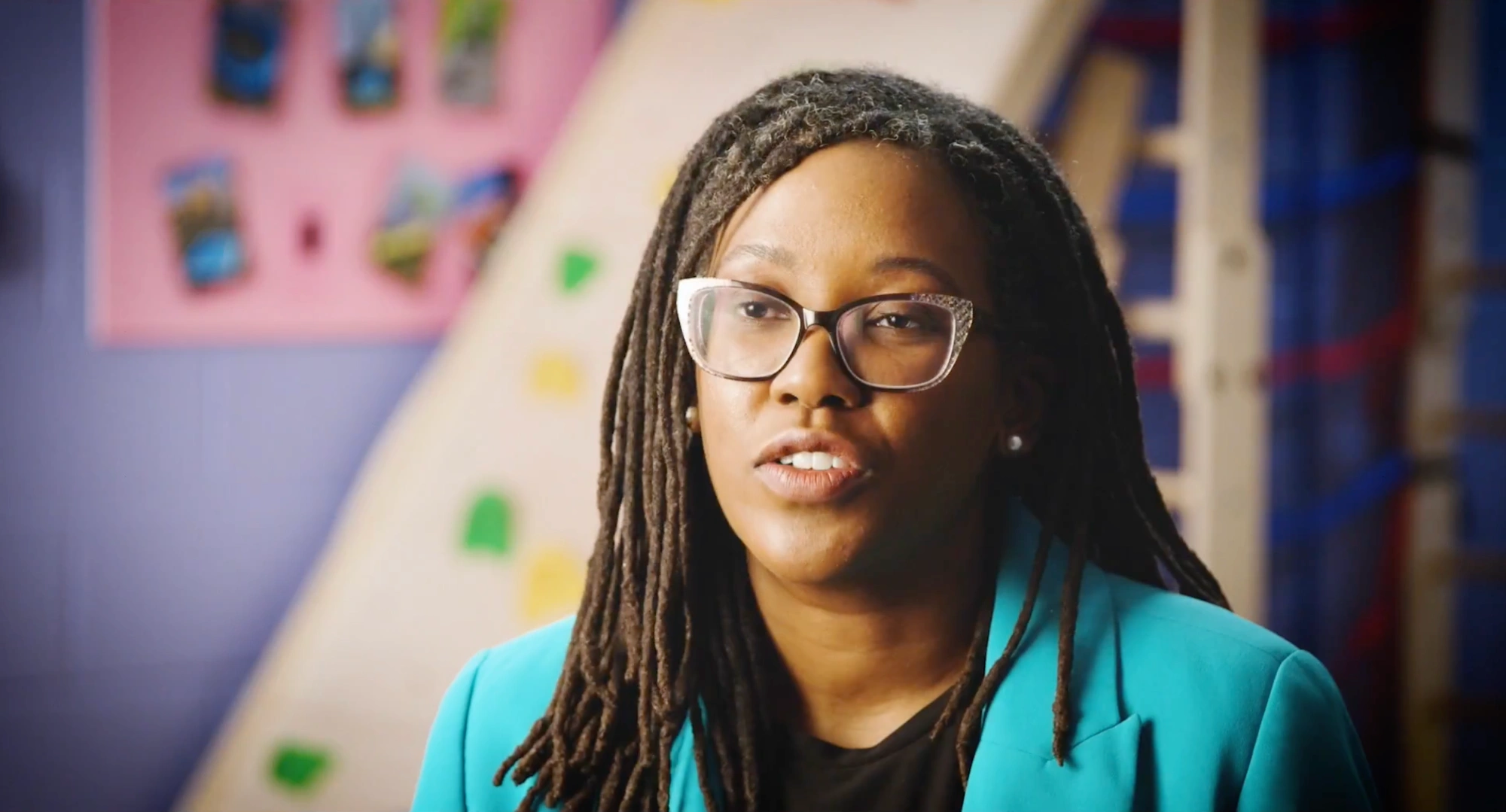
MetroEHS is excited to introduce Dezha Willoughby, one of two Challenge Detroit Fellows MetroEHS proudly hosts! Dezha was born and raised in Detroit and places like Belle Isle were the norm on the weekends (when the weather was nice). She attended and graduate from MLK High School (#GoCrusaders) and she went on to attend college at Michigan State University where she honed in her skills to work with and serve people. Dezha studied Human Development and graduated with her Bachelor of Science Degree in Human Development and Family Studies. Dezha enjoys being outside and enjoying nature. Dezha is very determined and ambitious about being an agent of positive change.

According to the company, “Challenge Detroit cultivates diverse, innovative, community-minded leaders from the city and across the country, fostering their talents to support local initiatives that move Detroit forward. While they spend four days a week accelerating their professional careers with our Host Companies, each Friday Fellows take a day out of the office to bring social impact challenge projects to life in collaboration with our local nonprofit partners. They work in multi-disciplinary teams, bringing their vision, creative muscles, and entrepreneurial spirits to address some of Detroit’s greatest challenges and opportunities. We believe that to move our city forward, positive change starts with an individual and is ignited by a community of leaders who bring innovative perspectives to their work, and most importantly, the nonprofits already making an impact within our Detroit communities.”