









What Does Pediatric Feeding Treatment Look Like?

young asian girl covering her mouth being a picky eater

Once a child has been diagnosed with a Pediatric Feeding Disorder due to oral dysphagia or sensory processing disorder or, if diagnosed by a psychologist, ARFID (Avoidant/Restrictive Food Intake Disorder), they will likely be referred for treatment. Eating is a learned behavior. It is only instinctive for the first 6 months of life. Older children must either teach themselves, or be taught (Toomey). Treatment for a feeding disorder can be completed by a Speech-Language Pathologist (SLP), Occupational Therapist (OT), Board-Certified Behavior Analyst (BCBA), Dietician, or Psychologist. All of these disciplines have overlapping and unique approaches to treatment, so a Pediatric Feeding team that involves more than one specialist may be best for your child. As an SLP who is part of a feeding team that involves an OT and BCBA, some approaches to treatment that I utilize alongside the team include the Food Chaining Approach, The Sequential Oral Sensory approach (SOS), and the Escape Extinction approach.

Food Chaining has become recently popular due to a book written by Fraker and Cox called Food Chaining: The Proven 6 Step Plan To Stop Picky Eating, Solve Feeding Problems, and Expand Your Child’s Diet. To summarize this approach, clinicians and parents would “chain” from food that children currently enjoy by changing 1 aspect of the food at a time: either color, texture, flavor, or shape. For example, if a child enjoys cheetos, you might “chain” to orange veggie sticks (changing flavor), then to green veggie sticks (change in color), then to green veggie chips (change in shape), then to zucchini cut in a circle and placed on the chip (change of texture), then remove the chip. The child is now eating zucchini, and it was introduced slowly in a non-threatening manner! In this procedure, food is not forced on children- they are able to touch and explore it themselves, the clinician models eating it, and children are encouraged to take a bite, but they decide if they would like to try it or not. Using food chaining, children will slowly and positively increase their repertoire of acceptable food.

The Sequential Oral Sensory (SOS) approach was developed by Dr. Kay Toomey, a psychologist who specializes in Pediatric Feeding Disorders. This procedure includes another slow process of children having repeat exposures to foods prior to being forced to take a bite. For example, a child would tolerate a new food, let’s say apple slices, on their plate without expectation of eating it. Once that is tolerated, the apple will slowly and systematically move closer to their mouth, again without expectation of eating. They will touch it first with a fork or toy, then their hand, then put it on their arm, then their cheek, then kiss it, then lick it, then take a bite and spit it out, then chew, and finally swallow the apple slice. This could take a couple of days or even weeks. The idea is to allow children to have positive interactions with the food so that eating is enjoyable and they control what is placed in their mouth according to their comfort level. Eventually the child will be able to more quickly and independently follow the above steps with a new food to independently increase their diet. Children will gain confidence and learn that new foods aren’t as scary as they once thought.

The Escape Extinction approach is an effective, evidence based approach used to aid with feeding problems across all ages and is often utilized in ABA therapy by a BCBA or Behavior Technicians under the guidance of a BCBA. Eating novel food items and non-preferred food items is broken down into easier steps to aid your child with succeeding in their feeding journey. Keeping the presentation of bites and the bite sizes predictable decreases anxiety and allows the child to feel more in control during meal times. We never move up in bite size until we are certain your child is able to handle the bite at that size and has the skills needed to properly lateralize the food item, masticate the bite, and take consecutive bites. Furthermore, this approach reinforces appropriate feeding behavior while extinguishing inappropriate or disruptive feeding behaviors by not allowing the child to escape from taking bites by using a non-removal of the spoon. Often times, children will spit out food, swallow food without chewing, pack bites, turn head away from the bite, or engage in aggression. When these behaviors occur, we do not remove the bite from their lips until the bite has been taken, and provide prompts and reinforcement for taking bites and chewing appropriately.

Children enrolled in the feeding program Metro EHS Pediatric Therapy are evaluated and treated as unique individuals, so these approaches, along with others, are often combined to best help your child experience success with eating.

Sources

  1. Tooomey, Kay. SOS Approach To Feeding.
  2. Tarbox, J and Tarbax, C. Training Manual for Behavior Technician Working with Individuals with Autism Spectrum Disorder. Retrieved from Sciencedirect.com.
  3. Fraker, Fishbein, Cox, Walbert. Food Chaining: The Proven 6 Step Plan To Stop Picky Eating, Solve Feeding Problems, and Expand Your Child’s Diet. Da Capo Lifelong Books.

Continue Reading

June 17, 2022

What Is the TheraSuit Method and How Does It Help Children Build Motor Skills?

History of TheraSuit

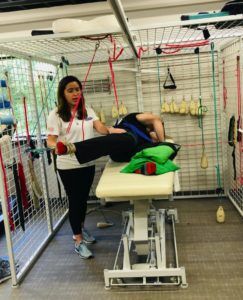
Richard and Izabela Koscielny are physical therapists, who have a daughter diagnosed with cerebral palsy and tried out suit therapy with her. After significant improvements with the suit, they modified and created their own suit specialized for therapeutic benefits, called TheraSuit™.

How Does TheraSuit Work?

  • TheraSuit worn over a prolonged time will correct proprioception and accelerate progress with functional strengthening
  • Skills practiced become more fluent when TheraSuit is worn
  • TheraSuit facilitates the development of new gross and fine motor skills faster than typical therapy approaches

Benefits Seen with TheraSuit

  • Retraining the central nervous system
  • Restores ontogenetic development
  • Provides external stabilization
  • Normalizes muscle tone
  • Aligns the body to as close to “normal” as possible
  • Provides dynamic correction
  • Normalizes gait patterns
  • Provides tactile stimulation
  • Influences the vestibular system
  • Improves balance
  • Improves coordination
  • Supports weak muscles
  • Decreases uncontrolled movements in ataxia and athetosis
  • Improves body and spatial awareness
  • Provides resistance to muscles to further enhance strengthening
  • Improves speech production and fluency through head control and trunk support
  • Promotes gross and fine motor development
  • Helps decrease contractures
  • Helps improve hip alignment through vertical loading
image

Patient Populations

  • Most major neurological diseases/diagnoses:
    • Autism
    • Down Syndrome
    • Cerebral Palsy
    • Cerebral Vascular Acciden
    • Traumatic Brain Injury
    • Spinal Cord Injury
  • Posture/alignment asymmetries
image

Intensive Physical Therapy Schedule

  • Intensive physical therapy is meant to be done 3 hours/day, for 5 days/week for 3-5 weeks
  • Recommended to complete 3-4 intensive bouts of therapy throughout the year
  • Breaks between the bouts have been shown to be more beneficial for the patient vs continuously pushing for months on end
  • Recommended to complete HEP 1-hour/day to compliment exercises done in intensive, allowing the patient to not only maintain, but improve their functional abilities
  • The schedule of 4  weeks was created specifically in order to change the neuro-pathways, and allow for increased improvements

In General

  • Week 1 works on correct muscle activation and beginning to complete basic concentric exercises
  • Week 2 works on solidifying concentric movements and working into eccentric movements
  • Week 3 solidifies the eccentric movements and introduces isometric holds
  • Week 4 focuses all on isometric holds, working into more complex exercises, as well as creating POC and HEP for time off between bouts of intensive

Work to decrease primitive reflexes and general movements that are present → goal-directed movements → selective effective strategies → refining skills → maintaining through practice

May 7, 2025

The One-Stop-Shop for All Things Pediatric Therapy! – WDIV Segment #3

A Collaborative, Child-Centered Approach

At MetroEHS, therapists from various disciplines—speech-language pathology, occupational therapy, physical therapy, and applied behavior analysis (ABA)—collaborate to address the diverse needs of each child. This team-based approach ensures that therapy is cohesive and comprehensive, promoting optimal outcomes.

Dr. Vira Francis, a speech-language pathologist at the West Bloomfield location, emphasizes the importance of this collaboration:

“When we’re using a collaborative and holistic approach with children, it’s like each team member is a puzzle piece. We really make that impact when we all come together to make the big picture, and it really helps to prioritize the child’s needs.”

Services Offered

MetroEHS provides a wide array of pediatric therapy services, including:

  • Speech Therapy: Addressing communication challenges, articulation, language development, and literacy skills.
  • Occupational Therapy: Focusing on daily living skills such as bathing, dressing, grooming, toileting, feeding, play, social participation, and school readiness.
  • Physical Therapy: Enhancing gross motor skills, balance, coordination, and strength to support functional movement and participation in activities.
  • ABA Therapy: Utilizing evidence-based strategies to improve socially significant behaviors in children with autism and other developmental disorders.

Each therapy session is designed to be engaging and child-led, incorporating play-based methods to make therapy enjoyable and effective.

Creating a Stimulating Environment

The West Bloomfield center is intentionally designed to be colorful and kid-friendly, providing a stimulating environment that encourages active participation. Therapists tailor activities to each child’s interests and sensory needs, ensuring that therapy sessions are both fun and beneficial.

Empowering Families

MetroEHS is committed to not only supporting children but also empowering parents and caregivers. By providing education and resources, they enable families to reinforce therapy goals at home and advocate effectively for their children’s needs.

August 30, 2024

What Is an IEP? A Parent’s Guide to Individualized Education Programs

A Comprehensive Guide for Parents on the Individualized Education Program

Navigating the world of special education can be overwhelming for parents, especially when faced with terms and processes that are unfamiliar but crucial for their child's education. One of the most crucial tools in supporting children with developmental needs is the Individualized Education Plan (IEP). But what exactly is an IEP, and how can it benefit your child? In this post, we’ll break down the IEP process into four essential points to help you understand how it works and how it can support your child’s educational journey. Plus, we’ll highlight how MetroEHS Pediatric Therapy leverages IEPs to providecomprehensive care for families.

1. Understanding the Basics: What Is an IEP?

An IEP, or Individualized Education Program, is a legally binding document developed for children who qualify for special education services in public schools. The child's IEP outlines specific educational goals, the services the child will receive, and the setting in which those services will be delivered. The IEP is designed to meet the unique needs of each student and is developed by a team that includes parents, teachers, school administrators, and specialists. The IEP is mandated by federal law to ensure that children with disabilities receive a free appropriate public education tailored to their unique needs.

An IEP is provided for students who are aged 3-26 in the state of Michigan. This is Part B of IDEA which is the Individuals with Disabilities Education Act, a federal law that provides free public education and special services to children with disabilities. IDEA entitles children to special education services if their disability significantly impacts their ability to access education, and if a specially designed program is needed. Part C of IDEA includes a special education law that governs special education programs and services for children who are birth to 3 years old. Special needs children in this age grouping and their families receive an Individualized Family Service Plan, and parents/caregivers are integral to the assessment and intervention process. This program is often called “Early On”.

At MetroEHS Pediatric Therapy, our specialists understand the critical role an IEP plays in a child’s education. We work closely with families and school districts to ensure that the IEP aligns with the child’s developmental goals, ensuring a smooth transition between therapy and the classroom environment.

2. The Evaluation Process: How Does It Start?

The IEP process begins with an initial evaluation with a MET (Multidisciplinary Evaluation Team). The MET only includes the required personnel for areas being assessed, which always includes a district representative, and a general education teacher in addition to other special education staff (special education teacher, speech and language pathologist, occupational therapist, and teacher consultants). This initial evaluation is a crucial step in the special education process to assess whether a child qualifies for special education services. In order to be eligible for special education programs and services, the child must have needs that pose an adverse academic impact.  If your child has been diagnosed with a developmental disorder, such as autism, you should contact your local school district to request a special education evaluation. If parents disagree with the school's evaluation, they have the right to request an Independent Educational Evaluation (IEE) at the school district's expense. This request must be made in writing, as it ensures a documented trail of your efforts to seek assistance.

Once the request is made, the school district has 30 school days to complete the initial evaluation. MetroEHS is proud to assist families during this process, offering insights and support to ensure that every evaluation considers the child’s full range of needs.

3. Developing the IEP: Collaborating for Special Education Services Success

Once the evaluation is complete and eligibility is confirmed, the IEP team—including parents, teachers, and specialists—convenes for an IEP meeting to develop the IEP. During the IEP meeting, various school personnel, including teachers and administrators, collaborate to create a plan that addresses the child's unique needs. The plan outlines specific goals for the school year, the type of classroom environment the child will be placed in, and any additional services they will receive to support the child's educational development. An IEP meeting should be held at least once per year and can occur more often at the discretion of any IEP team member.  

At MetroEHS, we emphasize the importance of parental involvement in this process. Parents are the experts on their child’s needs, and their input is crucial in creating an effective IEP. We work with families to ensure their voices are heard, advocating for the services and accommodations that will best support their child’s growth and learning.

4. Ongoing Monitoring and Adjustments: Keeping the IEP Relevant under the Disabilities Education Act

An IEP is not a static document; it is reviewed annually and adjusted as needed to reflect the child's educational progress and any changes in their needs. Every three years, a full reevaluation is conducted to reassess the child’s eligibility and to update the IEP accordingly. However, parents can request an IEP review at any time if they feel the current plan isn’t meeting their child’s needs. The 3 year Reevaluation may be waived,  and the child’s eligibility at that time may be continued. This occurs if there is not a concern about the child’s eligibility, (e.g., the child’s condition is chronic).

MetroEHS is dedicated to ongoing collaboration with schools and families. We monitor the effectiveness of the IEP and make recommendations for adjustments when necessary. This commitment ensures that the child receives the most appropriate education and therapeutic services at every stage of their development.

image

MetroEHS: Your Partner in the IEP Process with a Special Education Teacher

At MetroEHS Pediatric Therapy, we are committed to helping children with developmental needs reach their full potential. We understand that the IEP is a vital tool in achieving this goal, and we work tirelessly to support families through every step of the process. From initial evaluations to IEP development and ongoing adjustments, our team is here to provide the expertise and advocacy needed to ensure your child’s success in school and beyond.

The best start for your child is for a family member or caregiver to contact their local school district to get the IEP ball rolling. They can call their district’s special education department and seek an evaluation/support as needed.  

The Procedural Safeguards is a document given to parents/caregivers at every special education meeting. This includes specific guidance for special education for children in Michigan. You can access this information here: State of Michigan's Website

If you’re seeking more information about the IEP process or need support navigating special education services, contact MetroEHS today. Our experienced professionals are ready to assist you in unlocking the full potential of your child’s educational journey.